

A single well-planned shoot with the right outdoor photographer can yield multi-platform assets, lift campaign conversions by up to 30%, and reshape how travelers perceive a destination entirely. Most marketing professionals know professional photography matters, but very few understand just how deeply a skilled photographer influences campaign strategy, audience targeting, and long-term brand equity. This article breaks down the methodologies, frameworks, and practical decisions that separate average tourism campaigns from those that genuinely move the needle for adventure and outdoor brands.
Table of Contents
- Understanding the photographer’s influence in tourism campaigns
- Beyond snapshots: Methodologies and frameworks for impactful tourism photography
- Human element and risk management: Nuances in outdoor adventure campaigns
- Maximizing ROI: From conversion uplift to sustainability messaging
- Authenticity, UGC, and campaign innovation: Present and future trends
- What most tourism campaign guides overlook: The photographer’s strategic mindset
- Take your tourism campaign visuals to the next level
- Frequently asked questions
Key Takeaways
| Point | Details |
|---|---|
| Strategic image selection | Photographers use models like the Imagery Diagnosis Model to target campaign objectives and audience emotions effectively. |
| Process-driven photography | Moodboards, shot lists, and segment targeting align visuals to brand goals, improving ROI and guest engagement. |
| Risk and authenticity management | Balancing human elements, safety protocols, and authenticity ensures maximum impact for adventure tourism campaigns. |
| Multi-platform ROI | Expert tourism photography yields assets repurposed across media, driving measurable conversion increases and sustainability appeal. |
| Trend adaptation | Modern campaigns combine professional and UGC content, prioritizing scene and authenticity to connect with new traveler audiences. |
Understanding the photographer’s influence in tourism campaigns
Photographers are rarely just the person holding the camera. In adventure tourism and outdoor brand campaigns, they function as visual strategists who shape how a destination or product feels before a traveler ever books a trip. Their choices, what to frame, what to exclude, which light, which angle, determine whether an audience feels inspired or indifferent.
The emotional resonance of destination imagery is well documented. Images that create a sense of belonging, excitement, or aspiration consistently outperform technically perfect but emotionally flat content. Photographers who collaborate with outdoor photographers understand this intuitively, building shot concepts around emotional triggers rather than scenic checklists.
One of the most useful frameworks for campaign image selection is the Imagery Diagnosis Model. Photographers in tourism campaigns employ this methodology to select images that strongly and positively associate with a destination, categorizing them into Treasures, Hidden Gems, Traps, and Roadblocks for strategic use. Treasures are high-impact images with wide appeal. Hidden Gems are authentic shots that resonate deeply with niche segments. Traps look appealing but create inaccurate expectations. Roadblocks are images that actively discourage bookings.
A study cited in hospitality research surveyed 796 respondents evaluating 65 photos across 23 distinct beliefs about a destination. The takeaway was clear: not all beautiful images are campaign-worthy, and not all campaign-worthy images are beautiful in the traditional sense. This is precisely why experienced photographers bring irreplaceable strategic value.
Key roles a professional adventure photographer plays in campaign development:
- Visual storyteller: Frames destination experiences in ways that resonate with specific audience segments
- Brand guardian: Ensures images align with tone, values, and campaign objectives
- Segment analyst: Tailors compositions to attract families, thrill-seekers, or premium travelers
- Content architect: Produces a library of assets, not just individual photos
The role of photojournalists in outdoor campaigns is equally important here. Photojournalistic instincts, capturing real moments rather than staged scenes, add layers of authenticity that polished commercial photography sometimes lacks.
Beyond snapshots: Methodologies and frameworks for impactful tourism photography
Now that the photographer’s strategic value is clear, let’s unpack their process and methodologies in practice. The best outdoor and adventure photographers bring a structured approach long before anyone steps foot on location.
Professional photographers for tourism must have hospitality or adventure experience, provide moodboards and shot lists, handle licensing for unlimited use across channels, and tailor shots to guest segments like families or adventure seekers. This is not optional. It is the baseline expectation for campaigns that want measurable returns.
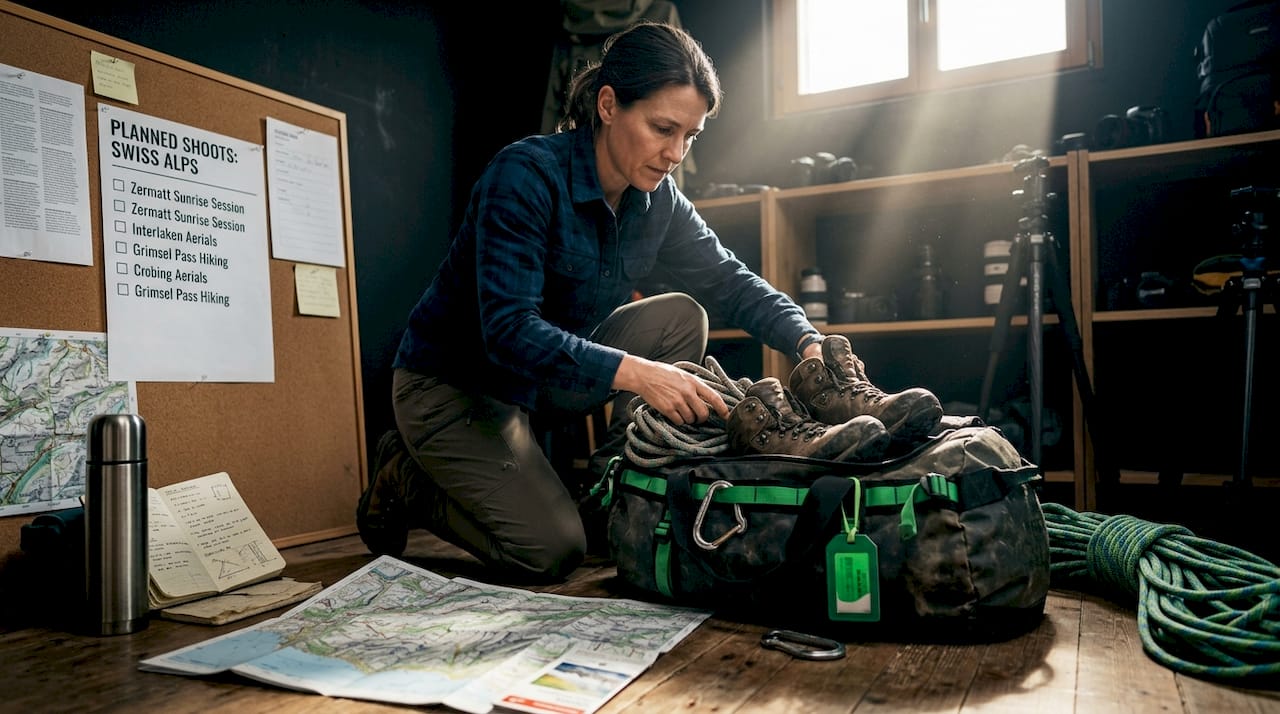
Moodboards establish visual direction before the shoot begins, reducing costly reshoots and ensuring creative alignment with your brand team. Shot lists guarantee that every key asset, hero images, social-first crops, vertical formats, wide establishing shots, is captured systematically. These tools transform shoots from reactive to intentional.
Comparison: Traditional vs. strategic tourism photography
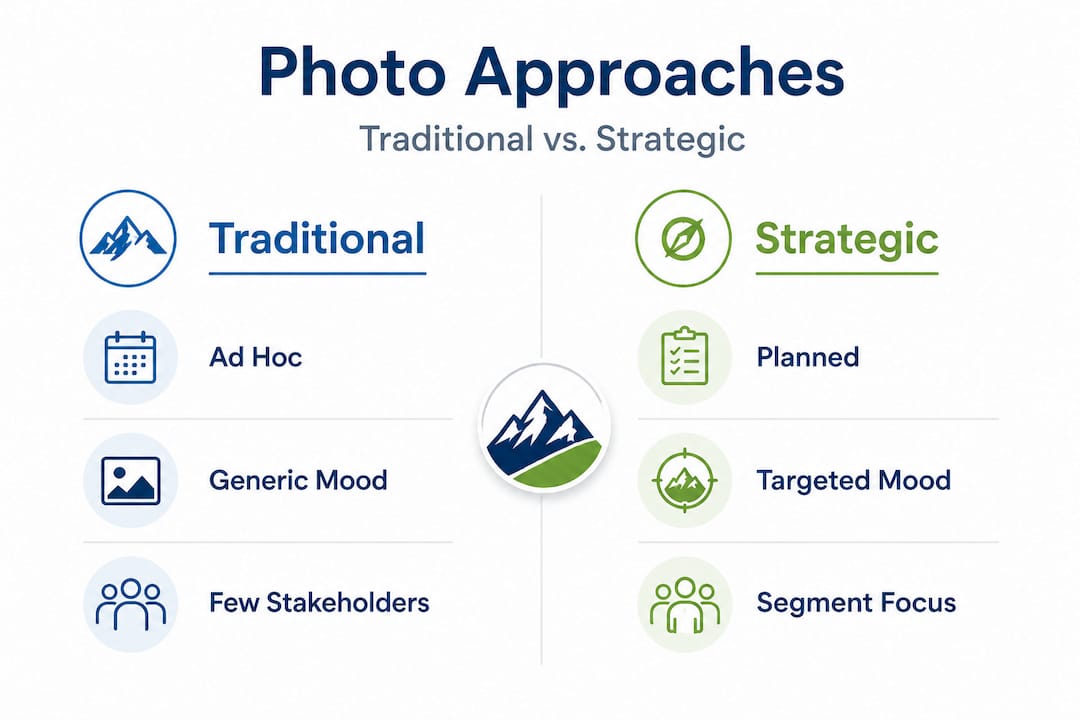
| Factor | Traditional approach | Strategic approach |
|---|---|---|
| Pre-shoot planning | Minimal or ad hoc | Detailed moodboards and shot lists |
| Audience targeting | Generic wide appeal | Segment-specific (families, adventure seekers) |
| Licensing | Project-specific | Unlimited multi-channel use |
| Asset variety | Single format | Web, print, social, partner-ready |
| Campaign alignment | Visual preference | Conversion and ROI focused |
| Authenticity balance | Polished only | Mix of aspirational and real |
Segment targeting is where good campaigns become great ones. An image that resonates with luxury eco-travelers features different elements than one designed for weekend mountain bikers or family adventure campers. When you invest in outdoor imagery with a photographer who understands your specific audience, you cut through the noise rather than adding to it.
Steps for aligning visual assets with campaign objectives:
- Define your target segment first before any creative briefing
- Build a moodboard that reflects the emotional tone and visual language your segment responds to
- Create a shot list organized by platform, use case, and content priority
- Brief the photographer on campaign goals, not just aesthetic preferences
- Negotiate licensing upfront to secure unlimited multi-channel use
- Plan for content repurposing across web, social, email, and partner campaigns
- Review and categorize assets using the Imagery Diagnosis Model before publishing
Pro Tip: Always insist on segment-driven moodboards before approving a shoot brief. Brands that skip this step consistently report lower engagement rates and higher post-production revision costs. A moodboard is not a nice-to-have creative exercise. It is a strategic alignment tool.
Working with outdoor photographers in Switzerland who operate in demanding alpine and adventure environments adds another layer of value. They understand the unpredictability of outdoor conditions and plan for contingencies in ways that studio-focused photographers simply cannot.
Human element and risk management: Nuances in outdoor adventure campaigns
After discussing frameworks, it is crucial to address the deeper nuances and risks unique to adventure and outdoor tourism campaigns. Getting the human element right is one of the most underestimated challenges in this space.
Edge cases to manage carefully: Aligning self-presentation with tourist perceptions via Instagram analysis helps avoid expectation mismatches; incorporating human elements strategically enhances destination relatability; and managing safety in risky adventure shoots is non-negotiable. These are not minor logistical footnotes. They are campaign-critical decisions.
Instagram-based audience analysis has become a practical research tool for photographers and campaign managers alike. By reviewing how your destination is currently being portrayed by travelers, you can identify gaps between your brand narrative and actual visitor experience. Closing that gap before a campaign launches protects brand trust and reduces the risk of backlash.
The human element debate is a real one in outdoor tourism photography. Aspirational images featuring elite athletes completing difficult technical routes can inspire, but they can also alienate the average adventure traveler. Authentic images of real people in relatable outdoor situations often generate stronger engagement and more qualified bookings.
“Strategic incorporation of people in outdoor destination imagery enhances relatability and emotional connection, making destinations feel accessible rather than intimidating to the target traveler.”
Key considerations for human element decisions in adventure shoots:
- Who your model represents: Age, skill level, and appearance should reflect your target audience
- Activity difficulty level: Match the challenge shown to what your actual guests can achieve
- Emotional expression: Joy and camaraderie outperform stoic intensity for most family and leisure segments
- Group vs. solo imagery: Each communicates a different travel experience and attracts different buyers
Safety management is another area where experienced adventure photographers prove their worth. Shooting in remote alpine environments, fast-moving rivers, or technical climbing locations requires active safety best practices for campaign shoots and clear risk protocols. Inexperienced photographers in these environments create liability exposure for brands, not just logistical headaches.
Pro Tip: Before approving any adventure shoot location, validate your shot concepts with a sample of your actual target audience. Even a quick online poll or focus group review can surface expectation mismatches that would be costly to correct after production. This also applies to your guide to event photography, where crowd safety and dynamic conditions require the same level of foresight.
Maximizing ROI: From conversion uplift to sustainability messaging
With methodology and nuance covered, let’s look at how these efforts translate into measurable results and strategic global messaging. The numbers here are genuinely compelling.
Conversion increases of 15-30% have been observed across 30 or more property and destination shoots where professional photographers replaced generic stock or low-quality imagery. That is not a marginal improvement. A 15% lift in booking conversions for a mid-sized outdoor resort can represent hundreds of thousands of dollars in annual revenue.
Campaign performance: Professional photography by channel
| Channel | Key benefit | Typical engagement lift |
|---|---|---|
| Website hero images | Reduces bounce rate, increases time on page | 20-35% |
| Instagram and social | Higher saves, shares, and story interactions | 25-40% |
| Email campaigns | Improved click-through to booking pages | 15-25% |
| Partner co-marketing | Premium brand positioning in joint campaigns | Qualitative |
| Print and OOH | Destination authority and trust signals | Long-term brand value |
One shoot can realistically generate assets for every channel in that table. When a photographer plans intentionally for multi-format output, you walk away with hero images, mobile-first vertical crops, wide establishing shots, intimate detail images, and action sequences. All from a single production budget.
Videography’s impact on marketing compounds these returns significantly. Still photography and short-form video captured in the same outdoor session create a content ecosystem that stretches campaign investment across months of publishing.
Sustainability messaging is increasingly central to premium outdoor tourism campaigns. Sustainability-driven campaigns that pair compelling visual storytelling with clear environmental values attract high-value travelers who spend more, stay longer, and generate stronger word-of-mouth. Photographers who understand this dynamic actively frame environmental responsibility into their compositions.
Effective strategies for maximizing asset use and campaign return:
- License for unlimited multi-channel use to avoid costly renegotiations
- Brief for format variety from the start, not as an afterthought
- Pair still and video assets for maximum platform coverage
- Schedule seasonal reshoots rather than relying on a single dated library
- Embed sustainability narratives visually through location choice and subject framing
- Repurpose across partner channels to extend campaign reach without additional production cost
Authenticity, UGC, and campaign innovation: Present and future trends
Finally, evolving trends shape how photographers deliver value. Let’s explore future directions and innovations that marketing professionals need to understand now.
User-generated content has shifted from a nice bonus to a core campaign strategy for many outdoor tourism brands. Travelers trust images taken by other travelers more than brand-produced content in many categories. The authenticity signal of imperfect, real-world imagery is genuinely powerful for building audience trust.
Contrasting viewpoints are instructive here: while professional photography drives direct ROI via conversions, innovative campaigns like Iceland’s “Worst Photographer” emphasize scenery overpowering skill, prioritizing UGC authenticity over perfection. Iceland paid $50,000 to a deliberately unskilled photographer to prove that the destination is photogenic enough to sell itself regardless of technical quality. That is a bold, expensive experiment, and it worked.
The lesson is not that technical skill does not matter. It is that the authenticity signal matters enormously. Smart campaigns blend both. Top campaign photographers now actively collaborate with UGC creators, providing location access, styling guidance, and sometimes equipment, to generate a hybrid content library that combines professional quality anchors with authentic community content.
Present and future trends in outdoor tourism campaign photography:
- Hybrid campaigns that pair hero professional imagery with curated UGC for social layers
- Creator partnerships where photographers mentor UGC contributors on location
- Vertical-first production driven by Reels, TikTok, and Stories consumption habits
- Real-time content capture at events and adventures for same-day publishing
- AI-assisted shoot planning for location scouting, light prediction, and crowd modeling
- Immersive 360-degree photography for virtual experience previews on destination websites
- Micro-influencer activations guided by professional creative direction
The photographers who thrive in this environment are those who understand both the technical craft and the content strategy landscape. They are not just photographers. They are visual campaign partners.
What most tourism campaign guides overlook: The photographer’s strategic mindset
Here is the perspective seldom found in conventional guides: the biggest gap in outdoor tourism campaign performance is not budget. It is not even image quality. It is strategic alignment between what the photographer is capturing and what the campaign actually needs to accomplish.
Most brands brief photographers on aesthetics. The best brands brief photographers on objectives. There is a massive difference between telling a photographer “we want dramatic mountain shots” and telling them “we need to increase bookings from 35 to 50-year-old adventure travelers who want challenge without extreme technical difficulty.” The second brief produces a campaign. The first produces a photo album.
Experienced adventure branding with sports photographers reveals something important: the photographers who consistently deliver exceptional campaign results ask more questions about audience and goals than about locations and schedules. They think in terms of conversion triggers, not composition alone.
Risk management thinking is equally undervalued. A photographer who has spent seasons shooting in genuine alpine and backcountry environments brings embedded safety awareness that protects your crew, your talent, and ultimately your brand. One incident during a campaign shoot can undo months of planning and generate the kind of media attention nobody wants.
The hard-won lesson across successful outdoor campaigns is this: audience understanding trumps photographic perfection every time. A perfectly exposed image of the wrong experience for the wrong segment will underperform every single time against a slightly imperfect but emotionally resonant image that speaks directly to your buyer. Choose photographers who chase that emotional truth, not just technical excellence.
Take your tourism campaign visuals to the next level
Ready to apply these insights to your own campaign? The gap between a good campaign and a great one often comes down to who is behind the camera and how strategically they approach your brief.
Martin Bissig is a Switzerland-based action and outdoor photographer with a proven track record delivering campaign-ready imagery for adventure brands, tourism destinations, and editorial clients across Europe and beyond. His background as a Canon ambassador and his extensive experience in mountain biking, alpine expeditions, and outdoor adventure shoots make him uniquely qualified to deliver the kind of strategic visual storytelling this article describes. To find an action photographer with genuine adventure credentials and a campaign-first mindset, or to access a complete outdoor guide for planning your next shoot, explore the resources available at bissig.ch and take the first step toward campaign visuals that actually convert.
Frequently asked questions
What frameworks do photographers use to select images for tourism campaigns?
The Imagery Diagnosis Model is commonly used to categorize images as treasures, hidden gems, traps, or roadblocks, guiding strategic campaign selection and ensuring only the most effective images reach your audience.
Why should brands insist on moodboards and shot lists for campaign shoots?
Moodboards and shot lists ensure that photography aligns precisely with campaign goals and target guest segments, resulting in fewer reshoots, stronger creative consistency, and higher conversion rates.
How does professional tourism photography drive direct ROI?
Professional photography can increase conversion rates by 15-30% and generates a versatile asset library that amplifies engagement across web, social, email, and partner channels simultaneously.
What are best practices for managing risk in adventure tourism shoots?
Validating shot concepts with your target audience and implementing clear safety protocols for shoots are both essential to avoiding expectation mismatches and protecting crew and talent in challenging outdoor environments.
How are UGC and authenticity trends changing tourism photography?
Innovative campaigns now blend professional photography with authentic UGC, with some brands like Iceland prioritizing scene over skill to connect more naturally with modern travelers who value realness over polish.
Recommended
- Why collaborate with outdoor photographers: boost your brand
- Why choose a sports photographer for adventure branding – Martin Bissig
- Why invest in outdoor imagery: enhance your brand’s impact
- The role of a photojournalist in outdoor storytelling – Martin Bissig
- Discover local London: Why exploring beyond tourist spots matters – The London Journal | London Vacation Guide


