

Most outdoor brands pour serious resources into product development and distribution, then quietly hope that a few smartphone shots will do the job on Instagram. They won’t. Research in adjacent industries shows that only 35% of agents currently use professional photography, which tells you exactly how much whitespace exists for brands willing to do it right. If you’re a marketing manager or editor at an outdoor brand, you already know visuals carry your message. What you may not fully realize is how much professional photography changes the actual results.
Table of Contents
- The difference professional photography makes for outdoor brands
- In-house photos vs. professional photography: What’s really at stake?
- Professional photographers unlock multi-channel storytelling
- Choosing the right professional photographer: What matters most
- Why many outdoor brands are still missing the mark
- Unlock your brand’s visual advantage with professional outdoor photography
- Frequently asked questions
Key Takeaways
| Point | Details |
|---|---|
| Pro photography boosts trust | Professional visuals signal credibility and quality across all brand touchpoints. |
| Storytelling spans every channel | Working with pros ensures your imagery elevates web, social, and ad campaigns alike. |
| ROI extends beyond the photo shoot | Images crafted by experts drive long-term results, not just short-term visual gains. |
| Choosing the right partner matters | Finding a photographer who understands your brand is key to maximizing impact. |
| Market opportunity remains untapped | Brands who act now gain visual advantages others are missing. |
The difference professional photography makes for outdoor brands
While most marketers recognize the importance of good visuals, many overlook the measurable benefits professionals offer in every campaign touchpoint. The gap between “nice photos” and “brand-building imagery” is wider than most teams assume, and the consequences show up everywhere from click-through rates to wholesale buyer meetings.
Professional images boost brand credibility, audience trust, and visual consistency across every platform your brand touches, including websites, paid social, emails, and pitch decks. That consistency is not a luxury. It is the mechanism by which audiences recognize and trust you on first contact, second contact, and every interaction after that.
Here is what separates professional outdoor photography from the alternatives:
- Technical mastery in real conditions. Mountain light changes in minutes. A professional knows how to read it, adapt, and still deliver a shot that looks deliberate rather than accidental.
- Narrative control. Every image tells a story about your brand’s values. A pro captures the emotion of effort, the scale of the environment, and the aspiration your product enables.
- Adaptable output. Professionals shoot with post-production and multi-format use in mind, giving you clean crops for vertical social, wide-angle hero shots for web banners, and tight detail shots for email headers.
- On-location problem solving. Weather delays, permit issues, athlete logistics. Experienced outdoor photographers have handled all of it before and won’t freeze when conditions shift.
“Brands that invest in professional photography present a more credible, consistent identity that resonates across every digital touchpoint.” This is not an abstract principle. It shows up in reduced bounce rates, higher engagement, and more favorable retail placement conversations.
| Marketing touchpoint | Impact of professional photography | Common in-house photography outcome |
|---|---|---|
| Website hero images | Communicates scale, aspiration, brand quality instantly | Often flat, poorly lit, lacks narrative |
| Paid social ads | Higher click-through rates, stronger scroll-stopping power | Generic feel, blends into feed noise |
| Pitch decks and lookbooks | Elevates perceived brand value with buyers | Undermines credibility with low resolution or bad composition |
| Email campaigns | Drives open-to-click conversion through visual intrigue | Forgettable, gets scrolled past quickly |
| Editorial submissions | Gets published, earns brand exposure | Often rejected by editors for technical quality |
Understanding why collaborating with outdoor photographers consistently outperforms in-house efforts starts with accepting that technical skill is just the baseline. The real value is strategic storytelling built into every frame. Investing in outdoor imagery is not a one-time spend. It is a brand infrastructure decision that compounds over time.
In-house photos vs. professional photography: What’s really at stake?
Knowing that credibility and consistency matter, the next logical step is to ask: are your current images really delivering, especially compared to what professionals capture?
The honest answer for most outdoor brands is no. And the gap is not just aesthetic. It’s strategic. Low professional photography adoption across industries shows that the brands willing to prioritize professional imagery gain a significant competitive advantage simply by looking more credible than their peers.
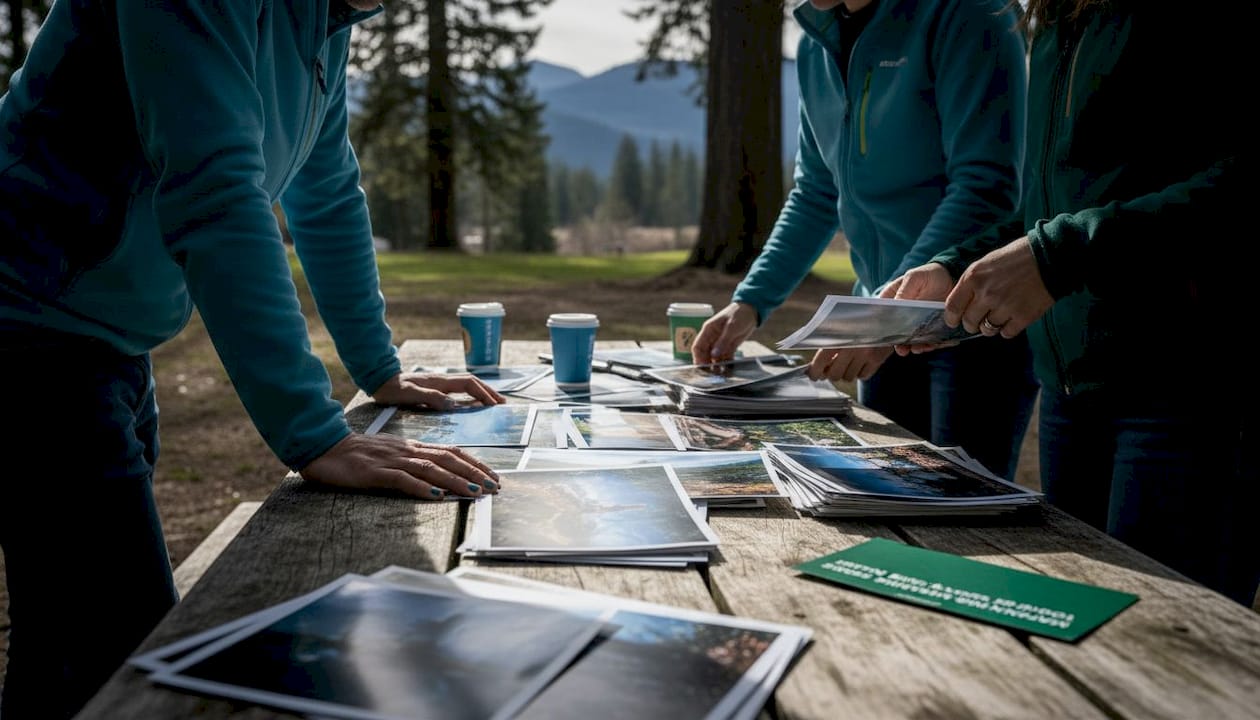
Here is a direct comparison of outcomes between in-house and professional photography:
| Factor | In-house / smartphone | Professional photographer |
|---|---|---|
| Image consistency across channels | Low, varies by team member and device | High, controlled by brand brief and professional standards |
| Post-production quality | Often over-filtered or unedited | Calibrated for platform-specific display |
| Usage rights and file formats | Unclear, often limited resolution | Full commercial licensing, multiple formats |
| Storytelling depth | Captures the product, misses the experience | Captures both the product and the emotional context |
| Time investment | Appears lower but scales poorly | Higher upfront, but output volume and quality both scale |
| Long-term ROI | Difficult to measure, often mixed | Trackable across campaigns and platforms |
To make the comparison real, consider these practical steps when evaluating whether your current imagery is performing:
- Pull your last three ad campaigns and check which images drove the most engagement. Are they professional or in-house?
- Look at your website bounce rate on pages dominated by in-house photos versus pages anchored by professional imagery.
- Ask your last two retail buyers what they thought of your lookbook. Their reaction to the visuals often reflects the quality of the photography directly.
- Compare time spent by your internal team sourcing, shooting, and editing in-house content versus the deliverable volume from a single professional shoot.
- Check editorial submissions. If your pitches are getting rejected or ignored, image quality is often the first filter editors apply.
Pro Tip: The most efficient approach is not to choose between in-house and professional. Shoot your hero campaigns and editorial work with a pro, then use in-house content for behind-the-scenes and community-facing social posts. This combination keeps your brand looking polished at critical moments while maintaining authentic day-to-day presence.
Working with sports photographers who specialize in your niche delivers something no generalist can offer. They understand what makes a mountain bike rider’s body position look powerful, what light direction makes a whitewater rapid look dramatic, and which moment in a climbing sequence reveals the emotion your audience wants to feel.
Professional photographers unlock multi-channel storytelling
Brands that turn to pros see measurable impact across all channels. Let’s break down what a well-executed professional image strategy actually activates.
A single high-production outdoor shoot, planned and executed by an experienced photographer, can produce content that fuels your entire marketing calendar. That is not an exaggeration. A structured shoot can generate professional images for websites, emails, ads, and pitch decks simultaneously, each version pre-planned for its specific platform. The efficiency gains alone often justify the investment.
Here is how multi-channel output from a single shoot typically breaks down:
- Website: Wide landscape shots for hero banners, athlete close-ups for product pages, environmental detail shots for About and Story pages.
- Paid social and display ads: Vertical crops for Instagram Stories and Reels, square crops for feed posts, attention-grabbing compositions for Facebook and YouTube banner ads.
- Email marketing: Action sequences for campaign headers, lifestyle detail shots for product feature sections, cohesive sets that maintain visual brand identity across a full email series.
- Retail and trade: High-resolution catalog images, lookbook spreads, and tradeshow display panels that require print-quality resolution.
- Editorial pitches: Story-driven sequences with emotional narrative that magazine editors can select from and build an article around.
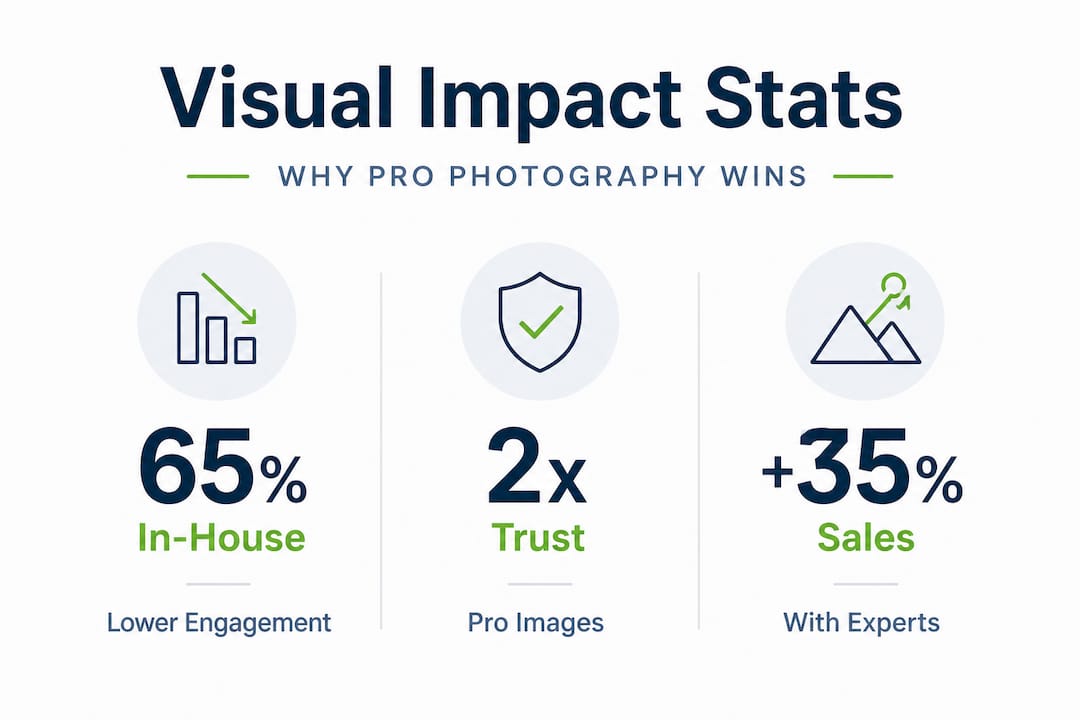
Visual fact: Across industries, more than 65% of brands still rely primarily on in-house images for their marketing content. That means brands that invest in professional photography stand out immediately, not just to consumers but to editors, buyers, and partners evaluating them for collaboration.
The role of photojournalism in outdoor storytelling is particularly relevant here. The best outdoor photographers don’t just document what happened. They build a visual narrative that audiences follow, where the tension of the climb, the payoff of the summit, and the camaraderie of the team all read clearly in a sequence of still images. That narrative pull is what separates scroll-stopping content from content that gets skipped.
Understanding outdoor photography techniques at even a basic level helps marketing teams brief photographers more effectively, resulting in shoots that deliver exactly what the brand needs rather than what the photographer defaults to.
Choosing the right professional photographer: What matters most
Once convinced of the value, your biggest lever is picking a photographer who can authentically translate your brand’s story to imagery.
Professional photography is not a commodity. The difference between a competent generalist and a specialized outdoor and action photographer is enormous, and that difference shows up in the final images, the shoot efficiency, and the ease of the creative relationship. Here is how to evaluate your options with confidence:
Checklist for evaluating photographer fit:
- Portfolio depth in your specific outdoor category (mountain biking, climbing, skiing, kayaking, trail running)
- Evidence of shooting in real, uncontrolled outdoor conditions rather than staged studio environments
- Client testimonials or case studies that reflect brand marketing outcomes, not just artistic awards
- Clear communication style and ability to interpret a creative brief
- Licensing and usage rights that match your distribution needs
- Experience working with athletes and models in dynamic outdoor settings
Top screening questions to ask before booking:
- Can you walk me through how you planned and executed your last commercial outdoor shoot?
- How do you handle unexpected weather, location changes, or athlete availability issues?
- What does your deliverable package include, and how are files formatted for multi-platform use?
- Can you share examples of work that was used in paid advertising or retail contexts?
- What is your approach to briefing and creative collaboration before the shoot?
Setting clear brand goals before your photographer even touches a camera is just as important as the technical work itself. Define your target audience, the emotion you want the imagery to convey, the products or experiences to feature, and the platforms where images will live. Photographers who specialize in outdoor and adventure work can then reverse-engineer the shot list from those goals.
Learning to develop sharper action shots requires deep knowledge of timing, light, and subject control. These are skills built over years of outdoor work, not something you can replicate by handing a capable employee a better camera.
Pro Tip: Always ask to see real-world client results, not just portfolio images. A photographer’s portfolio shows their best work in ideal conditions. Their client results show how that work performed in actual campaigns, with real budgets, timelines, and creative constraints. That is the data that matters. Understanding streamlined outdoor photo workflows also helps you ask smarter questions about turnaround times and file delivery.
Why many outdoor brands are still missing the mark
Despite all the evidence, most outdoor brands still underinvest in professional photography. The reasons are predictable. Budgets feel tight, internal teams are capable enough with smartphones, and the return on photography investment is harder to attribute directly than a paid ad click. Those justifications feel reasonable on paper. In practice, they are costing brands real opportunities every day.
The uncomfortable truth is that “good enough” imagery is not neutral. It actively signals that your brand does not take its own identity seriously. Retailers notice. Editors notice. Consumers scroll past. The market whitespace created by low professional photography adoption means that brands choosing to invest right now are gaining ground on competitors who are still rationalizing the status quo.
Two myths keep outdoor marketing teams stuck. First, the belief that professional photography is a one-time expense that does not compound. In reality, a well-executed shoot generates evergreen content that performs across campaigns for years. The cost per use drops significantly when you calculate it over a 24-month content cycle.
Second, the assumption that your audience cannot tell the difference. They can. And more importantly, they feel the difference before they consciously process it. Professional outdoor imagery creates a visceral response, a sense of aspiration and credibility, that in-house photos simply do not generate at the same scale or consistency.
The brands that win in outdoor marketing are not necessarily the ones with the biggest advertising budgets. They are the ones whose imagery makes their audience feel something immediately. That is a product of craft, experience, and intentional storytelling, which is exactly what professional outdoor photographers bring to every project. Reviewing the measurable impact of outdoor imagery on brand performance makes the case clearly: this is not a creative luxury, it is a strategic asset.
Unlock your brand’s visual advantage with professional outdoor photography
Your brand’s visual identity is one of the most powerful competitive tools you have. The good news is that building it does not require a complete overhaul of your marketing approach. It requires the right creative partner.
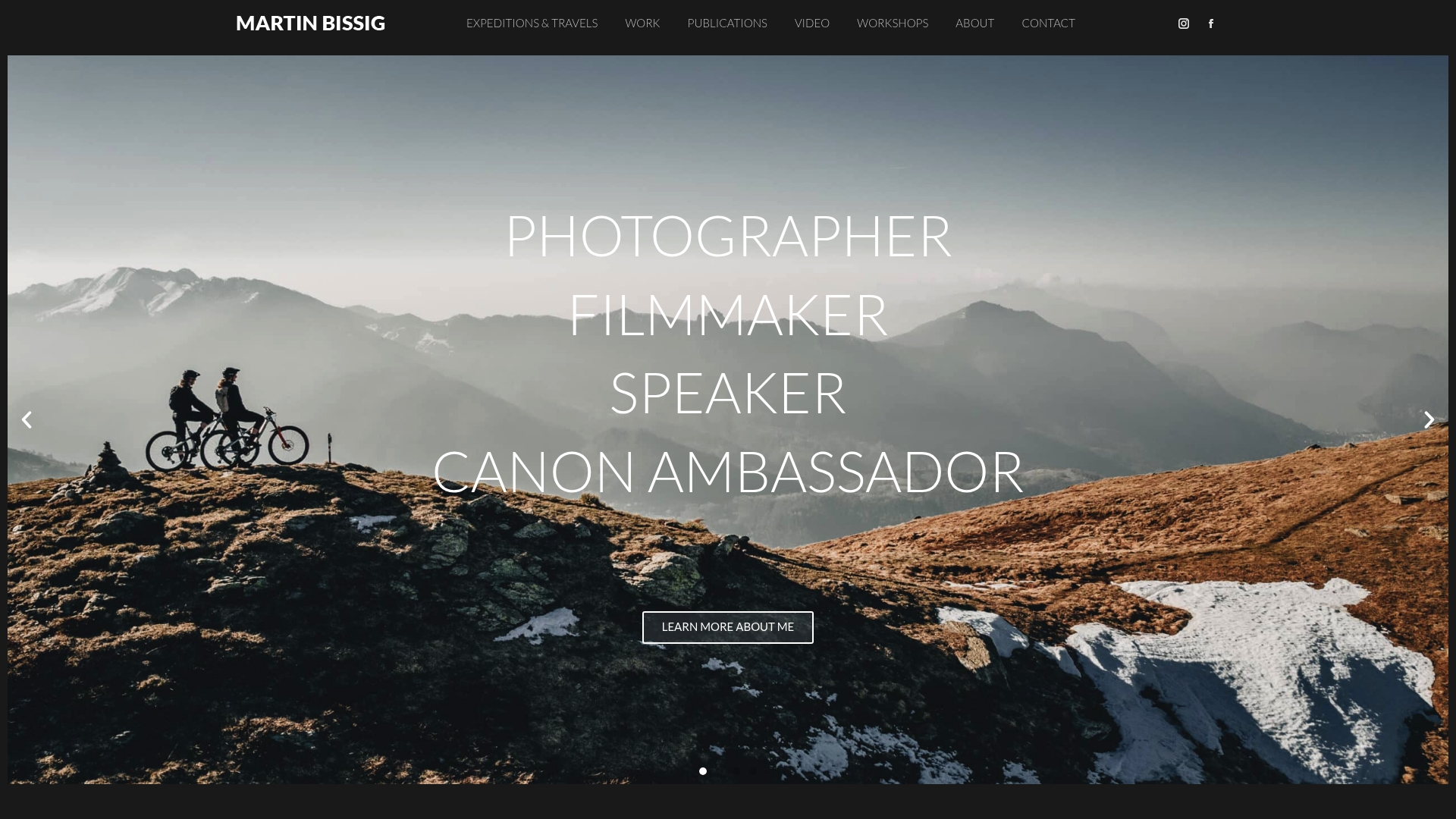
Exploring outdoor photography expertise from professionals who have built careers shooting in some of the world’s most demanding environments gives your brand access to imagery that no amount of internal effort can replicate. Whether you’re planning a major campaign shoot, need editorial-grade images for a product launch, or want to strengthen your visual storytelling across channels, working with a pro outdoor photographer gives you a measurable advantage in every conversation with editors, buyers, and your core audience. Discover how the benefits of collaboration with an experienced outdoor photographer translate directly into stronger brand results and more compelling visual content across every channel you manage.
Frequently asked questions
What makes professional outdoor photography different from DIY?
Pros bring technical and storytelling skills built through years of shooting in real outdoor conditions, which elevates brand image far beyond what typical in-house photos can deliver, even with good equipment.
How does professional photography impact multi-channel marketing?
It delivers consistent, high-quality visuals that perform across web, social, paid ads, and email, boosting brand recognition because professional images support multi-channel marketing in formats and compositions optimized for each platform.
Is hiring a professional photographer worth the ROI?
Yes. Professional images boost brand credibility and audience trust, which drives higher engagement rates, stronger conversion, and better placement outcomes with retailers and editorial partners.
What if our brand has a small budget?
Strategic investment in one or two high-priority shoots per year, with low professional adoption across your competitive landscape giving you a clear edge, delivers outsized returns when you prioritize hero campaigns and supplement with in-house content for daily social use.


