

Motion photography is the art of capturing movement within a single still image by controlling shutter speed and the relative motion between camera and subject. The result is a spectrum of effects: frozen action, flowing blur, or the sharp-subject-against-streaked-background look that defines great panning shots. Unlike static portraiture or landscape work, motion photography forces you to think in time, not just in light. Shutter speed becomes your primary creative tool, and every decision you make about exposure duration shapes whether a cyclist looks suspended in air or dissolves into a streak of color. Gear from brands like Canon and support systems from Manfrotto play a direct role in how reliably you can execute these effects.
What is motion photography and why does it matter?
Motion photography is defined as any photographic approach that intentionally uses exposure duration and movement to produce a visual representation of motion within a single frame. The industry also calls this “dynamic photography” when the emphasis is on conveying energy and action rather than a specific technical method. Both terms describe the same core discipline: using your camera’s time window to tell a story about movement.
The significance goes beyond aesthetics. Sports editors, outdoor brands, and advertising agencies consistently choose motion-driven images over static ones because they communicate speed, effort, and emotion in a way that a frozen frame sometimes cannot. A mountain biker frozen mid-air tells you what happened. A mountain biker with a blurred background and sharp body tells you how fast it felt. That distinction is the entire creative argument for learning these techniques.
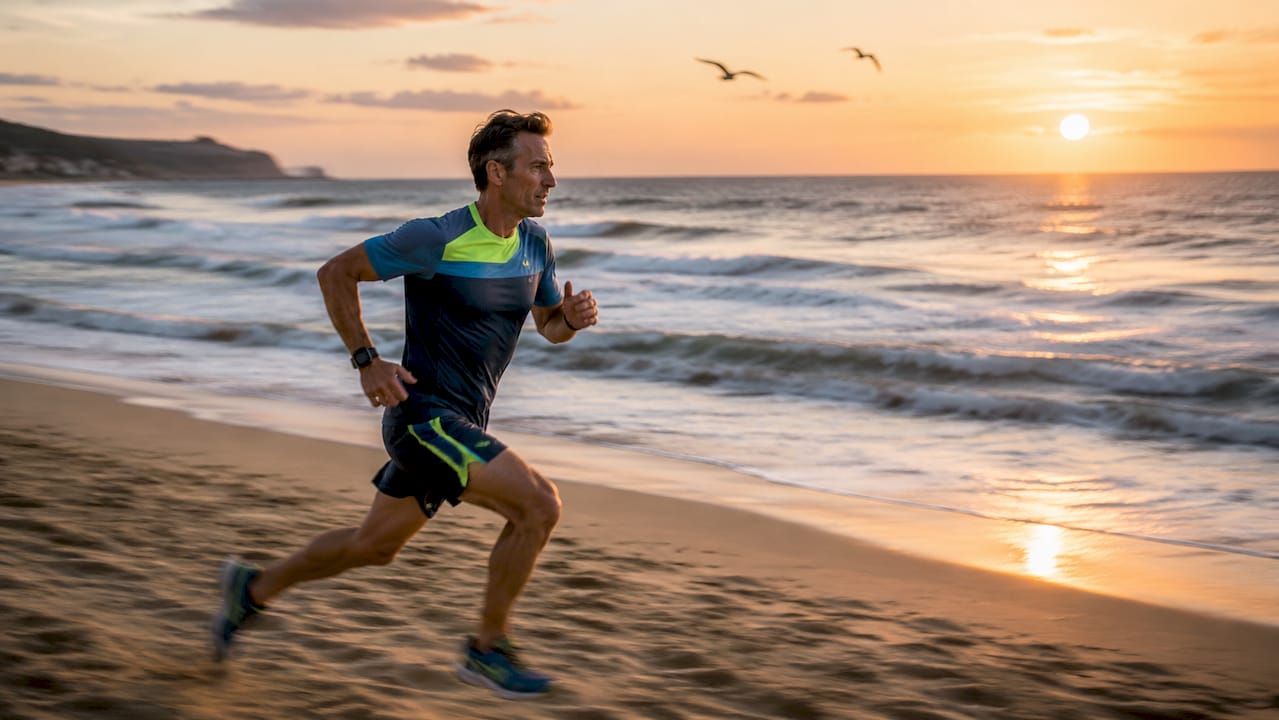
Shutter speed acts as a time window that controls how much motion is captured in a frame, either freezing it, blurring it, or partly canceling it. This single concept underpins every technique covered in this guide. Once you internalize it, the rest follows logically.
What is motion blur in photography and how does it work?
Motion blur results from relative movement) between subject and camera during exposure, causing streaking along the direction of motion. The camera sensor records every position the subject occupies during the exposure window and integrates them into one smeared image. The longer the exposure, the more positions are recorded, and the more pronounced the blur.
Think of it this way: a shutter speed of 1/1000s captures roughly one millisecond of reality. A shutter speed of 1/15s captures 66 milliseconds. A sprinter moving at 10 meters per second travels about 0.66 meters during that longer exposure. That distance becomes the length of the blur trail on your sensor.
The table below shows how shutter speed choices translate into practical blur effects across common subjects:
| Shutter speed | Subject effect | Best for |
|---|---|---|
| 1/2000s and faster | Complete freeze, zero blur | Birds in flight, motorsport |
| 1/500s to 1/1000s | Frozen action, sharp detail | Running athletes, cycling |
| 1/60s to 1/125s | Slight blur on fast elements | Panning shots, urban movement |
| 1/15s to 1/30s | Strong blur, subject may smear | Waterfalls, light trails |
| 1s and slower | Full motion trails, abstract effects | Star trails, ICM, long exposure water |
Motion blur can separate subject from background and adds dynamic, artistic qualities to photos, functioning similarly to bokeh in the way it draws the eye to what matters. This is the reason professional outdoor photographers use slow shutter speeds deliberately, not as a mistake to fix in post-processing.
Pro Tip: Set your camera to Shutter Priority (Tv or S mode) when learning motion blur. You control the time window directly, and the camera handles aperture. This lets you focus entirely on the relationship between shutter speed and the movement in front of you.
What are the main techniques used in motion photography?
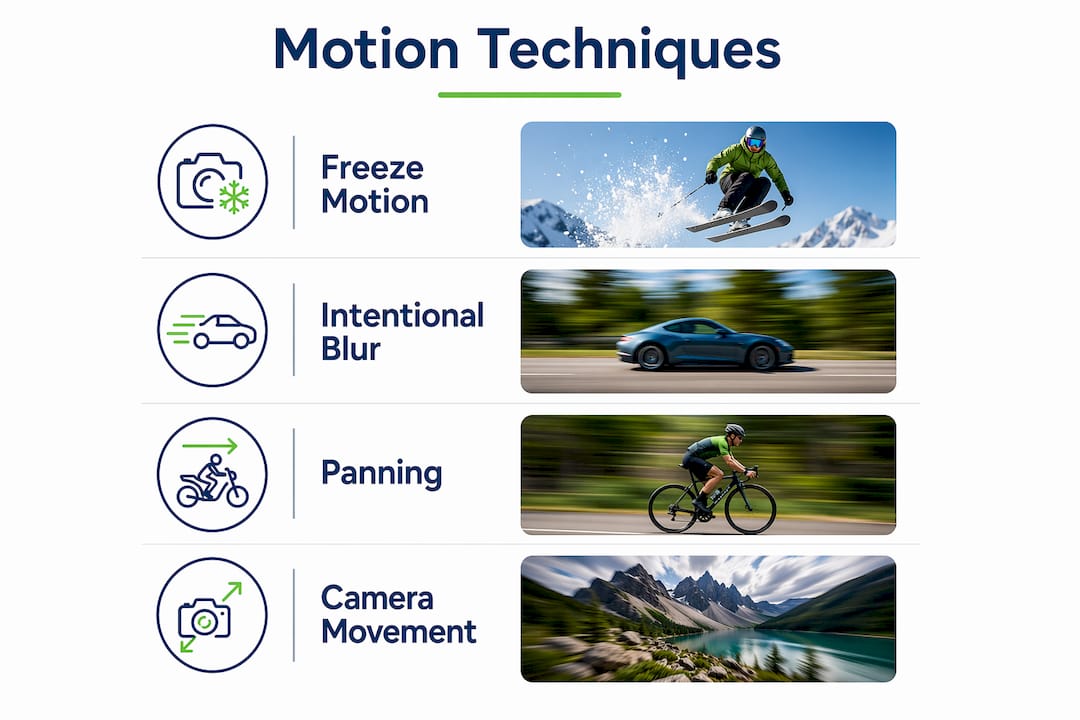
Motion photography techniques fall into four main categories, each producing a distinct visual result. Understanding the differences lets you choose the right approach before you raise the camera, not after you review the shots.
Freezing motion uses fast shutter speeds, typically 1/500s or faster, to eliminate all visible blur. The subject appears suspended, every detail sharp. This is the default mode for sports photography and wildlife work where clarity of action is the editorial priority.
Intentional motion blur does the opposite. You use a slow shutter speed while the camera stays fixed on a tripod, allowing moving subjects to streak across the frame. Waterfalls, traffic light trails, and crowd scenes are classic applications. The stationary elements stay razor sharp while everything in motion becomes fluid and painterly.
Panning is the technique most associated with conveying speed. Panning requires camera tracking of the subject during exposure to create a sharp subject against a blurred background. Typical panning shutter speeds range from 1/30s to 1/60s, which is slow enough to blur the background but fast enough to keep the subject recognizable if your tracking is smooth. The effect communicates velocity in a way that a frozen frame never can.
Intentional Camera Movement (ICM) is the most experimental of the four. ICM moves the camera during exposure to produce abstract, painterly effects. Typical shutter speeds for ICM run from 1/20s to 1/2 second, and the direction and speed of your camera movement determine the final aesthetic. A vertical sweep through a forest produces something that looks like an oil painting. A horizontal drag across city lights creates neon ribbons.
Here is a quick comparison of all four techniques:
| Technique | Shutter speed range | Subject result | Background result |
|---|---|---|---|
| Freeze motion | 1/500s or faster | Sharp, frozen | Sharp |
| Intentional blur | 1/15s to several seconds | Blurred, streaked | Sharp (on tripod) |
| Panning | 1/30s to 1/60s | Sharp | Blurred, streaked |
| ICM | 1/20s to 1/2s | Abstract | Abstract |
Pro Tip: For panning, pre-focus on the spot where the subject will pass rather than relying on continuous autofocus. Lock focus, then track the subject through the frame. This eliminates the half-second lag that causes most failed panning attempts.
How to do motion photography: practical tips and gear
Getting started with motion photography does not require a camera upgrade. It requires understanding your existing gear and making deliberate choices about settings and support.
-
Use a camera with full manual or shutter priority control. Any modern mirrorless or DSLR body from Canon, Nikon, Sony, or Fujifilm gives you this. The ability to set exact shutter speeds is non-negotiable for consistent results.
-
Invest in a sturdy tripod for blur and long-exposure work. A tripod and remote shutter release eliminate camera shake that would otherwise contaminate your intentional blur with random, ugly movement. Manfrotto and Gitzo both make tripods specifically rated for outdoor and action use.
-
Go handheld for panning. A tripod actually restricts the smooth horizontal tracking that panning requires. Stand with feet shoulder-width apart, rotate from the hips, and follow the subject through the full arc of its movement before and after pressing the shutter.
-
Match shutter speed to subject speed. A cyclist at 30 km/h needs a different shutter speed than a Formula 1 car at 300 km/h to produce the same blur effect. Start with the table in the previous section as a reference, then adjust based on your results.
-
Shoot in bursts. Panning success rates improve dramatically when you fire 5 to 10 frames per pass rather than a single shot. The action shots guide at Bissig covers burst mode strategies in detail for outdoor and sports contexts.
-
Review histograms, not just the image preview. A motion blur shot can look great on a small LCD but be badly overexposed. In bright outdoor conditions, use a neutral density (ND) filter to achieve slow shutter speeds without blowing out highlights.
The most common beginner mistake is choosing a shutter speed that is too slow for the subject speed, producing an unrecognizable smear rather than a controlled blur. The second most common mistake is panning with a tripod. Both are easy to fix once you understand why they happen.
The artistic and storytelling potential of motion photography
Motion photography is one of the few techniques where technical imperfection can become artistic strength. A slightly soft panning shot of a mountain biker still communicates raw speed. An ICM image of a forest that looks nothing like a forest can evoke atmosphere and mood that a sharp photograph never could.
The artistic decision in motion photography) is controlling what parts are sharp versus blurred, governed by shutter speed and relative motion. This is where the craft becomes genuinely expressive. Consider these creative applications:
- Sports photography: Freeze a ski jumper at peak height for editorial clarity, or pan a downhill racer to put the viewer in the moment. Bissig’s sports photography tips show both approaches applied to real mountain sports.
- Nature and water: A 1/2s exposure on a waterfall creates the silky flow effect that defines landscape photography. A 1/1000s exposure on the same waterfall freezes individual droplets into something almost violent.
- Urban motion: Long exposures of city streets at night turn traffic into light rivers. Pedestrians disappear entirely if they move through the frame quickly enough.
- Rear-curtain sync flash: Flash fires at the end of exposure, freezing the subject sharply while ambient light creates a trailing motion blur behind it. The result is a single frame that contains both sharpness and motion simultaneously.
“The most powerful motion images are not accidents. They are the result of a photographer who understood exactly what shutter speed would do to that specific subject at that specific speed, and chose it deliberately.”
ICM deserves special mention for photographers who feel constrained by the need for technical precision. Camera movement direction and speed in ICM dramatically affect the final image aesthetics, and experimentation is the only reliable method. You cannot predict the result exactly, and that unpredictability is the point. It forces you to work intuitively rather than technically, which builds a different kind of photographic eye.
Key takeaways
Motion photography requires deliberate control of shutter speed and relative motion to produce images that convey speed, flow, or dynamic energy through freeze, blur, panning, or ICM techniques.
| Point | Details |
|---|---|
| Shutter speed is the core tool | Every motion effect, from freeze to full blur, is controlled by how long the shutter stays open. |
| Panning needs smooth tracking | Effective panning depends more on steady subject tracking than shutter speed alone. |
| Tripods serve blur, not panning | Use a tripod for intentional blur and long exposures; go handheld for panning shots. |
| ICM rewards experimentation | Camera movement direction and speed produce unpredictable but artistically rich results. |
| Rear-curtain sync adds depth | Combining flash with slow shutter creates freeze and blur in a single frame for dramatic effect. |
Why shutter speed changed how I see every shot
The first time I genuinely understood shutter speed as a creative decision rather than a technical setting was during a mountain biking shoot in the Swiss Alps. I had been defaulting to 1/1000s because sharp was safe. Then I tried a panning sequence at 1/40s on a rider coming through a tight corner. The background dissolved into color, the rider stayed sharp, and the image looked like it was moving even when printed and pinned to a wall. That single roll of frames shifted how I approach every assignment.
What I have learned since is that most photographers spend too long in freeze mode. Freezing action is technically easier and editorially reliable, but it rarely produces the image that stops someone scrolling. The shots that get used by outdoor brands and magazines are almost always the ones where motion is visible, where the viewer can feel the speed or the flow. Panning and intentional blur are harder to execute consistently, but the hit rate improves fast with practice.
I also want to push back on the idea that ICM is a gimmick. Some of my most requested images from editorial clients are ICM shots of forests and mountain terrain. They work because they communicate atmosphere rather than information, and atmosphere is what sells adventure to an audience that has already seen ten thousand sharp action photos.
The gear matters less than the mindset. A Canon R-series body helps, but the decision to slow down your shutter speed and commit to the blur is entirely yours.
— Martin
Take your motion shots further with Bissig
Motion photography is where technical knowledge and artistic instinct meet, and the best way to accelerate that learning is to study work from photographers who shoot in demanding real-world conditions. Bissig specializes in outdoor action and sports photography across mountain, adventure, and travel environments, producing the kind of motion-driven imagery that outdoor brands and editorial clients actually use. If you want to understand how these techniques apply beyond the studio, the outdoor photography guide covers styles, techniques, and professional tips grounded in real field experience. For those ready to push into video and dynamic storytelling, the action videography resource connects motion photography principles directly to moving image work.
FAQ
What is motion photography in simple terms?
Motion photography is the practice of capturing movement within a still image by controlling shutter speed and the relative motion between camera and subject. The result can be a frozen action shot, a blurred streak, or a sharp subject against a blurred background.
What shutter speed should I use for motion blur?
Shutter speeds between 1/15s and 1/30s produce strong motion blur for most subjects. Faster subjects like vehicles may need speeds as slow as 1/60s to show visible blur, while slow subjects like waterfalls can blur at 1/4s or longer.
What is panning in motion photography?
Panning is a technique where you track a moving subject with your camera during exposure, keeping the subject sharp while the background blurs into horizontal streaks. Effective panning depends more on smooth subject tracking than shutter speed alone.
What is ICM photography?
Intentional Camera Movement (ICM) is a creative technique where the photographer deliberately moves the camera during a slow exposure to produce abstract, painterly effects. ICM typically uses shutter speeds between 1/20s and 1/2 second, with movement direction and speed shaping the final result.
Do I need special gear for motion photography?
A camera with manual or shutter priority mode is the only true requirement. A tripod from brands like Manfrotto or Gitzo adds precision for blur and long-exposure work, while a remote shutter release prevents camera shake during slow exposures.


