

Location selection defines the light quality, storytelling potential, and logistical feasibility of every outdoor photography or videography session. A poor location choice does not just limit your creative options. It can collapse an entire shoot day through unpredictable crowds, wrong-angle light, or permit violations. Understanding why location matters in outdoor shoots means treating it as the single most consequential pre-production decision you make, not an afterthought once gear is packed. This guide breaks down the creative, technical, and operational dimensions of location choice so you can plan with precision and shoot with confidence.
Why location matters in outdoor shoots: light, mood, and narrative
Location shapes natural light more directly than any other variable, including time of day. Two photographers 10 meters apart at the same sunrise can record completely different lighting because terrain, obstructions, and direction alter how light reaches the subject. That single fact reframes the entire importance of shooting location. You are not just choosing a backdrop. You are choosing a light source configuration.
Light direction determines whether your subject reads with depth and texture or goes flat. Side light from a canyon wall creates dramatic shadow separation on a mountain biker’s face. Front light from an open meadow produces soft, even tones ideal for editorial portraits. Back light from a ridge at golden hour wraps subjects in rim light that no studio strobe replicates convincingly. The terrain surrounding your subject acts as a natural reflector, diffuser, or blocker, and only the right location delivers the specific combination you need.
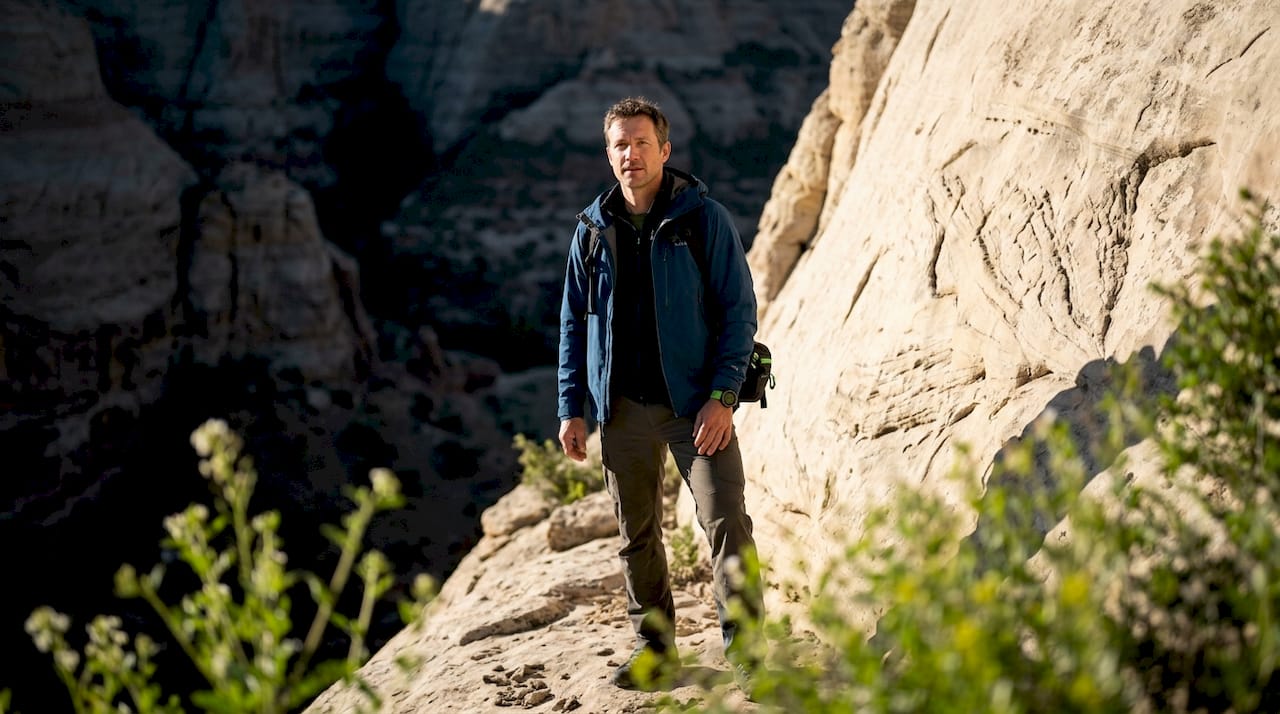
Cloud cover and landscape features compound this effect. A dense forest canopy creates open shade that functions like a giant softbox, while a reflective alpine lake bounces warm light upward onto faces. These conditions are location-specific. You cannot manufacture them on a different hillside or in a parking lot at the same time of day.
The impact of location on photography extends directly into visual storytelling. A location that matches the emotional tone of the story you are telling removes the need to force mood through post-processing. A crumbling industrial wall communicates tension and grit. A wildflower meadow in the Swiss Alps communicates freedom and scale. The location speaks before the subject does.
- Scout multiple viewpoints at the planned shoot time to understand how light shifts across the scene
- Identify open shade zones as fallback positions when direct sun becomes too harsh
- Note how surrounding terrain reflects or blocks light at different angles
- Check whether foreground elements like water, snow, or sand add fill light to the subject
Pro Tip: Visit your location at the exact time of day you plan to shoot, not just at a convenient hour. Light behavior at 7 a.m. and 10 a.m. at the same spot can differ by several stops of exposure and a full shift in color temperature.
Why scouting and recce are non-negotiable
Location scouting and a formal recce are distinct steps, and conflating them costs production time. Scouting is the creative assessment: does this place match the visual story? A recce is the technical and operational verification: can we actually shoot here safely, legally, and efficiently? Skipping or rushing the recce increases risk and leads to delays, extra cost, or compromised results on shoot day.
A thorough recce checks factors that no satellite image or Instagram geotag reveals:
- Terrain obstructions that block sunlight at your planned shoot time
- Power availability for charging batteries or running monitors on longer productions
- Noise sources like roads, construction, or water features that affect audio recording
- Access limitations including locked gates, seasonal closures, or restricted zones
- Crowd patterns at the specific hour you plan to shoot
Scouting at the same time of day as your planned shoot yields accurate predictions of both light quality and crowd density. This is the most underused location tip for outdoor shoots. Most photographers scout at a convenient time, then arrive on shoot day to find the light completely different and the location packed with tourists.
Pre-visualizing shots during the scout also reduces decision fatigue on the day itself. You arrive knowing your hero angle, your backup angle, and your contingency location if weather forces a pivot. That preparation directly translates to faster shooting, better coverage, and a calmer crew or client.
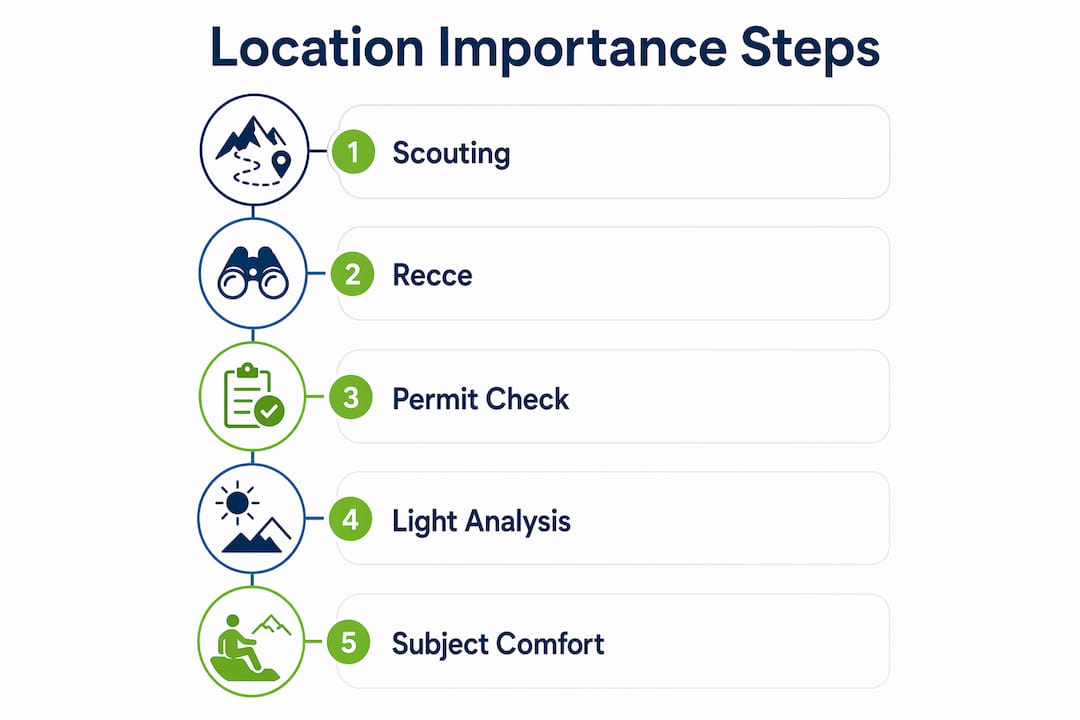
Pro Tip: Combine Google Earth for terrain analysis, The Photographer’s Ephemeris for sun angle prediction, and one in-person visit at shoot time. Each tool covers what the others miss.
How location shapes subject comfort and authentic expression
The shoot environment controls human behavior more than most photographers account for. A subject who feels exposed, cold, or physically uncomfortable will tense up, and that tension reads directly in portraits. Outdoor sessions scheduled around golden hour create a romantic, organic atmosphere that relaxes subjects and produces expressions no posing direction achieves alone. The location does the emotional heavy lifting.
Different outdoor settings support fundamentally different moods, and each mood shapes wardrobe, posing, and interaction:
- Urban environments create energy and movement, encouraging dynamic poses and candid street-style frames
- Forest or woodland settings produce intimacy and calm, supporting slower, more connected interactions between subjects
- Open mountain terrain generates a sense of scale and achievement, ideal for athlete and adventure brand shoots
- Coastal or waterfront locations introduce natural movement through wind and water, which loosens stiff posing organically
Movement space within the location matters as much as its visual character. A location with natural pathways, varied elevation, and multiple distinct zones lets subjects move freely between setups. That movement generates candid moments that static, confined spaces never produce. When a trail winds through a forest and opens onto a viewpoint, the transition itself becomes a shooting opportunity.
Privacy is a practical comfort factor that photographers underestimate. A busy public park forces subjects to perform in front of strangers, which creates self-consciousness. A quieter, less-trafficked location removes that pressure and produces more genuine expressions. Choosing the right outdoor setting is partly about controlling the social environment, not just the visual one.
Managing permits, logistics, and production factors
Outdoor shoot logistics hinge almost entirely on location choice. Permits, police support, parking, and drone permissions are all location-dependent variables that directly affect planning and budget. A location that looks perfect on a scout can become operationally impossible once permit requirements are factored in.
Crowd density creates a compounding problem. Popular outdoor areas can be constantly packed, and moving between locations takes longer than map estimates suggest. Schedule drift from underestimated transit times and crowd interference is one of the most common reasons outdoor shoots lose usable daylight. Every 15 minutes lost to a location move is 15 minutes of golden hour you cannot recover.
Budget implications of location choice are often invisible until shoot day. Consider these factors when evaluating any outdoor location:
- Permit fees, which vary from zero in remote wilderness areas to several hundred dollars per day in urban parks
- Parking and equipment transport costs, particularly for locations requiring long hikes with heavy gear
- Security or crowd management personnel for high-traffic public spaces
- Contingency time and cost built in for weather-forced location changes
Balancing creative ambition with operational feasibility is the core skill of outdoor production planning. A location that requires a two-hour permit process, a 45-minute hike, and a specific weather window is not automatically the wrong choice. It is a choice that demands more lead time and a tighter contingency plan.
Comparing location types for your shoot goals
Choosing between location types requires matching creative priorities against production constraints. The table below outlines the core trade-offs:
| Location type | Narrative strength | Light control | Logistical ease |
|---|---|---|---|
| Natural outdoor (wilderness) | Very high: raw, authentic, scale | Low: fully weather-dependent | Low: access, permits, no power |
| Urban outdoor | High: texture, energy, context | Medium: shade structures, reflections | Medium: permits, crowds, noise |
| Controlled outdoor (private land) | Medium: curated but less wild | Medium: predictable terrain, some shade | High: access, privacy, flexibility |
| Studio outdoor (branded set) | Low: artificial feel | High: full control | Very high: no permits, no crowds |
Combining studio and outdoor sessions in a single production day is a proven strategy. Controlled studio work in the morning handles product detail shots or portraits requiring consistency, while the outdoor location in late afternoon captures the natural light and environmental context that gives a brand campaign its authenticity. Neither location type alone delivers what both together achieve.
Natural wilderness locations produce the strongest narrative for adventure, sports, and outdoor brand content. They are also the hardest to manage. Controlled outdoor locations on private land offer a middle path: real environmental character without the logistical friction of public spaces. For photographers and videographers working with commercial clients, that trade-off often justifies the location fee.
Photographic storytelling depends on the environment reinforcing the narrative, not fighting it. When location type aligns with story intent, every frame works harder.
Key takeaways
Location is the single variable in outdoor shoots that simultaneously determines light quality, subject behavior, narrative tone, and production feasibility.
| Point | Details |
|---|---|
| Location controls light | Terrain and direction shape light quality more than timing alone; scout at shoot time. |
| Recce reduces risk | A formal recce checks noise, access, power, and obstructions that online tools miss. |
| Environment shapes subjects | Privacy, comfort, and movement space directly influence authentic expressions and candid moments. |
| Logistics are location-dependent | Permits, crowd density, and transit times must be budgeted before committing to a location. |
| Combine location types strategically | Pairing controlled and natural outdoor settings in one production day maximizes both consistency and authenticity. |
What 15 years of outdoor shoots taught me about location
The most expensive mistake I see photographers make is treating location as a backdrop rather than a collaborator. I have shot in the Swiss Alps, in Pakistan’s Karakoram range, and across California’s desert terrain, and the shoots that failed were never about gear or timing. They failed because the location was chosen for how it looked in someone else’s photo, not for what it could actually deliver on the day.
The single habit that changed my work most was scouting for light zones rather than hero shots. I walk a location looking for where the open shade sits at 4 p.m., where the ridge blocks wind, where a subject can move naturally without hitting a dead end. That choreography of sun and shade is what keeps a shoot flowing when the light shifts unexpectedly, and it always shifts.
I also stopped underestimating the emotional effect of location on athletes and subjects. A mountain biker on a trail they find genuinely challenging rides differently than one on a trail that bores them. That authenticity is visible in every frame. You cannot fake it in post. The location has to earn the subject’s engagement, not just look good behind them.
My advice: budget as much time for location work as you budget for the shoot itself. The outdoor videography techniques that produce the strongest work are built on location intelligence, not improvisation.
— Martin
Take your outdoor shoots further with Bissig
Mastering location selection is one part of a larger outdoor production skill set. Bissig’s resources cover the full spectrum, from action photography techniques that integrate location planning with dynamic subject capture, to detailed guides on outdoor video production that address lighting, recce, and logistics at a professional level. Whether you are planning a commercial campaign in the Alps or a brand shoot in an urban environment, these guides give you the framework to make location work for you, not against you. Explore the full library at bissig.ch and build the location intelligence your shoots deserve.
FAQ
Why does location matter more than timing in outdoor photography?
Light direction and terrain alter how light reaches a subject more than the time of sunrise or sunset alone. Two photographers at the same location but different positions can record completely different lighting quality at the identical moment.
What is the difference between location scouting and a recce?
Scouting evaluates creative fit, while a recce verifies technical and operational suitability. A proper recce checks noise sources, power availability, access restrictions, and terrain obstructions that affect shoot execution.
How do permits affect outdoor shoot planning?
Permits are location-dependent and vary from free in remote wilderness areas to several hundred dollars per day in managed public spaces. Drone permissions, police support, and parking are also tied to specific locations and must be confirmed before scheduling.
What location type works best for adventure and sports photography?
Natural wilderness locations deliver the strongest narrative for adventure and sports content because they provide authentic scale, raw texture, and environmental context. The trade-off is lower logistical control, which requires more thorough scouting and contingency planning.
How does location affect subject behavior during a shoot?
A comfortable, private, and physically accessible location reduces subject tension and produces more authentic expressions. The environment’s impact on subject comfort is a direct factor in the quality of candid and portrait imagery.


