

Outdoor videography is not a point-and-shoot discipline. The filmmakers and brand teams producing the most compelling action sports content right now are operating with deliberate strategy, refined technique, and a storyteller’s instinct — not just expensive cameras. Whether you’re shooting a mountain biking edit in the Swiss Alps, a surfing campaign on the California coast, or a ski brand’s season opener, the difference between footage that gets scrolled past and footage that stops thumbs lies in how intentionally every decision is made. This guide breaks down the techniques, frameworks, and mindsets that professional outdoor videographers use to build narratives that genuinely land.
Table of Contents
- Why outdoor videography demands unique strategies
- Foundations: Camera settings and gear selection
- Techniques for dynamic storytelling in outdoor videography
- Editing and workflow: From raw footage to impactful stories
- Perspective: Why technical mastery alone isn’t enough for outdoor videographers
- Elevate your outdoor videography with professional support
- Frequently asked questions
Key Takeaways
| Point | Details |
|---|---|
| Story over specs | Authentic, athlete-driven stories yield higher engagement than technical perfection alone. |
| Essential settings | High frame rates and fast autofocus are crucial for crisp, dynamic outdoor action footage. |
| Smart editing | Well-organized workflows and strategic edits bring outdoor footage to life. |
| Adapt to the environment | Being adaptable to changing outdoor conditions can mean the difference between missed and iconic shots. |
Why outdoor videography demands unique strategies
With the increasing demand for impactful action narratives, it’s crucial to understand what truly sets outdoor videography apart from studio or event-based production. Outdoor action sports and brand projects introduce a range of variables that simply don’t exist in controlled environments. Light shifts from golden to overcast in minutes. An athlete lands a trick once and not again. Weather can go from clear blue sky to a whiteout before you’ve changed lenses. These aren’t inconveniences — they’re the conditions you’re working with, every single time.
The audience has also evolved. Viewers consuming action and adventure content are no longer satisfied with clean, sterile commercial shots that feel staged. They want rawness. They want to feel the cold, the speed, the stakes. Generic brand footage that could have been shot anywhere by anyone is losing ground to content that feels specific, authentic, and human.
This shift is backed by real data. Athlete personal content consistently outperforms competition recap footage, with snowboarding content surpassing platform engagement benchmarks at 0.70% or higher. Audiences want to connect with the person behind the helmet, not just the trick.
“The most powerful outdoor videos aren’t the ones with the biggest budgets — they’re the ones where you feel like you were actually there.”
Key realities every outdoor videographer needs to embrace:
- Variable natural light requires constant exposure monitoring and an adaptable mindset
- Athlete movement is unpredictable, demanding reactive camera work and fast autofocus
- Environmental sound — wind, water, snow — adds a layer of immersion no score can fully replace
- Authentic moments happen once, and preparation is the only way to capture them
For practical strategies on handling these real-world challenges, the outdoor video production tips at Bissig.ch offer a focused breakdown of what actually works in the field.
Foundations: Camera settings and gear selection
Understanding these unique challenges demands careful gear and setting choices tailored to the outdoor environment. The wrong settings on a fast shoot mean unusable footage, and there’s rarely a second take when the athlete is dropping into a couloir or threading a trail gap at 50 kilometers per hour.
Frame rate and shutter speed are the starting point. Shooting at 120fps or higher gives you the slow-motion range needed to stretch impactful moments and let viewers absorb what just happened. The rule for
shutter speed for action is straightforward: double your frame rate. Shooting at 120fps means setting shutter speed to 1/240 or 1/250. This produces natural motion blur that keeps footage looking cinematic rather than choppy.
| Setting | Standard shooting | Action/slow-mo shooting |
|---|---|---|
| Frame rate | 24fps or 30fps | 120fps or 240fps |
| Shutter speed | 1/50 or 1/60 | 1/250 or 1/500 |
| Autofocus mode | Single or continuous | Continuous, fast servo |
| Eye tracking | Useful for faces | Off or minimal for helmeted athletes |
| Stabilization | In-body or lens | In-body + gimbal or monopod |
Autofocus speed and configuration deserve serious attention. Fast continuous autofocus is non-negotiable in action work, but assigning custom buttons for rapid AF mode toggles can be the difference between nailing a sequence and fumbling through menus mid-shot. One of the most overlooked details in action videography tips: eye-tracking autofocus is less effective when athletes are wearing helmets, goggles, or balaclavas. In those scenarios, switching to subject tracking or zone AF produces more reliable results.
Here’s a practical setup sequence before every outdoor shoot:
- Set your frame rate based on the intended final look (cinematic 24p or high-speed for slow-mo)
- Dial in shutter speed at double the frame rate
- Assign your fastest continuous AF mode to an accessible custom button
- Configure back-button focus to separate AF from the shutter release
- Test your stabilization system before the athlete drops in
- Check your exposure with a quick test clip in the actual lighting conditions
Pro Tip: Carry two camera bodies configured differently. One body set for high frame rate slow-motion, another ready for real-time cinematic coverage. Switching bodies mid-shoot is faster than resetting all your parameters when the action demands it.
Lens selection matters as much as body choice. A fast telephoto in the 70-200mm range keeps you far enough from the action to stay safe and out of the athlete’s line, while still capturing tight, intimate reactions. A wide-angle lens on a second body or a drone gives you the scale and environmental context that makes viewers feel the location. For advice on sharper action shots, the fundamentals around lens choice and stabilization are detailed thoroughly at Bissig.ch.
Techniques for dynamic storytelling in outdoor videography
Once you’ve prepared your gear, it’s time to focus on the storytelling techniques that turn raw footage into memorable narratives. Technical competence captures the image. Story structure makes it worth watching.
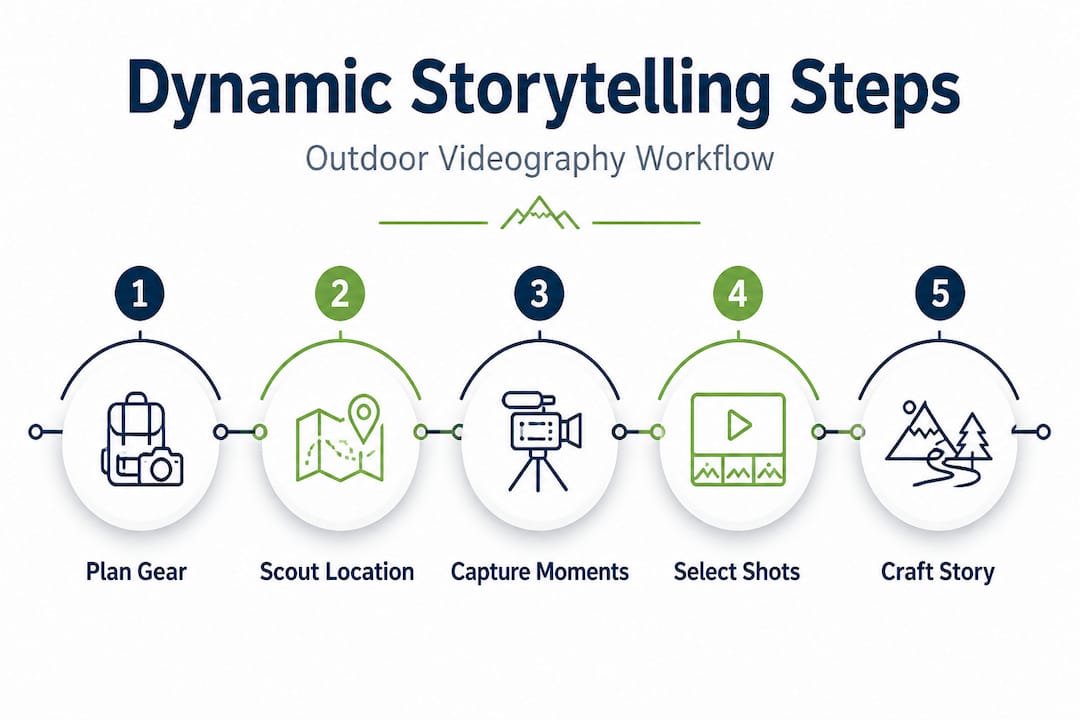
The single most effective storytelling shift you can make is prioritizing authentic moments over choreographed ones. Athlete reactions — the exhale after a hard run, the nervous laugh before a big drop, the fist pump that no one asked for — carry more emotional weight than any perfectly framed action sequence. These are the moments that make audiences share, comment, and feel personally connected to the content.
Here’s a direct comparison of two common approaches to action sports video content:
| Approach | Generic event recap | Story-led personal video |
|---|---|---|
| Focus | Results and highlights | Journey, setbacks, personality |
| Audience response | Passive viewing | Emotional investment, sharing |
| Engagement rate | Near benchmark average | 0.70% or above |
| Brand perception | Informational | Human, relatable, memorable |
| Replay value | Low | High |
Shot selection should match the narrative beat, not just look impressive. Wide establishing shots tell the audience where they are and create the atmosphere. Medium shots put the action in physical context. Tight shots on faces, hands, and gear communicate emotion and intensity. The best sequences use all three in rhythm, mirroring how a story naturally unfolds — setup, tension, release.
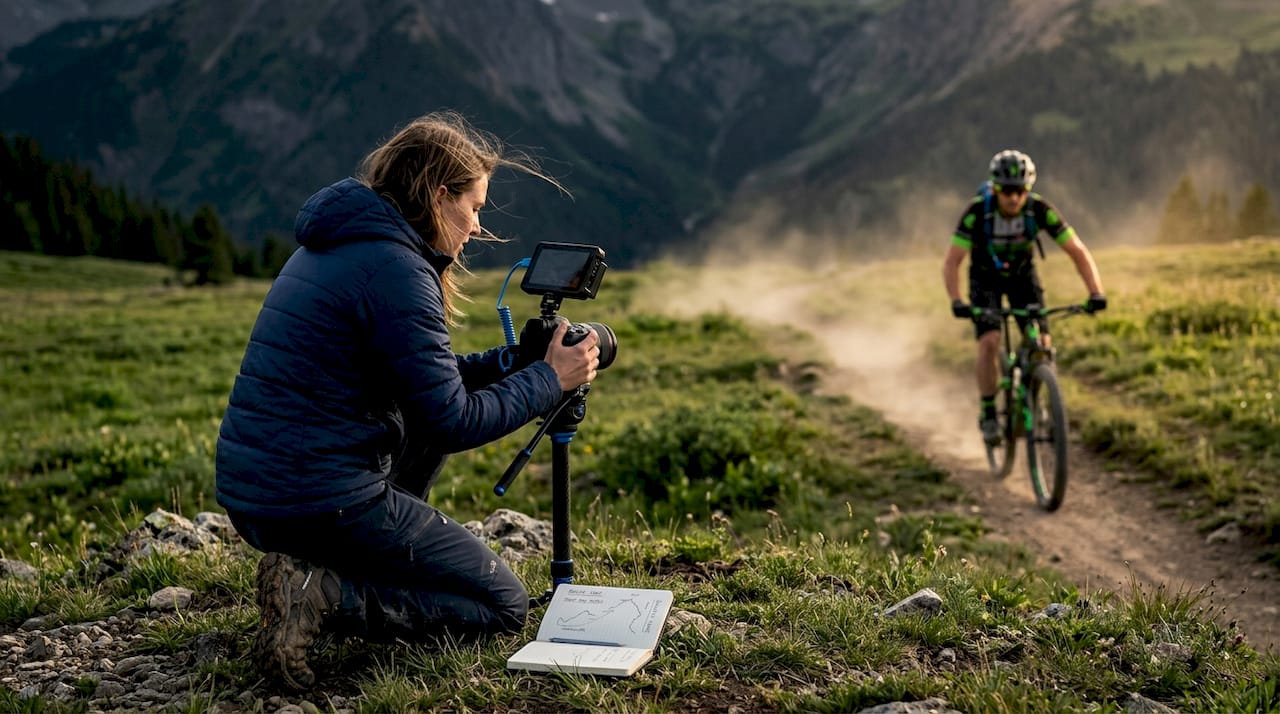
Adapt your technique to the sport, the athlete, and the day. A calculated freerider building to a specific line needs different coverage than a mountain biker blazing through a natural trail network. One is deliberate and structured; the other is spontaneous and reactive. Your create action video content strategy should flex with those realities.
Core techniques for dynamic outdoor storytelling:
- Shoot for the edit: capture clean entry shots, action sequences, and exit reactions for every key moment
- Use environmental audio: let natural sound anchor the location before and after peak moments
- Include context B-roll: athlete prep, gear checks, landscape transitions all build the world of the story
- Capture opposing perspectives: ground level wide shots pair powerfully with aerial or elevated angles
- Get the quiet moments: downtime, conversation, and reflection footage often becomes the emotional core of a piece
For broader context on how adventure videography works across different disciplines and environments, Bissig.ch offers deep portfolio examples across mountain biking, skiing, and expedition projects.
Editing and workflow: From raw footage to impactful stories
Armed with effective techniques, the final challenge is transforming hours of footage into powerful finished stories. The edit is where discipline and story instinct intersect, and where many action sports videos lose the energy they earned in the field.
A repeatable workflow keeps you from drowning in footage:
- Import and backup all media immediately with clear date and location-based folder naming
- Organize by scene or moment: separate action sequences, athlete reactions, B-roll, and audio
- Select before you edit: watch everything, flag the best 10-15% of clips, and only work with those
- Assemble around narrative beats: build the story structure before adding music or effects
- Polish last: color grade, sound mix, and titles come after the story works in rough form
This sequence sounds simple, but most editors skip straight to the assembly without selecting, which means they spend hours cutting and then starting over. The footage selection step protects the story quality of every edit you produce.
Focus your edit around the highest-value authentic moments. Athlete personal content consistently drives stronger engagement than competition-style highlight reels, so your best moments in the timeline should be unscripted reactions and personality-revealing sequences, not just the most technically impressive tricks.
Strong editing principles for outdoor action content:
- Build sequences around context, build-up, and payoff — not just the hero action moment
- Cut tight on action, but leave room for breath in emotional or environmental beats
- Let ambient sound breathe: wind, water, and crowd noise keep viewers grounded in the location
- Use slow motion purposefully to emphasize the moments that deserve weight, not as default
- Avoid over-cutting; frenetic edits often kill the tension that was building naturally
Pro Tip: Before locking a cut, watch your edit with the sound off. If the story still reads clearly and the emotional arc holds, your visual storytelling is working. If it falls apart silently, the edit is leaning too hard on music to carry the narrative.
Collaboration with brand marketers or editorial clients at the review stage sharpens the final product significantly. Building in a feedback round before picture lock saves time, protects creative clarity, and ensures the finished piece actually serves the brief. For a well-structured approach to your overall production process, the photo workflow steps framework at Bissig.ch translates effectively to video projects as well.
Perspective: Why technical mastery alone isn’t enough for outdoor videographers
Before wrapping up, consider what separates truly memorable outdoor video work from footage that is merely functional. The outdoor filmmaking community has a gear fixation problem. Every year, new bodies, new lenses, and new stabilization systems get celebrated as if they are the missing ingredient in creating compelling content. They’re not.
The filmmakers and brand teams producing work that genuinely moves audiences are not the ones with the largest kit bags. They’re the ones who understand that a viewer watching an adventure video is asking a very simple question: why should I care about this person? Technical perfection cannot answer that question. Story can.
Authentic athlete storytelling consistently outperforms polished, generic action content across every measured engagement metric. This is not a soft creative preference — it is a documented behavioral pattern in how audiences consume and respond to action sports media. Audiences crave context, setbacks, and personalities. They want to know what it cost the athlete to be there. A failed attempt, captured cleanly, is worth more to the narrative than three perfect runs stitched together.
Being present and adaptable on location often beats rigid planning. The shot you scripted might not survive first contact with the mountain. But if you’re tuned into the day, the athlete, and the environment, something better usually presents itself. Rigidity protects mediocrity. Flexibility is where the best work comes from.
The technical skills covered in this guide — settings, gear choices, workflow structure, shot selection — form a critical foundation. But they’re the floor, not the ceiling. Invest just as deliberately in your narrative instincts as you do in your camera system. Study storytelling. Watch your work critically. Ask editors and athletes what actually resonated and why. The gap between technically competent footage and action sports videography that audiences genuinely remember is almost always a storytelling gap, not a technical one.
Elevate your outdoor videography with professional support
If you’re ready to turn new knowledge into action, tap into the resources and expertise that can help elevate your next production.
Martin Bissig’s work across mountain biking, skiing, expedition travel, and brand campaigns offers a real-world reference point for the techniques described in this guide. Whether you’re looking to sharpen your own team’s capabilities or planning a high-stakes production that needs proven expertise, exploring the action videography mastery content on Bissig.ch is a strong next step. Dive into the portfolio, review the approach to outdoor photography styles and technique, or connect directly to discuss how professional sports videography services can bring your next outdoor project to life with the impact it deserves.
Frequently asked questions
What camera settings are best for capturing fast outdoor action?
Use high frame rates of 120fps or higher for slow-motion work, and always set your shutter speed at double the frame rate to maintain natural motion blur in your footage.
How can I make my outdoor videos more engaging for social media?
Build your content around athlete-driven stories and authentic moments rather than competition highlights, since personal narrative content consistently drives stronger engagement than event-style recaps.
What’s the most overlooked aspect of outdoor videography for action sports?
Capturing unscripted reactions, setbacks, and personality-revealing moments is far more impactful than technical perfection, yet most filmmakers underinvest in this area entirely.
Do I need expensive gear to get started with outdoor videography?
No. Mastering camera technique, story structure, and a disciplined editing workflow will produce stronger results than simply owning top-tier equipment without the skills to use it purposefully.


