

Video in event coverage is the single most measurable driver of audience engagement and ticket sales available to event planners today. IAEE’s 2026 report confirms that organizations using video beyond highlight reels integrate it year-round to build ongoing “can’t-miss” event value through authentic moments and emotional connection. The role of video in event coverage has shifted from documentation to a full-spectrum marketing engine, one that generates leads, satisfies sponsors, and keeps audiences engaged long after the final session ends. Planners who treat video as a strategic asset, not a post-event afterthought, consistently outperform those who don’t.
How video in event coverage drives engagement and ticket sales
The performance gap between video and non-video event campaigns is not marginal. Paciolan’s 2026 analysis of 10 event marketing partners found that video campaigns achieved a 7.79% average engagement rate compared to 4.51% for non-video campaigns. That difference compounds fast: the same data showed a 28.4% reduction in cost per acquisition when video was used as the primary creative format. Lower acquisition costs with higher engagement rates means video pays for itself before the event even opens its doors.
“Video is not just documentation. It is performance creative that directly influences whether someone buys a ticket or walks past.”
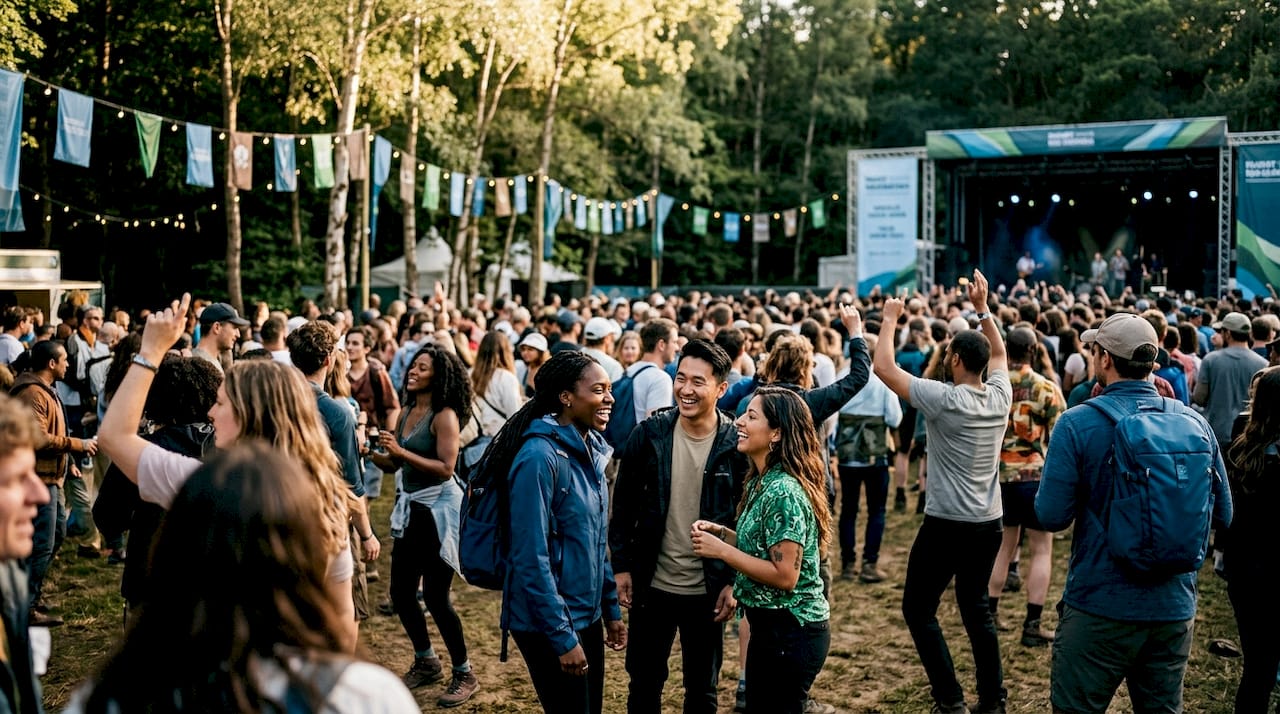
The mechanism behind this is social proof combined with FOMO. When prospective attendees watch footage of packed venues, energized speakers, or athletes competing at peak intensity, they experience the event vicariously. That emotional preview converts passive interest into purchase intent. Measuring engagement rate alongside CPA gives planners a fuller picture of video’s marketing impact than return on ad spend alone, because engagement signals audience quality, not just volume.
For outdoor and adventure events specifically, this effect is amplified. A 90-second edit of mountain bikers threading technical singletrack or climbers reaching a summit communicates the experience in a way no written description can match. The footage becomes the pitch. Planners who commission professional video before their event launches use that content to seed paid social campaigns, email sequences, and partner promotions, turning pre-event production into a ticket-selling machine.
What video formats and interactive features work best for events
Not all event video serves the same purpose. The format you choose determines whether your audience watches passively or participates actively, and that distinction matters enormously for retention and conversion.
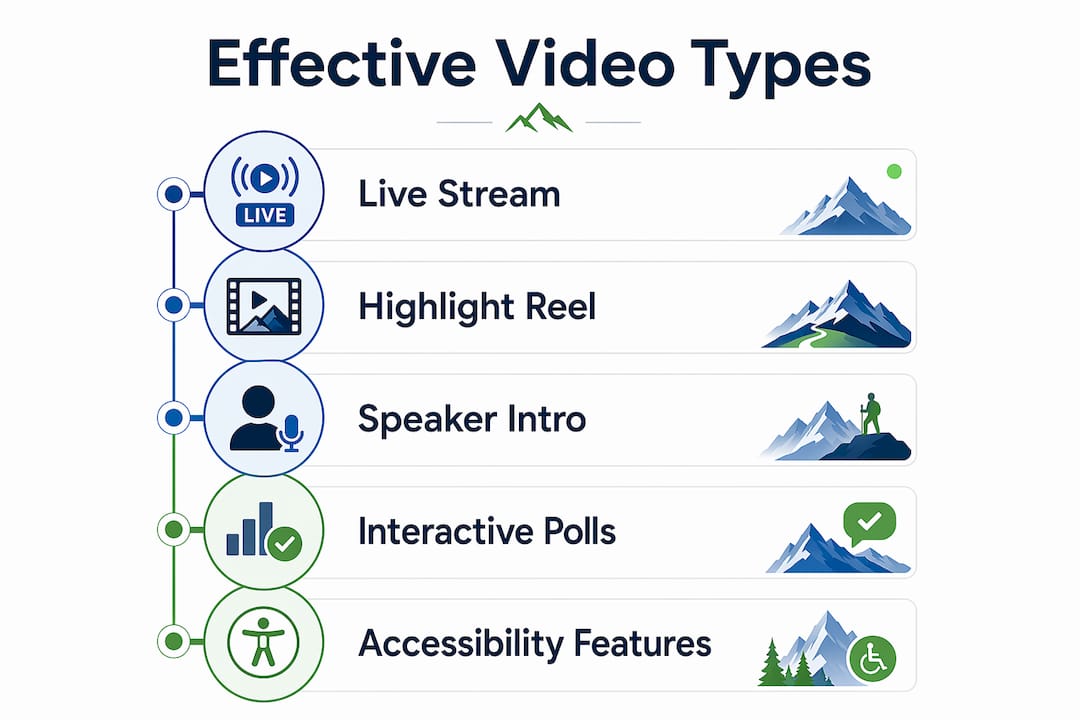
Kickervideo’s 2026 report found that live streams with interactive features raise engagement by 30 to 40%, while mixing video styles, such as combining live footage with pre-recorded segments and animated graphics, boosts watch times by up to 25%. These numbers reflect a fundamental shift: interactive video features transform passive viewers into active participants, which deepens their connection to the event and increases the likelihood of future attendance.
Here is how the main formats break down by strategic purpose:
- Live streams capture real-time energy and create urgency. They work best for keynotes, competitions, and award ceremonies where the outcome is unknown.
- Pre-recorded segments allow for tighter editing, better audio control, and polished storytelling. Use them for speaker introductions, sponsor messages, and event trailers.
- Testimonial videos build credibility. A 60-second clip of a past attendee describing their experience outperforms any written review in conversion contexts.
- Animated explainers clarify complex schedules, maps, or sponsor tiers without requiring on-camera talent.
- Interactive Q&A and poll integrations during live streams turn the broadcast into a two-way conversation, which engagement rate data confirms is the top success metric for 34% of video marketers.
Accessibility is not optional. Adding captions and transcripts to event video expands your reach to deaf and hard-of-hearing audiences, non-native speakers, and anyone watching in a sound-off environment, which describes the majority of mobile social media users. Captions also improve SEO indexing of video content, giving your footage a longer organic shelf life.
Pro Tip: Record a short “what to expect” video from your event director or lead speaker before the event launches. This single asset works as a paid ad, an email header, a social post, and a website hero. One shoot, five placements.
What production standards make event video actually usable
High production quality is not about aesthetics. It is about whether your footage can be repurposed for marketing, sponsor deliverables, and social media without requiring expensive reshoots or heavy post-production fixes.
Elite Video’s 2026 production standards for major venue coverage include multi-camera setups, wireless audio systems, lapel microphones, and direct podium feeds. These are not luxury additions. They are the baseline for footage that is actually usable. Poor audio quality makes otherwise excellent footage unusable for social clips and recap edits. A visually stunning keynote recording becomes worthless if the speaker’s audio cuts in and out.
The production elements that matter most for post-event marketing use:
- Multi-camera coverage provides editing flexibility. A single-camera shoot locks you into one angle; multi-camera gives editors the ability to cut dynamically and maintain viewer attention.
- Wireless lapel microphones capture clean speaker audio regardless of room acoustics or ambient crowd noise.
- Podium feeds record directly from the venue’s PA system, providing a clean audio backup that eliminates room echo.
- Same-day highlight reels allow planners to publish recap content while the event is still trending on social media. Elite Video’s standard package includes rapid turnaround edits specifically for this purpose.
Sponsor satisfaction depends heavily on production quality. Sponsors who see their logo in a polished, well-lit multi-camera edit are far more likely to renew than those who appear in shaky, poorly lit single-camera footage. Professional production is a sponsor retention tool, not just a creative preference.
Pro Tip: Brief your videographer on sponsor logo placements, key speakers, and branded moments before the event starts. A pre-production shot list cuts editing time in half and makes sure no critical sponsor moment gets missed.
For outdoor and adventure events, Bissig’s approach to dynamic outdoor storytelling applies directly here: capturing authentic movement and environment requires preparation, not improvisation.
How to repurpose event video into a year-round content engine
A single well-produced event generates enough footage to fuel 12 months of marketing content. The planners who extract that value treat their event video as a modular content library with reusable assets for social media, sponsor deliverables, training, and recruitment rather than a single monolithic recap video.
C-SPAN’s event pages demonstrate a best practice that any event planner can adopt: condensing long-form coverage into “Points of Interest” chapters that let viewers watch key moments in 10 minutes or less. Segmenting long-form content into short chapters improves usability and viewer retention, which translates directly into more social shares and longer on-site dwell time for event recap pages.
| Content format | Best use case |
|---|---|
| Full keynote recording | Gated content for email list growth or sponsor deliverable |
| 90-second highlight reel | Paid social ads and organic Instagram or LinkedIn posts |
| Speaker testimonial clips | Email nurture sequences and event landing pages |
| Behind-the-scenes footage | Recruitment content and brand storytelling |
| Animated recap with stats | Sponsor reports and post-event press releases |
The IAEE’s 2026 framework for ongoing attendee acquisition treats video as a tool for building year-round momentum, not a one-time deliverable. This means planning your content distribution calendar before the event, not after. Identify which moments will become ads, which will become gated downloads, and which will feed your recruitment pipeline. That planning happens in pre-production, not in the editing suite.
Avoiding content fatigue requires varying both format and message. The same highlight reel posted six times over six months loses impact fast. Rotate between speaker quotes, audience reaction clips, behind-the-scenes moments, and data-driven recap graphics to keep your audience engaged without repeating yourself.
Key takeaways
Video in event coverage works because it combines emotional storytelling with measurable performance data to drive ticket sales, sponsor retention, and year-round audience engagement.
| Point | Details |
|---|---|
| Video outperforms non-video campaigns | Paciolan data shows 7.79% vs. 4.51% engagement and a 28.4% lower cost per acquisition. |
| Interactive formats multiply engagement | Live streams with polls and Q&A raise engagement by 30 to 40% over passive broadcasts. |
| Audio quality determines usability | Poor audio makes footage unusable for marketing; lapel mics and podium feeds are non-negotiable. |
| Modular content extends event value | Segmenting footage into chapters and clips creates a 12-month content library from one event. |
| Plan distribution before the event | Deciding content use cases in pre-production maximizes marketing output and sponsor satisfaction. |
Why most event video fails before the camera rolls
I have watched planners invest serious budget into event video and walk away with footage they can barely use. The problem is almost never the camera. It is the absence of a content strategy before anyone hits record.
The mistake I see most often is treating video as documentation rather than as the primary marketing deliverable. When you think of video as a record of what happened, you shoot everything and plan nothing. When you think of it as a marketing asset, you build a shot list, you brief the crew on sponsor moments, you plan the highlight reel structure before the event starts, and you know exactly where every clip will live before the editor opens the timeline.
Audio is where events consistently fail. I have seen beautifully shot keynote footage rendered completely unusable because the organizer assumed the room’s built-in PA would be sufficient. It never is. Wireless lapel mics and a direct board feed are not optional upgrades. They are the foundation that everything else depends on.
The other underused opportunity is pre-event video. Planners who shoot a compelling teaser or speaker preview before the event opens consistently outperform those who wait for the recap. That pre-event content seeds your paid campaigns, warms your email list, and creates the social proof that drives last-minute ticket purchases. The footage from Bissig’s WEF Davos coverage illustrates exactly this: the most impactful event video is planned with the end audience in mind, not assembled from whatever happened to get captured on the day.
Treat your event video budget as a marketing investment with a measurable return, not a production cost. That shift in framing changes every decision that follows.
— Martin
Bring professional video quality to your next event
Bissig specializes in capturing high-stakes outdoor and adventure events with the production quality that makes footage genuinely usable across every marketing channel. From multi-angle action sequences to polished speaker coverage, the work is planned around your content goals, not just the event schedule. If you need footage that performs as paid creative, satisfies sponsors, and fuels a year-round content calendar, the starting point is a clear production brief and a crew that understands both the technical and strategic side of event video. Explore Bissig’s approach to action videography techniques and see how professional outdoor production translates directly into event marketing results. For broader context on why professional video delivers measurable returns, the case is straightforward.
FAQ
What is the role of video in event coverage?
Video in event coverage captures live experiences and transforms them into marketing assets that drive ticket sales, sponsor value, and year-round audience engagement. It functions as both documentation and performance creative, with measurable impact on cost per acquisition and engagement rates.
How much does video improve event engagement rates?
Paciolan’s 2026 data shows video campaigns achieve 7.79% engagement compared to 4.51% for non-video campaigns, alongside a 28.4% reduction in cost per acquisition. These figures apply specifically to event ticket marketing across 10 analyzed partners.
What video formats work best for live event coverage?
Live streams with interactive polls and Q&A features raise engagement by 30 to 40%, according to Kickervideo’s 2026 report. Combining live footage with pre-recorded segments and testimonials also increases average watch time by up to 25%.
Why does audio quality matter so much for event video?
Poor audio makes footage unusable for social clips, sponsor deliverables, and recap edits regardless of visual quality. Professional setups use wireless lapel microphones and direct podium feeds to capture clean audio in any venue environment.
How can event planners repurpose video content after the event?
Segment long recordings into chapters and short clips organized by topic, speaker, or moment. This creates a modular library that feeds paid social ads, email campaigns, gated content offers, and sponsor reports for up to 12 months after the event.


