

Photographers at summits are strategic communication assets, not background service providers. Their role is to capture decisive moments across keynotes, panels, and networking sessions while delivering publication-ready imagery fast enough to support same-day press releases, social media posts, and internal briefings. Event organizers and corporate communications managers who treat summit photography as an afterthought consistently lose the visual narrative. The role of photographers in summits now spans operational planning, accreditation compliance, rapid workflow execution, and multi-channel brand storytelling. Every image produced is a communication decision.
What key responsibilities do photographers have during summits?
Summit photographers integrate directly with the event schedule, covering keynote speeches, panel discussions, delegate networking, and sponsor visibility zones. Their job is not to document everything. It is to identify and capture the moments that carry the most narrative weight for communications teams. A speaker’s gesture at the podium, a handshake between two executives, a crowded breakout session — these images tell the story of the summit’s purpose and reach.
Maintaining a brand-safe, non-disruptive presence is a core professional responsibility. Photographers move through the room without interrupting speakers, blocking sight lines, or drawing attention from the audience. This requires reading the room constantly and anticipating moments before they happen rather than reacting after the fact.
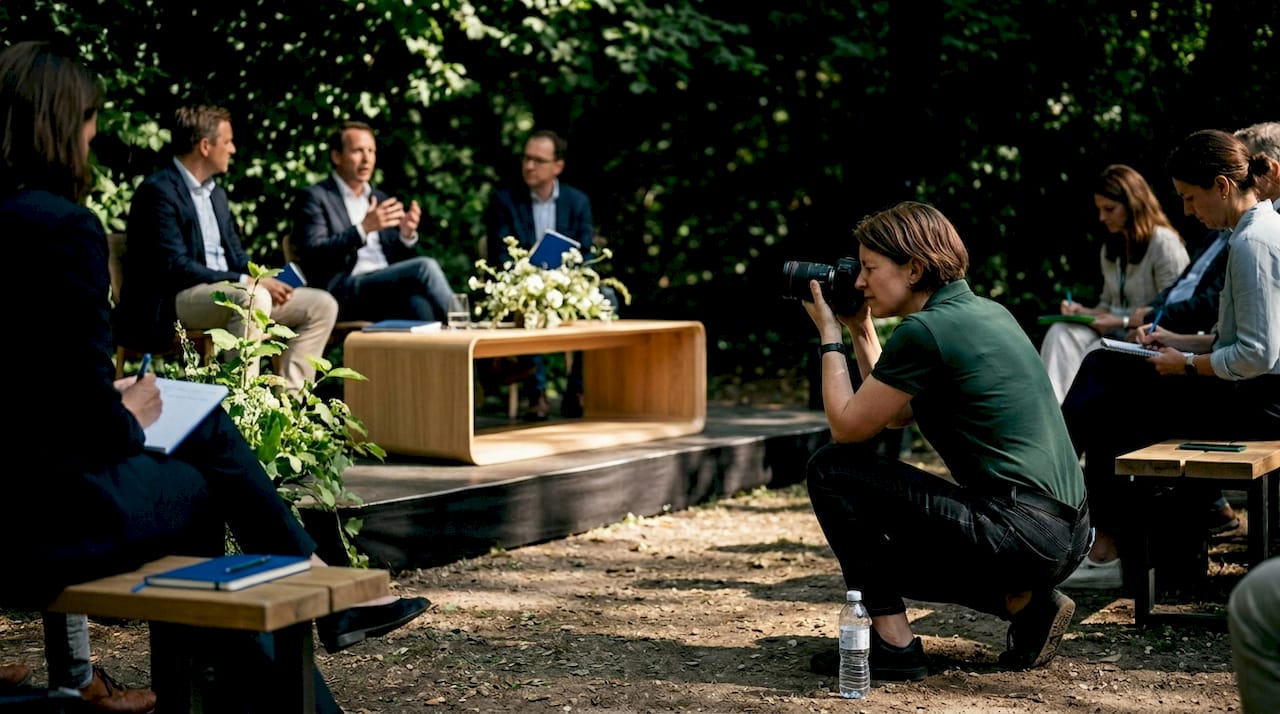
Working with AV teams is not optional. Lighting rigs, stage setups, and projection screens all affect exposure and framing. Photographers who coordinate with AV crews before the event starts can position themselves correctly, understand the lighting transitions, and avoid shooting into blown-out screens. Schedule changes happen at every summit. A photographer who cannot adapt in real time will miss the moments that matter most.
Key onsite responsibilities include:
- Capturing leadership moments: keynote speakers, panel moderators, and executive interactions
- Documenting audience engagement: reactions, participation, and delegate networking
- Ensuring sponsor and branding visibility in images for contractual and marketing use
- Maintaining unobtrusive positioning to preserve the event atmosphere
- Adapting to last-minute schedule changes without losing coverage continuity
Pro Tip: Share a detailed run sheet with your photographer at least 48 hours before the summit. Include speaker names, session times, priority moments, and any restricted zones. This single step eliminates the most common coverage gaps.
How do photographers manage fast delivery and workflow demands at summits?
Same-day and next-day photo delivery is the standard expectation at large corporate summits. Communications teams need images for press releases, LinkedIn posts, and internal newsletters within hours of a session ending. A photographer who delivers a full gallery three days later has missed the window where those images carry maximum impact.
The modern summit photography workflow operates on two speeds. The first speed is triage: selecting hero images within hours of capture for immediate PR and social use. AI culling cuts workflow times by 40 to 60 percent, allowing photographers or remote editors to identify the strongest frames rapidly without manually reviewing thousands of files. The second speed is the full edited gallery, delivered later for archives, detailed reporting, and long-form marketing use.
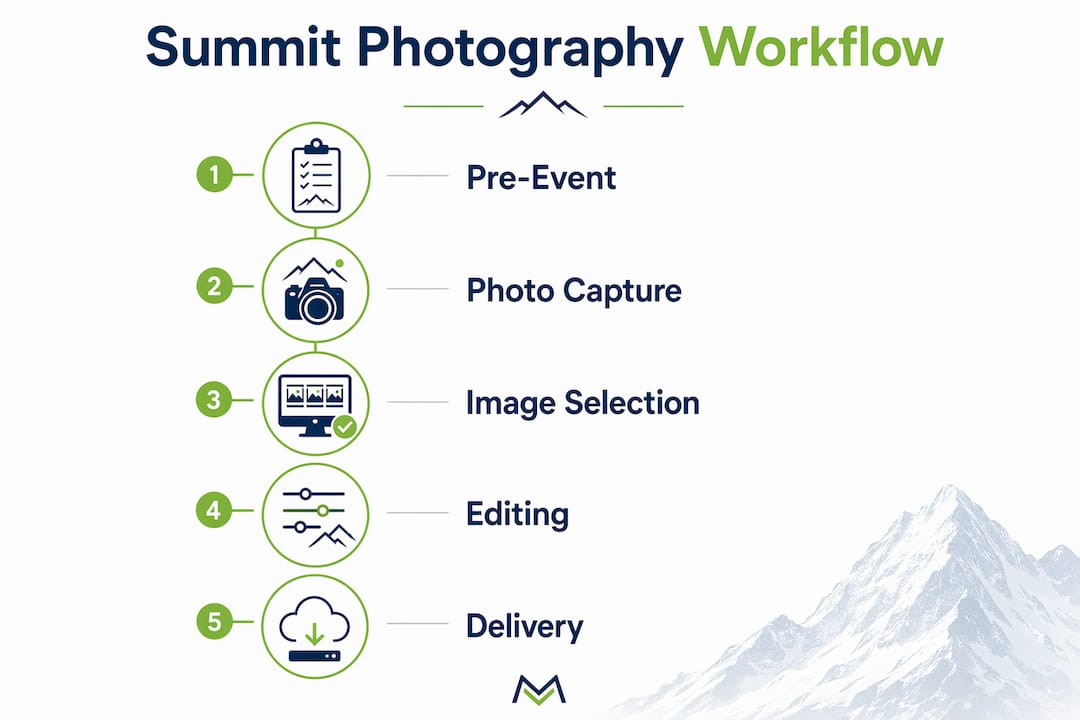
Parallel workflows make this possible. While one photographer continues shooting afternoon sessions, a second team member or remote editor begins culling and color-correcting morning images. This separation of capture and post-production is what enables same-day delivery without sacrificing image quality. The two-speed model is now a competitive standard, not a premium add-on.
| Workflow type | Delivery timeline | Best use case |
|---|---|---|
| Standard gallery | 3 to 5 business days | Archives, annual reports, print collateral |
| Accelerated hero selects | 2 to 4 hours post-session | Press releases, social media, live coverage |
| Full accelerated gallery | Same day or next morning | Internal communications, website updates |
Pro Tip: Agree on the delivery structure before the event, not during it. Define which sessions require hero selects within two hours and which can wait for the full gallery. This prevents miscommunication when the summit is running at full speed.
Why is accreditation and operational compliance important for summit photographers?
Photographer accreditation grants controlled access to designated photo zones within a summit venue. Without it, photographers cannot legally or logistically reach the positions needed to capture keynote stages, VIP areas, or restricted breakout rooms. Accreditation is not a formality. It is the operational mechanism that determines what a photographer can cover and how.
Applications for summit accreditation typically require a portfolio of previous work, a statement of publication or usage purpose, and organizational affiliation. Once granted, accredited photographers must comply with event rules: staying within designated media zones, respecting participant boundaries, and coordinating with security and production staff. Operational compliance ensures photographers do not disrupt the event or create friction with other media professionals working in the same space.
Ethical framing decisions matter as much as technical ones. Photographing a delegate in a private conversation without consent, or capturing an unflattering moment of a speaker, can damage relationships and create legal exposure for the organizing body. Professional summit photographers understand the difference between editorial documentation and invasive coverage.
Core compliance responsibilities include:
- Registering for accreditation well in advance and providing required documentation
- Respecting designated photo zones and not crossing into restricted areas
- Coordinating movement with security and production teams during high-profile sessions
- Applying risk assessment and safety planning in complex or high-security environments
- Managing image licensing distinctions between editorial and commercial use to avoid legal exposure
What impact do photographers have on marketing, communications, and stakeholder engagement?
Custom summit photography builds brand trust in a way that stock imagery cannot replicate. Forbes frames custom photography as critical for controlling visual narratives and improving social engagement. Real attendees, real leadership, and real moments carry authenticity that audiences recognize immediately. A stock photo of a generic conference room communicates nothing about your organization’s actual culture, reach, or credibility.
The visual storytelling role of summit photographers extends across every communications channel. Press teams use images for media releases. Marketing teams use them for website updates and campaign assets. Internal communications teams use them for employee newsletters and leadership reports. A single well-executed summit photography program produces assets that serve all three simultaneously.
Large coordinated photography teams take this further. An eight-person team covering the Clinton Global Initiative Annual Meeting delivered same-day selects for press, internal communications, and social media while maintaining narrative continuity across multiple simultaneous sessions. That level of coverage requires pre-planned shooting assignments, shared asset management systems, and clear editorial direction from the communications lead.
| Factor | Stock imagery | Custom summit photography |
|---|---|---|
| Authenticity | Generic, no organizational context | Real people, real moments, real brand |
| Exclusivity | Available to any buyer | Owned exclusively by your organization |
| Brand alignment | Approximate at best | Precisely on-brand by design |
| Stakeholder trust | Low: audiences recognize stock | High: reinforces credibility and presence |
| Licensing risk | Complex, usage restrictions apply | Controlled by your team from capture |
How can event organizers plan and collaborate with summit photographers?
Effective collaboration between event organizers and photographers starts before the venue is booked. The photographer needs to understand the summit’s communications objectives, not just the schedule. What moments are non-negotiable? Which sessions carry the most brand weight? Who are the key speakers and stakeholders that must appear in the final image library?
Pre-event briefings should cover the agenda in full, including session priorities, speaker names and titles, brand guidelines for framing and logo visibility, and any restricted areas or sensitive topics. Organizers who provide this context produce significantly better image libraries than those who hand over a schedule and expect the photographer to figure it out on site. Planning event photography with this level of detail is the difference between a reactive photographer and a proactive communications partner.
A practical collaboration framework for organizers:
- Share the full run sheet and session priorities at least 48 hours before the event
- Identify the top five to ten moments that require guaranteed coverage
- Confirm accreditation logistics and venue access points with the photographer
- Align on delivery expectations: which sessions need hero selects and when
- Introduce the photographer to the AV lead, production manager, and communications director before day one
Understanding workflow constraints matters as much as sharing the schedule. If your photographer is also managing same-day delivery, they may need a quiet editing space, reliable Wi-Fi, and a clear point of contact for image approvals. These are operational requirements, not preferences.
Pro Tip: Integrate your photographer into the production team WhatsApp group or Slack channel before the summit. Real-time schedule updates, room changes, and speaker arrivals reach the photographer instantly instead of minutes late.
Key takeaways
Professional summit photographers deliver maximum value when treated as operational partners integrated into communications planning from the start.
| Point | Details |
|---|---|
| Photographers as communication assets | Summit photographers capture brand-critical moments that serve press, marketing, and internal channels simultaneously. |
| Two-speed delivery is the standard | Hero selects within hours and full galleries later keep communications teams on deadline without sacrificing quality. |
| Accreditation enables effective coverage | Controlled access and compliance with event protocols protect both the photographer and the organizing body. |
| Custom photography outperforms stock | Real attendees and leadership imagery builds stakeholder trust and brand credibility that stock images cannot match. |
| Pre-event briefing drives results | Sharing run sheets, priorities, and brand guidelines before the summit is the single highest-impact planning step. |
What I’ve learned from covering high-stakes summits
Most event organizers I speak with think of photography as a logistics checkbox. Book a photographer, confirm the date, move on. That approach produces mediocre image libraries and missed moments that cannot be recreated.
The photographers who deliver genuinely useful summit coverage are the ones who arrive knowing the agenda as well as the event manager does. They know which speaker is the headline moment, which networking session has the most senior attendees, and which sponsor activation needs to appear in at least three frames. That knowledge does not come from the photographer alone. It comes from the organizer sharing it.
Fast delivery has also changed the game in ways that most organizers have not fully absorbed. When a keynote ends at 11 a.m. and your communications team can post three strong images to LinkedIn by noon, the summit’s reach extends far beyond the room. Attendees share those posts. Media pick them up. The visual narrative of the event is set before the afternoon sessions even begin. That window closes fast. A photographer without a workflow built for speed cannot serve that opportunity.
Accreditation and compliance are areas where I see the most friction between photographers and event teams. Photographers who understand the rules and work within them build trust with security, production, and venue staff. That trust translates into better access and smoother coverage. Photographers who treat accreditation as a bureaucratic obstacle create problems for everyone, including the organizers who hired them.
The practical takeaway is this: treat your summit photographer as you would treat your AV lead or your production manager. Brief them thoroughly, integrate them into your operational communications, and define success before the event starts. The images you get back will reflect exactly how seriously you took that preparation.
— Martin
Bring expert photography to your next summit
Summit photography demands the same technical precision and situational awareness as capturing fast-moving action in the field. At Bissig, the same skills that produce sharp, high-impact imagery in outdoor and adventure environments translate directly to high-stakes conference and summit coverage. If you want images that serve your communications team from the moment the keynote ends, the foundation is technique, preparation, and workflow discipline. Explore the action photography techniques that inform Bissig’s approach to capturing decisive moments under pressure. For a practical framework on capturing dynamic summit moments, the outdoor action photography guide covers the technical and editorial decisions that separate strong event images from forgettable ones.
FAQ
What is the role of photographers in summits?
Summit photographers capture keynotes, panels, networking, and sponsor visibility while delivering publication-ready images for press, marketing, and internal communications. They function as operational communication assets integrated into the event’s production and editorial workflow.
How fast should summit photographers deliver images?
Same-day hero selects are the current standard for large corporate summits, with AI-assisted culling reducing selection time by 40 to 60 percent. Full edited galleries typically follow within 24 hours to meet marketing and internal reporting deadlines.
Why is accreditation required for summit photographers?
Accreditation grants controlled access to designated photo zones and requires compliance with event rules, security protocols, and media boundaries. Without it, photographers cannot reach the positions needed to cover key moments effectively or legally.
How does custom summit photography compare to stock images?
Custom photography produces exclusive, brand-aligned imagery featuring real attendees and leadership, which builds stakeholder trust and social engagement. Stock images carry licensing restrictions, lack organizational context, and are available to any buyer, including competitors.
What should event organizers share with photographers before a summit?
Organizers should provide the full run sheet, session priorities, speaker names and titles, brand guidelines, accreditation details, and delivery expectations at least 48 hours before the event. This briefing is the single most effective step for producing a strong, usable image library.


