

A potential client lands on your website and decides whether to contact you in under 3 seconds, with 94% of that impression shaped by design alone. That is not a typo. Before they read a single caption or check your pricing, they have already formed an opinion. Understanding why choose a photography portfolio means understanding this moment. Your portfolio is not just a gallery of your best shots. It is your pitch, your brand, and your first handshake with every future client, all happening simultaneously.
Table of Contents
- Key takeaways
- Why choose a photography portfolio: what it actually does for your business
- How to curate your portfolio for maximum impact
- Using your portfolio as a positioning and growth tool
- Choosing the right platform for your portfolio
- Practical steps to build or refine your portfolio today
- My take on portfolio curation and business growth
- See what a focused outdoor photography portfolio looks like
- FAQ
Key takeaways
| Point | Details |
|---|---|
| First impressions are design-driven | Clients judge your portfolio within seconds, so curation and layout matter as much as image quality. |
| Smaller portfolios perform better | Keeping your portfolio to 15 to 25 images maintains focus and increases client conversion rates. |
| Niche positioning filters better clients | Specializing your portfolio reduces low-quality inquiries and attracts premium, serious leads. |
| Proof blocks build client confidence | Adding testimonials and case studies alongside images turns a gallery into a conversion tool. |
| Portfolios need regular maintenance | Reviewing and updating your portfolio quarterly signals growth and keeps your brand current. |
Why choose a photography portfolio: what it actually does for your business
Most photographers think of their portfolio as a display case. A place to put their best work and let clients browse. That framing undersells what a well-built portfolio can actually do.
Your portfolio is your primary marketing asset. It communicates your technical skill, your visual style, your reliability, and your creative point of view before you ever speak to a client. When a brand manager at an outdoor gear company searches for a photographer, they are not just looking for someone who can hold a camera. They want someone who understands their world, delivers consistent results, and will not make their project a gamble.
A strong portfolio does all of this without a single word of copy. Here is what it accomplishes:
- Proves technical competence through the consistency and quality of your images
- Signals creative style so clients self-select based on visual fit
- Establishes credibility quickly, reducing the need for lengthy introductions or explanations
- Differentiates you from generalist photographers by showing depth in a specific area
- Supports pricing because premium work justifies premium rates without negotiation
This is especially relevant right now. 63% of photographers reported slow inquiries in early 2026. In a quieter market, your portfolio becomes the loudest thing speaking on your behalf. Photographers who treat it strategically will pull ahead of those who treat it as an afterthought.
How to curate your portfolio for maximum impact
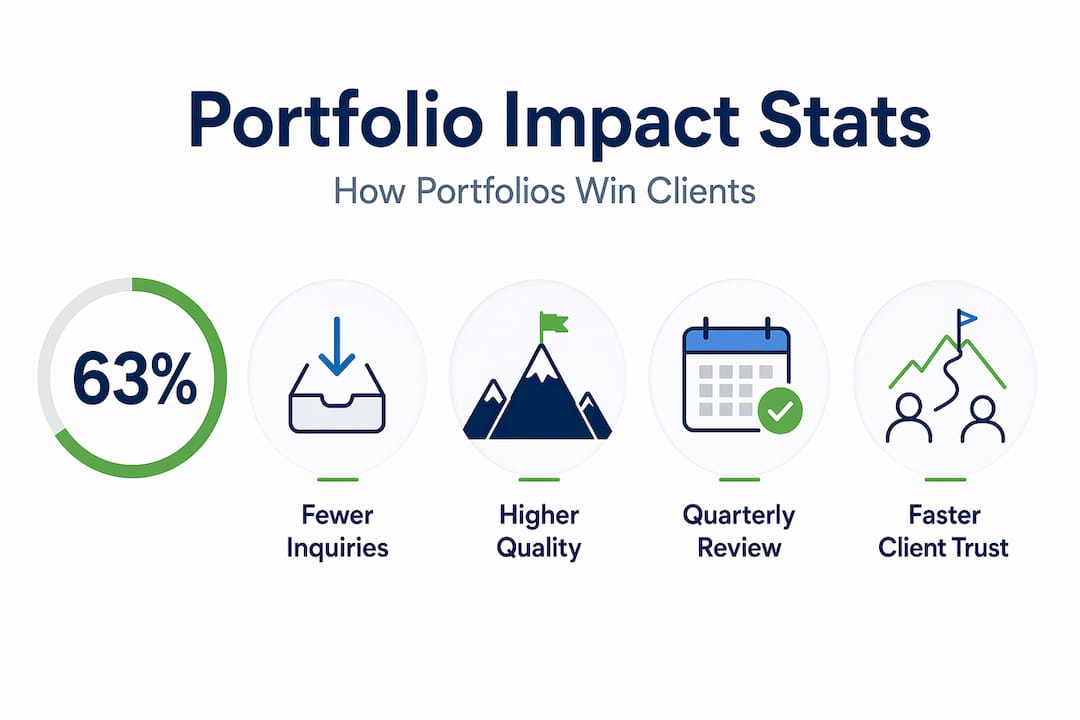
This is where most photographers stall. Curation feels like loss. You worked hard for every image, and cutting them feels like erasing effort. But bloated portfolios dilute your message and lower client conversion. Industry experts recommend 15 to 25 images as the optimal portfolio size. More than that, and clients lose focus. Fewer, and you risk appearing narrow.
Here is a practical system for building a focused portfolio from scratch or slimming down an existing one:
- Collect all candidates. Pull every image you consider portfolio-worthy into one folder. No filtering yet.
- Apply the top 5 rule. Top photographers use a “top 5 per genre” rule to cut aggressively. For each category you shoot, select your five absolute best images and set the rest aside.
- Eliminate redundancy. If two images are similar in composition, lighting, or subject, keep only the stronger one. Repetition signals a limited range, not mastery.
- Check for style consistency. A portfolio that jumps between moody, dark edits and bright, airy tones confuses clients. Every image should feel like it belongs to the same visual world.
- Sequence for rhythm. The order of your images shapes how clients experience your work. Open strong, build through the middle, and close with something memorable. Think of it like a film, not a slideshow.
- Get outside feedback. Show your shortlist to people who represent your ideal clients, not just fellow photographers. Their reactions will tell you things your own eyes cannot.
Pro Tip: Ask a trusted colleague to pick your ten best images without any context. If their picks do not match yours, that gap reveals how clients actually perceive your strongest work, which is often different from your personal favorites.
Avoid the common trap of building a portfolio for your peers. You are not curating for other photographers who will appreciate technical nuance. You are curating for clients who want to feel confident hiring you.
Using your portfolio as a positioning and growth tool
Here is the part most articles skip. Your portfolio is not just a highlight reel. It is a long-term business strategy that shapes who inquires, what they pay, and how they treat the work.
Premium clients evaluate portfolios for reliability, process, and long-term value, not talent alone. A brand hiring a photographer for a six-figure campaign needs to trust that you will deliver under pressure, communicate professionally, and produce consistent results across a full shoot day. Your portfolio is the evidence for all of that.
“A portfolio that integrates case studies and client outcomes acts as a commercial asset rather than just artwork.” — photography.link
This reframe changes what belongs in your portfolio. Consider adding:
- Testimonials placed near relevant images to connect social proof directly to the work that earned it
- Brief project context explaining the brief, the challenge, and the outcome
- Before-and-after or behind-the-scenes elements that demonstrate your operational process
- Case studies for commercial work showing how your images performed for the client’s campaign
Niche specialization in portfolios produces fewer but higher quality inquiries, which directly improves commercial success. A portfolio that says “I shoot everything” attracts budget clients who are comparison shopping. A portfolio that says “I specialize in alpine action photography for outdoor brands” attracts exactly the clients willing to pay for that expertise. Learn more about this positioning in Bissig’s breakdown of niche portfolio strategy.
Treat your portfolio as a living document, reviewing it quarterly and replacing weaker work with stronger, more current images. This signals growth to returning clients and keeps your brand from feeling stale.

Choosing the right platform for your portfolio
The platform you choose shapes how clients experience your work. A technically brilliant set of images can be undermined by a slow-loading website or a mobile layout that crops your images awkwardly.
An online portfolio must load quickly, be mobile optimized, and display images at high quality. More than half of web traffic arrives on mobile devices, so a portfolio that looks beautiful on desktop but breaks on a phone is losing clients silently.
| Platform type | Best for | Key trade-offs |
|---|---|---|
| Dedicated photography platforms | Photographers wanting fast setup and built-in templates | Limited customization; subscription costs |
| Self-hosted website | Full control over design, SEO, and branding | Requires more technical setup and maintenance |
| Social media (Instagram, etc.) | Supplementary visibility and audience building | Algorithm dependent; images compressed; no ownership |
| Physical portfolio book | In-person pitches, editorial meetings, premium clients | High production cost; limited reach; needs regular printing |
The table above makes one thing clear: social media should supplement but never replace a dedicated portfolio website you own and control. Instagram limits your reach to whoever the algorithm shows your work to. Your own website works for you every hour of every day, indexed by search engines and accessible by any client who knows where to look.
Choosing the right platform involves balancing ease of use, customization, image quality display, and client experience. For most photographers, a self-hosted site on a clean, image-forward theme paired with an active Instagram presence covers both discovery and depth.
Physical portfolios still matter for the right contexts. An editorial pitch meeting or a brand presentation benefits enormously from a high-quality printed book. Keep it tight, keep it printed on premium paper, and tailor it to the specific client you are meeting.
Practical steps to build or refine your portfolio today
You do not need to rebuild everything at once. A few focused sessions can transform an average portfolio into one that actively attracts the clients you want.
Pro Tip: Schedule a one-hour “portfolio audit” every quarter. Set a calendar reminder, pull up your portfolio as if you are a new client, and ask yourself honestly: does this represent where I am now, or where I was two years ago?
Here is how to approach the process in stages:
- Start with a content audit. List every image currently in your portfolio and rate each one from 1 to 5 based on quality, relevance, and client appeal.
- Identify the gaps. If you want to attract outdoor brands but your portfolio shows mostly portraits, plan a shoot to fill that gap before reaching out to new clients.
- Solve the chicken-and-egg problem. You need client work to build a portfolio, but you need a portfolio to get clients. Shoot personal projects that mirror your ideal client work. Brand-level production value on self-initiated projects signals capability even without paid credits.
- Track engagement. If you use an analytics tool on your website, watch which portfolio images get the most time spent on them. Clients linger on what resonates. That data tells you what to show more of.
- Build narrative coherence. Every image in your portfolio should feel like part of the same story. If a viewer can describe your style in one sentence after seeing your portfolio, you have succeeded. Regularly updated portfolios communicate activity and growth, which builds client confidence over time.
Connecting your outdoor photography workflow to your portfolio process means the two reinforce each other. The discipline you bring to shooting carries directly into the discipline you apply to selecting.
My take on portfolio curation and business growth
I have been shooting outdoor and action photography professionally for years, and the single biggest mistake I see from photographers at every level is the failure to cut. Cutting hurts. I understand that. But too many photographers fail to eliminate weaker images, and it quietly caps their business growth and the quality of clients they attract.
What I have learned, sometimes the hard way, is that the discipline required to curate a portfolio ruthlessly is the exact same discipline required to run a successful photography business. When you get serious about which images represent you, you also get serious about which clients are worth your time, which projects match your vision, and what rates reflect your actual value. These things are not separate skills. They are the same muscle.
The portfolios I have seen attract the best commercial clients, outdoor brands, magazine editors, event organizers, are never the largest. They are the most focused. Every image in those portfolios earns its place, and you feel it when you scroll through. There is no dead weight. There is no “this one is okay.” There is only work that makes a client think: I need this person on my project.
Updating your portfolio quarterly feels like administration. It is actually creative direction. It forces you to evaluate where your work is going, what your next level looks like, and what you need to shoot to get there. That is not maintenance. That is growth.
— Martin
See what a focused outdoor photography portfolio looks like
If you are building a portfolio strategy and want to see what focused, niche-specific outdoor photography looks like in practice, Bissig’s work offers a direct reference point.
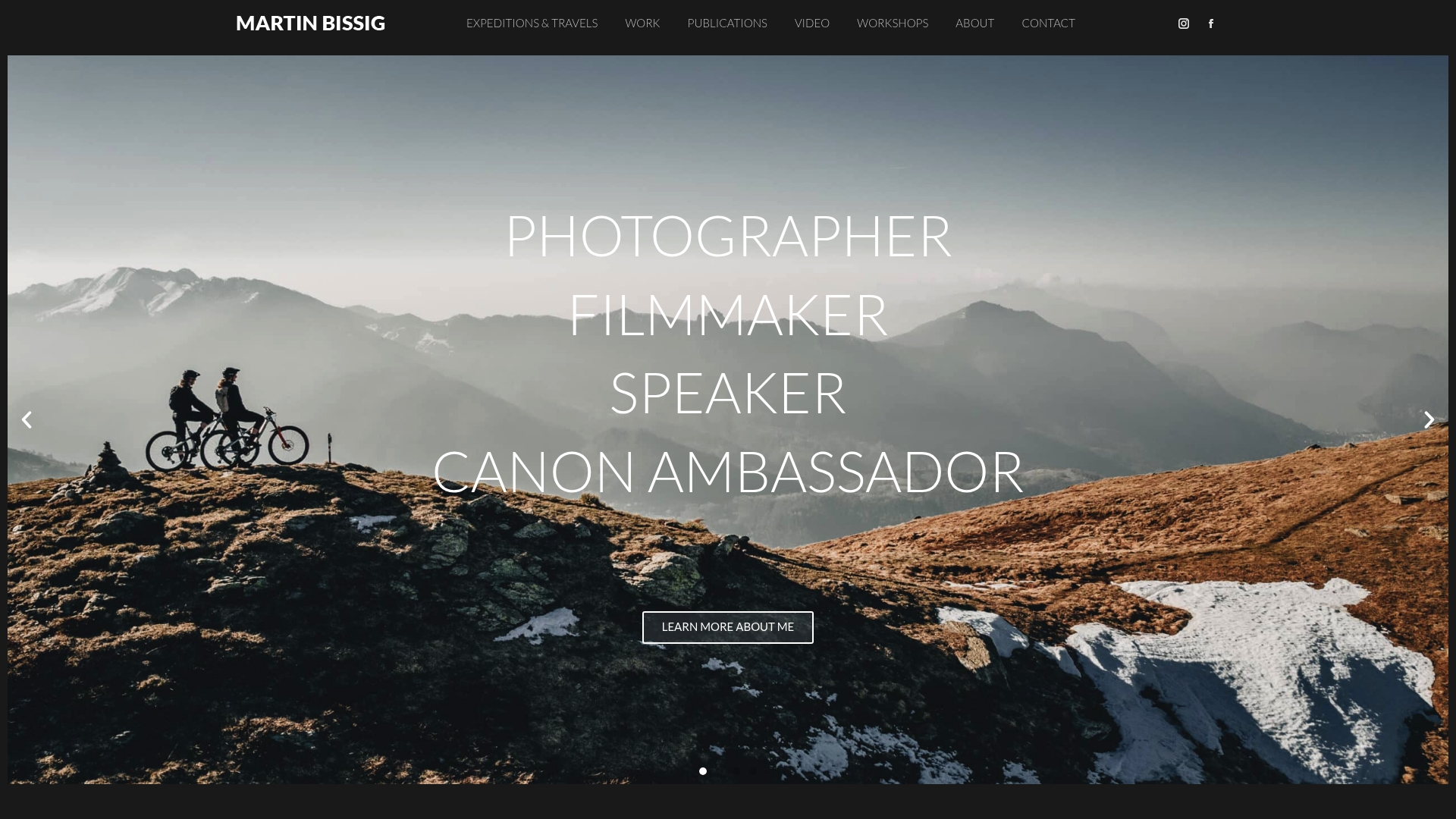
Martin Bissig has spent years working with outdoor brands, editorial clients, and adventure campaigns, developing a portfolio that attracts exactly the projects worth taking. From high-altitude mountain biking to expedition-level wilderness shoots, every project on Bissig’s outdoor photography portfolio reflects the kind of focused positioning this article describes. If you are evaluating how to build or refine your own portfolio, exploring what outdoor photography looks like at a commercial level is a useful place to start. You can also explore why professional photography shapes how brands make hiring decisions, which directly mirrors how clients will read your portfolio.
FAQ
Why does a photography portfolio matter more than social media?
Your portfolio website is a permanent, searchable asset you own and control. Social media platforms compress images, limit reach through algorithms, and can change their rules at any time.
How many images should a photography portfolio include?
Industry experts recommend keeping your portfolio to 15 to 25 images. Portfolios with 40 or more images dilute focus and reduce client conversion rates.
What makes a great photography portfolio stand out?
A focused style, ruthless curation, consistent quality, and proof elements like testimonials or project context all contribute to a portfolio that converts viewers into clients.
How often should I update my photography portfolio?
Review and update your portfolio at least once per quarter, replacing weaker images with stronger, more recent work to reflect your current skill level.
Can a niche portfolio actually attract more clients?
Yes. Niche portfolios generate fewer total inquiries but attract higher quality leads. Specialized work signals expertise and reduces time spent on low-budget or misaligned projects.


