

Your portfolio is the first real conversation you have with a potential client. Before a single email is exchanged, a client will scroll through your work and decide whether you are worth their time. The photography portfolio tips 2026 photographers actually need go far beyond “show your best work.” They cover niche clarity, smart curation, website design that converts, and a consistent review process that keeps your portfolio earning for you every quarter.
Table of Contents
- Key takeaways
- 1. Define your niche before you pick a single image
- 2. Curate down to your 15 to 20 strongest images
- 3. Lead with your absolute strongest shot
- 4. Build a portfolio website designed for clients, not photographers
- 5. Add context that proves commercial value
- 6. Pair your website with active social proof
- 7. Keep your portfolio updated on a 90-day cycle
- My take on curation: the hardest part is trusting less
- Take your portfolio further with professional outdoor expertise
- FAQ
Key takeaways
| Point | Details |
|---|---|
| Curate aggressively | Limit your portfolio to 15 to 20 images so clients see a clear, confident message. |
| Lead with your strongest shot | Your first image sets the entire tone. Never ease into a portfolio. |
| Build a clean, fast website | Minimalist design and fast load times keep clients focused on your images, not your layout. |
| Add commercial context | Brief project descriptions and measurable outcomes build client trust beyond pure aesthetics. |
| Review every three months | Regular updates replace outdated work and reflect your current skill level and goals. |
1. Define your niche before you pick a single image
Most photographers make the same mistake: they treat their portfolio as a greatest hits album. Every genre, every experiment, every shoot they liked. Clients do not hire generalists. They hire specialists.
Your portfolio is a deliberate signal about the type of work you want more of, not an archive of everything you have ever shot. Portfolios signal future client fit, not past history. If you want to shoot adventure sports, your portfolio should look like an adventure sports photographer’s body of work. Period.
Here is how to get clear on your direction before you touch a single image:
- Write down the three types of clients you most want to work with in 2026.
- List five photographers in that niche whose career you admire. Study what their portfolios have in common.
- Plan at least two personal shoots in the next 90 days specifically to fill gaps in your niche portfolio.
- Commit to removing any image that belongs to a different genre, even if it’s technically excellent.
Mixing unrelated genres does not demonstrate range to clients. It creates confusion. A mountain biking brand scanning your portfolio does not care that you also shoot weddings. That image just pulls attention away from your specialty.
Pro Tip: Write one sentence describing exactly who hires you and what you deliver for them. Every image you include should make that sentence more believable.
2. Curate down to your 15 to 20 strongest images
This is where most photographers stall. Cutting your own work is uncomfortable. But photographers who delete 90% of their portfolios consistently report better bookings and stronger client alignment.
Here is a practical curation process you can run in a single afternoon:
- Export every candidate image into one folder.
- Do a first pass. Remove anything technically flawed: soft focus, poor exposure, cluttered composition.
- Do a second pass. Remove near-duplicates. Keep only the single strongest version of any moment or setup.
- Do a third pass. Remove anything that does not fit your defined niche.
- Rank what remains. Your top 20 are your portfolio. Everything else goes into a private archive.
Consistent editing style and no near-duplicates create the visual coherence that makes a portfolio feel like a body of work rather than a random collection. Mixed processing styles signal inconsistency, even if each individual image is strong.
A useful framing is to compare what a tight portfolio communicates versus a bloated one:
| Portfolio type | Client impression | Booking outcome |
|---|---|---|
| 15 to 20 curated images, consistent style | Confident specialist, clear vision | Higher trust, faster decision |
| 50+ images, mixed genres and styles | Scattered, unsure of direction | Confusion, slower or no response |
| 10 images or fewer | Inexperienced or inactive | Skepticism about volume of work |
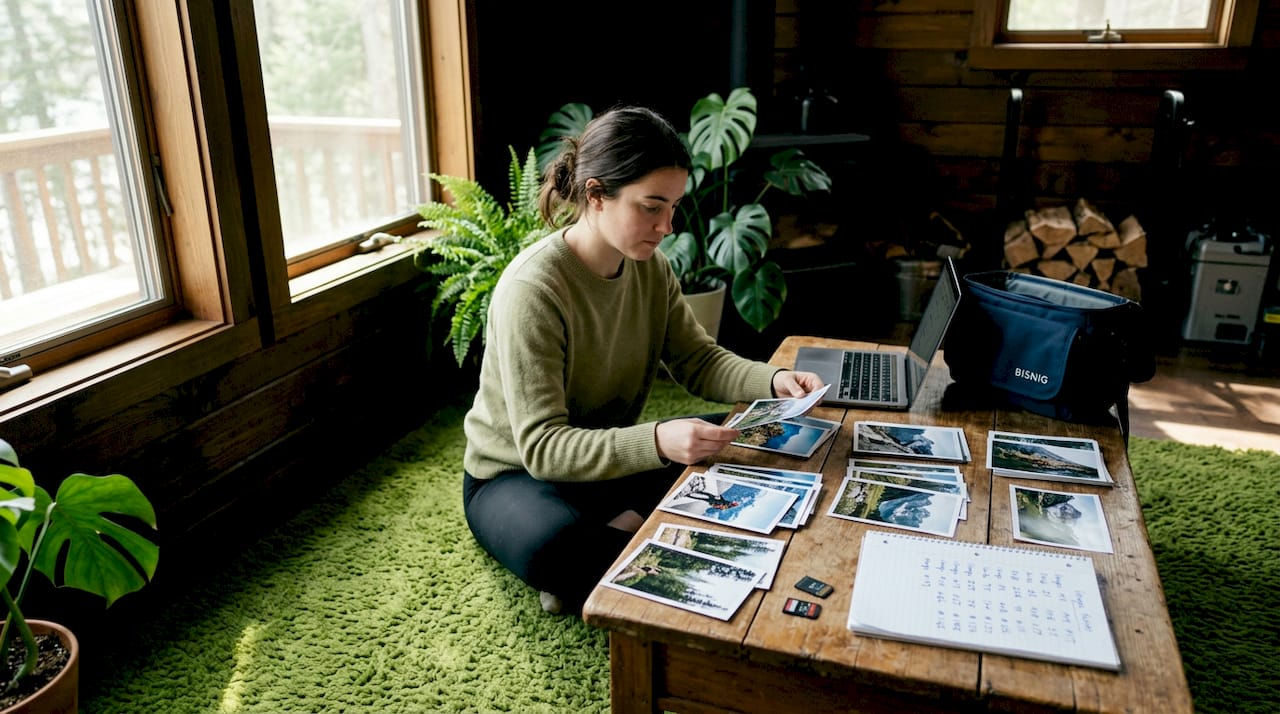
The recommended portfolio size of 15 to 20 images is not arbitrary. Clients and hiring directors make fast judgments. Give them fewer, stronger images to evaluate.
Pro Tip: Ask a photographer outside your circle to review your shortlist and remove what feels weakest to them. Fresh eyes kill the sentimental attachment that keeps mediocre images in.
3. Lead with your absolute strongest shot
Reviewers decide within minutes whether a portfolio holds their attention. That means your first image carries disproportionate weight. If you open with something good but not great, many clients will not stay long enough to see your best work.
There is a common temptation to build to a climax. Resist it. Your portfolio is not a film. Open with the image that makes someone stop scrolling. Then sustain that quality throughout.
Consider organizing your images in thematic or project-based series rather than a flat chronological scroll. A series of three to five images from a single shoot tells a visual story: the wide establishing shot, the action frame, the intimate detail. This approach demonstrates versatility within a consistent context, which matters to commercial clients evaluating whether you can cover an entire brief.
4. Build a portfolio website designed for clients, not photographers
Photographers tend to build websites they love as photographers. Clients need websites that make it easy to evaluate, contact, and hire you. Those are different things.
The clean minimalist theme with core pages is not a design preference. It is a conversion strategy. Every element competing with your images reduces the chance a client takes action.
Here is what your site structure should look like:
- Home: A single, powerful hero image or short loop of images with a direct statement of who you are and what you shoot.
- Portfolio: Organized by category or project, not one undifferentiated gallery. Make it easy for a magazine editor to find exactly the type of work they need.
- About: Written for clients. Explain your background, your gear, your process, and why brands and publications trust you. This is not a biography. It is a pitch.
- Contact: One clear call to action. No ambiguity about how to reach you or what happens next.
Beyond structure, the technical fundamentals matter significantly more than most photographers realize:
| Factor | Why it matters | Target |
|---|---|---|
| Page load speed | Slow sites lose clients before images load | Under 3 seconds |
| Mobile optimization | Most initial portfolio views happen on phones | Fully responsive |
| Image file size | Balances quality with fast loading | 200 to 500 KB per image |
| Alt text and metadata | Supports search visibility for your niche | Every image labeled |
SEO is not optional if you want clients to find you without paid advertising. Use keyword-rich titles and descriptions tied to your specific niche and geography. A sports photographer based in the Alps should not have a website that mentions neither sports photography nor Switzerland anywhere in the metadata.
5. Add context that proves commercial value
A great image shows technical skill. A great image with a one-paragraph project brief shows commercial utility. Premium clients value documented commercial success as much as image quality. That is the gap most aspiring photographers leave wide open.
For each project or series in your portfolio, consider including:
- The brief or goal behind the shoot.
- The turnaround time from brief to delivery.
- Where the images were published or used.
- Any measurable outcomes: campaign reach, client retention, magazine placement.
You do not need a case study for every image. Two or three strong project descriptions across your portfolio can shift how clients perceive you. Instead of seeing a photographer, they see a professional with commercial impact.
“Show the full picture of a project, not just the hero shot. Wide establishing frames, tight detail shots, and the final branded placement together tell clients exactly how you work and what they can expect.”
Including shot variations from the same assignment, wide angles alongside detail close-ups, also demonstrates that you think in editorial sequences rather than single frames. That is a significant differentiator when pitching to magazine editors or outdoor brands running multi-channel campaigns.
6. Pair your website with active social proof
Your portfolio website is the permanent record. But clients often find you elsewhere first, whether through Instagram, a recommendation, or a publication credit. Make sure those touchpoints are consistent with and connected to your portfolio.
Link your portfolio from every professional profile. Use the same editing style across your social posts that you use in your portfolio. If your portfolio is moody and high-contrast but your Instagram is bright and colorful, the disconnect undermines both.
Publication credits carry real weight. If your work has appeared in a magazine, been used by a known outdoor brand, or been featured in an editorial campaign, name it. Briefly, without overexplaining. Clients recognize those names and the credibility transfers immediately.
7. Keep your portfolio updated on a 90-day cycle
A portfolio that was excellent 18 months ago is a problem today. Clients assume the most recent work represents your current standard. Old images left in your portfolio signal that either your skills have not progressed or that you are not working regularly.
Review and update your portfolio every three months to reflect where your work actually is right now. This does not mean replacing everything. It means removing the weakest images, adding the strongest new work, and checking that the overall portfolio still communicates your niche clearly.
Here is a simple quarterly review process:
- Set a recurring calendar reminder for 90 days out.
- Pull up your portfolio and score every image on a simple 1 to 5 scale.
- Remove any image scoring 3 or below if you have a stronger replacement.
- Add no more than three to five new images to stay within your target count.
- Re-read your About page and project descriptions. Update anything outdated.
Pro Tip: Use each portfolio review as an iteration loop. Note what types of images you wish you had more of, then schedule those shoots before the next review cycle.
When preparing for formal portfolio review sessions, whether at festivals, client pitches, or industry events, bring the format the reviewer prefers. Some want prints. Others want a portfolio book or a digital screen presentation. Matching the expected format noticeably improves both feedback quality and the professional impression you leave behind.
My take on curation: the hardest part is trusting less
I spent years building portfolios I was proud of by photographer standards. Wide variety, technical range, locations across three continents. Clients looked at them and said “very nice” without booking anything.
The turning point came when I forced myself to cut an entire portfolio down to 14 images. No mixed genres, no sentimental favorites, nothing that did not directly serve the mountain biking and outdoor action niche I wanted to own. The next round of client conversations was completely different. I started getting faster responses and fewer “we’ll think about it” replies.
What I learned is that aggressive curation communicates confidence. When you show fewer images, clients stop wondering what kind of photographer you are. They know. And that clarity is what makes someone say yes instead of maybe.
The other thing that changed my approach was treating the portfolio not as a collection but as a business tool. I optimize my shooting workflow with portfolio gaps in mind. If I know I need stronger early-morning alpine light shots for my next review, I build that into my schedule. The portfolio tells me what to go shoot next. That feedback loop is what keeps it current and purposeful.
Regular updates also changed how I photograph. Knowing that every shoot is a potential portfolio addition raises my own standard in the field. It is not about pressure. It is about intention. Every time you pick up a camera, you should be thinking about whether this could be the image that replaces something weaker in your current selection.
— Martin
Take your portfolio further with professional outdoor expertise
If you are building a photography portfolio in the outdoor, adventure, or sports space, the bar for visual quality is genuinely high. Brands and magazine editors working in this niche have seen thousands of portfolios and they move fast past anything that does not look completely in its element.
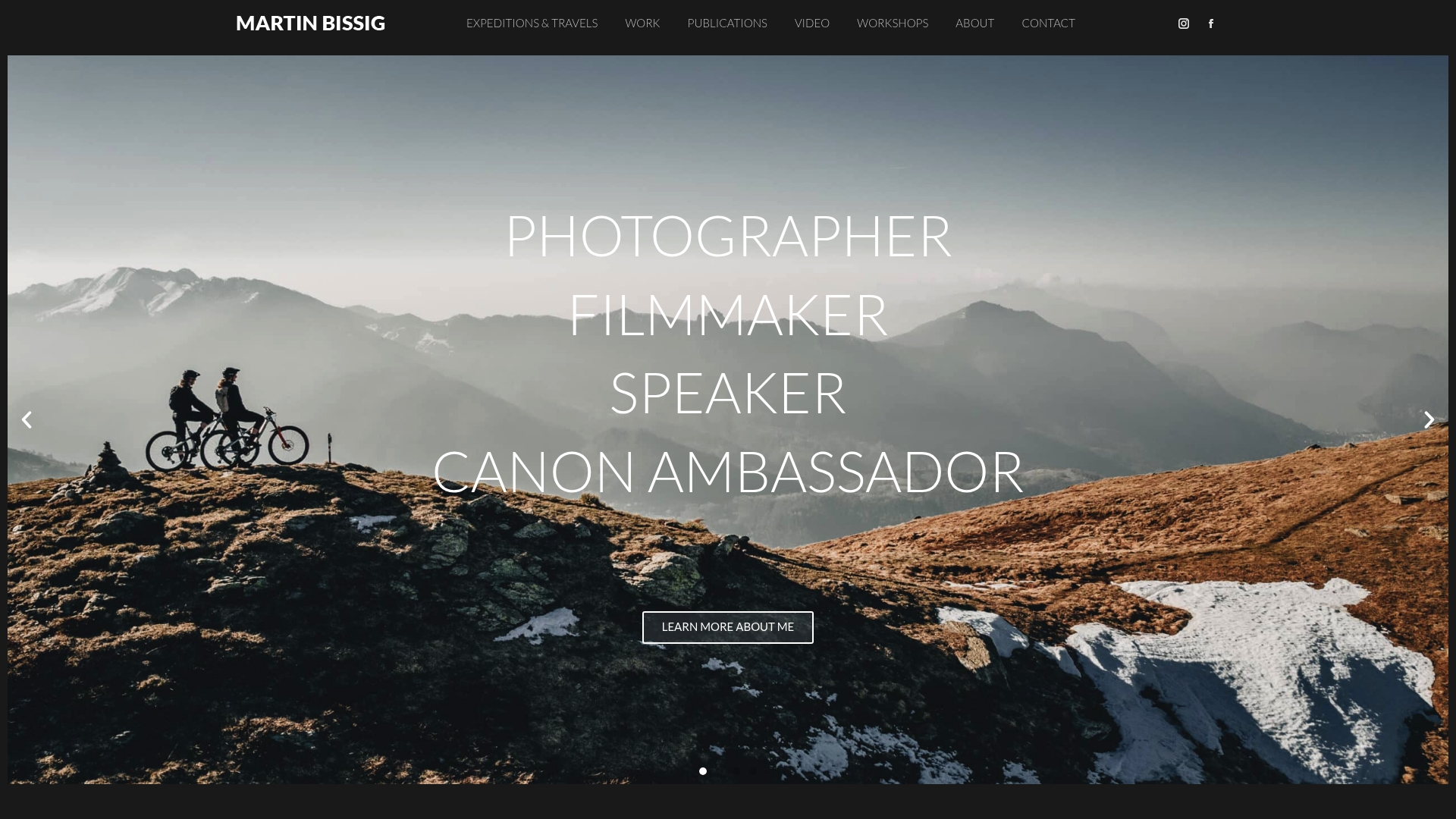
Bissig has spent years shooting for commercial and editorial clients across mountain biking, alpine sports, and outdoor adventure. Whether you want to understand how a working outdoor photography portfolio is built and maintained, or you are a brand looking for imagery that earns its place in campaigns, Bissig’s work demonstrates what purposeful, niche-specific photography looks like at a professional level. Explore the full range of outdoor photography styles and techniques to sharpen your own direction.
FAQ
How many images should a photography portfolio include?
Most professional photographers and hiring directors recommend 15 to 20 images for a portfolio. Fewer images force stronger curation and leave a clearer impression on clients.
How often should I update my photography portfolio?
A 90-day review cycle is the standard recommendation. Regular updates replace weaker images, reflect your current skills, and signal to clients that you are actively working.
Does portfolio niche really matter for getting clients?
Yes. Clients hire specialists. A portfolio that covers one niche clearly and consistently communicates expertise and intent far better than a mixed portfolio, and it shortens the client’s decision-making process.
What pages does a portfolio website need?
A professional photography website needs four core pages: Home, Portfolio (organized by category), About, and Contact. Each page should have a single clear purpose without unnecessary navigation layers.
How do I prove commercial value in my portfolio?
Add brief project context to two or three of your strongest series. Include the client brief, where the work was published, and any measurable commercial outcomes such as campaign reach or publication placement. This shifts how clients read your work.


