

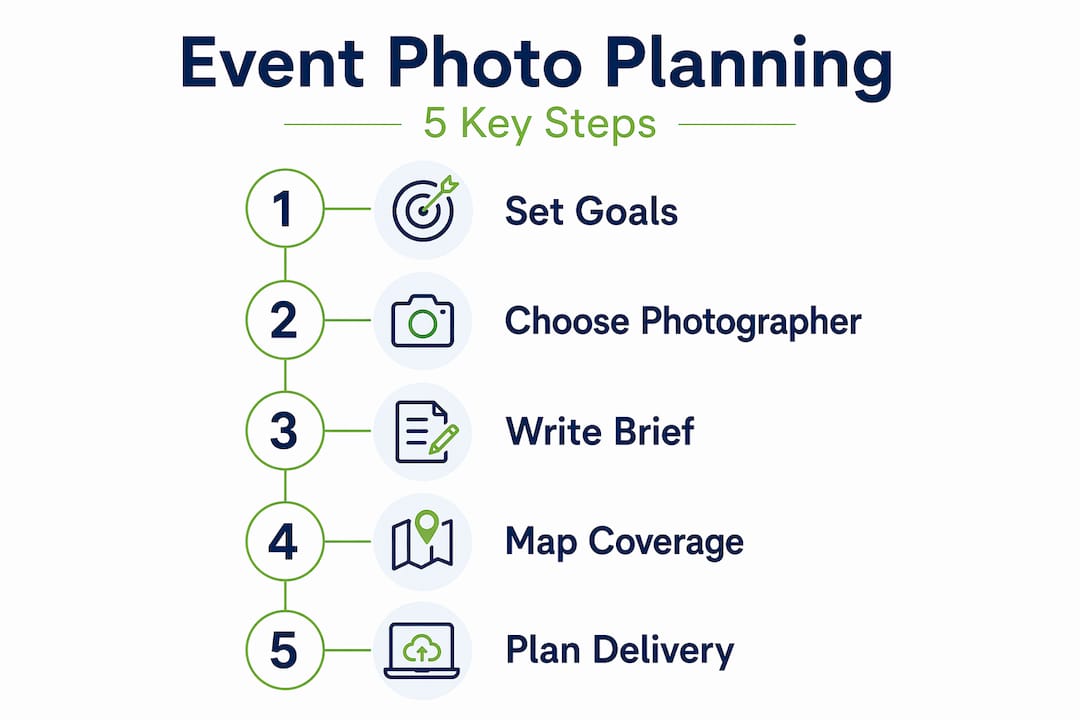
Most event organizers spend months on logistics, catering, and speakers, then treat photography as an afterthought. That gap between effort and outcome shows up in the final gallery: blurry crowd shots, missed keynote moments, and zero images that actually work for marketing. Knowing how to plan event photography from the start, before you even contact a photographer, changes everything. This guide walks you through exactly what to prepare, how to choose the right photographer, what to include in your brief, and how to verify results after the event.
Table of Contents
- Key takeaways
- How to plan event photography: start before the venue
- Choosing your photographer and writing the brief
- Event day planning: timing and coverage
- Post-event verification and delivery expectations
- Why planning transforms photography into storytelling
- Capture your event with Bissig
- FAQ
Key takeaways
| Point | Details |
|---|---|
| Start with event goals | Define what the photos need to achieve before building any shot list or brief. |
| Brief your photographer thoroughly | Explicit event goals like sponsor visibility and speaker portraits guide photographer priorities. |
| Map photographer movement | Position photographers proactively against your run of show to avoid missing critical moments. |
| Set delivery expectations early | Agree on timelines, formats, and usage rights in the contract before the event day. |
| Plan for contingencies | Backup gear and a named point of contact reduce the risk of missed shots under pressure. |
How to plan event photography: start before the venue
The most common mistake in planning for event photos is jumping straight to hiring a photographer without first understanding what you need them to capture. Before any conversation with a photographer happens, you need a clear picture of your event goals, your audience, and the moments that actually matter.
Start by asking three questions. What is this event trying to communicate? Who are the most important people in the room? And where will the images end up? A product launch for a tech brand needs clean, editorial images with strong branding. A charity gala needs warmth, emotion, and donor recognition. An outdoor sports event needs energy, movement, and atmosphere. The answers shape everything that follows.
Once you have your goals clear, gather the following before you do anything else:
- Full event schedule with exact timings for speeches, awards, performances, and transitions
- VIP and guest list with names, roles, and photos where possible so the photographer can recognize key people
- Venue layout including floor plans, restricted areas, and any flash or lighting policies
- Brand guidelines covering color preferences, logo placement, and tone of imagery
- Access permissions, especially for backstage areas, press zones, or restricted stages
Pro Tip: Ask your venue coordinator directly whether flash photography is permitted in each space. This single detail affects lens choice, ISO settings, and the entire shooting approach. Finding out on event day is too late.
The pre-session consultation solves roughly 80% of common shoot problems by clarifying goals, agenda, and logistics before anyone sets foot in the venue. Treat this stage as the foundation, not a formality.
Choosing your photographer and writing the brief
Knowing how to choose an event photographer is less about finding the most impressive portfolio and more about finding the right fit for your specific event type. A photographer who excels at intimate corporate dinners may struggle with a 2,000-person outdoor festival. Look for three things: style alignment, relevant event experience, and equipment readiness for your specific conditions.
When reviewing portfolios, look for evidence that the photographer can handle your event’s lighting conditions, crowd density, and pace. Ask specifically whether they have shot events of similar scale. Ask about their backup equipment. Ask how they handle sudden schedule changes. These questions reveal operational maturity, not just technical skill.
Once you have selected your photographer, the brief is where planning for event photos becomes concrete. A weak brief produces generic coverage. A strong brief produces purposeful storytelling. Here is what to include:
- Event overview: Name, date, location, start and end times, and overall purpose
- Key moments: Ranked list of must-capture shots including arrivals, speeches, awards, and networking
- VIP identification: Names and roles of speakers, sponsors, executives, and guests of honor
- Brand and tone: Style references, mood board, or examples of imagery you admire
- Access and logistics: Where the photographer can go, where they cannot, and who is their point of contact on the day
- Deliverables: Number of edited images, delivery format, and expected timeline
- Technical constraints: Flash restrictions, dress code for the photographer, and any media accreditation needed
Briefing photographers aligns them as part of the team. It is not micromanaging creativity. It is giving a skilled professional the context they need to make smart decisions in real time.
Pro Tip: Send your brief at least one week before the event, not the night before. This gives the photographer time to ask questions, scout the venue if needed, and prepare the right equipment.
Contracts deserve the same attention as the brief. A solid photography contract covers number and type of edited photos, delivery methods, timelines, usage rights, cancellation terms, and liability. Get this signed before any deposit changes hands.
Event day planning: timing and coverage
Good event photography ideas rarely happen by accident. They happen because someone mapped out exactly where the photographer needs to be and when. This is the tactical layer of planning, and it is where most organizers leave value on the table.
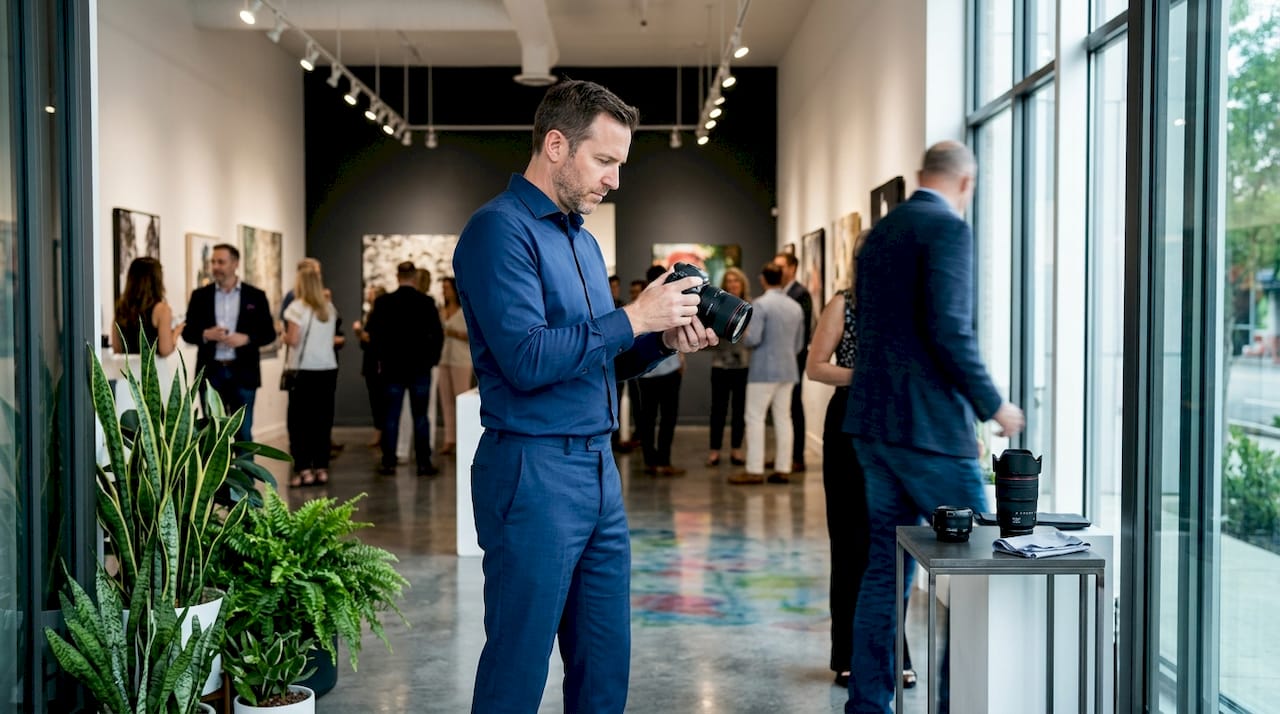
A practical event photography checklist segments tasks into pre-event preparation, tailored shot lists, equipment checks, live coverage, and post-event editing workflow. Use this structure to build your own day-of plan.
Here is a proven sequence for event day execution:
- Arrive 60 to 90 minutes early. The photographer should walk the venue before guests arrive, identify the best positions for key moments, and test lighting in each space.
- Map positions against the run of show. Positioning photographers proactively, such as being ready 10 minutes before a keynote speech, prevents missing moments that cannot be recreated.
- Confirm the point of contact. Venue constraints like flash policies, gear storage, and sudden access changes require instant communication. The photographer needs one named person to reach immediately.
- Balance the shot list with flexibility. Shot lists are living documents. If the program runs early or a spontaneous moment unfolds, the photographer needs permission to adapt.
- Check backup equipment. Redundancy planning with dual card slots, backup cameras, and spare batteries is non-negotiable. Events do not pause for technical failures.
Beyond the structured list, a few principles make a real difference on the day. Candid shots often carry more emotional weight than staged group photos. Give the photographer windows of time where they are free to move and observe without direction. For outdoor events especially, lighting changes fast. Morning golden hour and late afternoon light produce dramatically different results than midday sun. Build those windows into your schedule if the event allows it.
- Assign a staff member to escort the photographer to VIPs for quick introductions
- Flag any moments that are off-limits for photography and communicate this in writing
- Plan for both wide establishing shots and tight detail shots to give editors variety
Pro Tip: For outdoor or action-heavy events, ask your photographer about their lens selection in advance. A fast 70-200mm telephoto lens captures stage moments and crowd reactions without disrupting the atmosphere.
Post-event verification and delivery expectations
The event is over. Now comes the part most organizers handle poorly: managing delivery expectations and client communication. Getting this right protects the relationship and gets you usable images faster.
Delivery timelines vary by event type. For fast, marketing-sensitive events, plan for highlight images within 24 hours and a comprehensive gallery within 72 hours. For corporate and social events, a curated highlight gallery within 48 to 72 hours and a full gallery within one to two weeks is standard.
Here is what your delivery agreement should cover:
- Number of edited images: Typical corporate events yield 200 to 500 fully edited images depending on duration and scope
- Delivery format: High-resolution files for print plus web-optimized versions for digital use
- Usage rights: Who can use the images, for what purposes, and for how long
- Revision policy: How many rounds of editing are included and what counts as a revision
- Sneak peek timeline: A small selection of 10 to 20 images delivered within 24 hours for social media
A structured post-event workflow with a pre-labeled folder for media-ready images enables quick shares and staged deliveries that support your marketing timeline. Ask your photographer whether they use this kind of system.
| Delivery type | Typical timeline |
|---|---|
| Social media sneak peek | Within 24 hours |
| Highlight gallery | 48 to 72 hours |
| Full edited gallery | 1 to 2 weeks |
| Rush delivery (agreed in advance) | Same day or next day |
Contracts reduce misunderstandings by clarifying scope, roles, payment, and timelines upfront. If revisions come up after delivery, handle them through the process outlined in the contract rather than informal messages. This keeps expectations clean and protects both parties.
Why planning transforms photography into storytelling
I have photographed events ranging from intimate brand activations to large-scale outdoor competitions, and the single biggest factor separating forgettable coverage from genuinely powerful imagery is never the camera. It is the preparation that happened before I arrived.
When an organizer hands me a clear brief with the event goals, a ranked shot list, VIP photos, and a contact I can reach instantly, I spend my mental energy on reading the room and finding the real moments. When I show up without that context, I spend the first hour figuring out what matters. Those are usually the same 60 minutes when the best light is happening and the most authentic interactions are taking place.
I have also learned that the best event photography ideas come from the organizer, not the photographer. You know which sponsor relationship needs to be documented. You know which speaker moment will define the event narrative. My job is to translate that knowledge into images. Your job is to give me that knowledge clearly and early.
The outdoor and action event photography work I do for brands and organizations always starts with a conversation about what the images need to accomplish. Not what they should look like. What they need to do. That shift in framing changes everything about how I approach coverage.
Flexibility within structure is the real skill. A shot list gives you a safety net. But the image that ends up on the cover is almost always the one nobody planned for.
— Martin
Capture your event with Bissig
Planning a high-stakes outdoor or action event and need photography that goes beyond standard coverage? Bissig specializes in dynamic, authentic imagery for brands, organizations, and event teams operating in demanding outdoor environments.
Whether you are organizing a mountain sports competition, a brand activation in the Alps, or a corporate event in the Swiss outdoors, Bissig brings the operational experience to match your planning with results. From pre-event briefing to fast post-event delivery, the process is built around your timeline and marketing needs. Explore the full range of professional outdoor photography services, or visit the outdoor photography guide to understand what quality event coverage actually looks like in practice. Ready to talk through your event? Get in touch directly through the site.
FAQ
What should I include in an event photography brief?
Include the event overview, key moments ranked by priority, VIP names and roles, brand tone references, access rules, and delivery expectations. Strategic briefing transforms photography from random snaps to intentional storytelling.
How do I choose the right event photographer?
Look for style alignment with your event type, experience at similar scale events, and confirmed backup equipment. Ask specifically how they handle lighting challenges and sudden schedule changes before you commit.
How long does event photo delivery typically take?
For most events, expect a highlight gallery within 48 to 72 hours and a full edited gallery within one to two weeks. Marketing-sensitive events can negotiate same-day or next-day delivery for key images when agreed in the contract.
What should an event photography contract include?
A solid contract covers the number of edited images, delivery methods, timelines, usage rights, cancellation terms, and liability. Comprehensive contracts also address privacy laws and dispute resolution to protect both parties.
How early should the photographer arrive at the event?
Aim for 60 to 90 minutes before guests arrive. This allows time for venue scouting, lighting tests, and position planning against the run of show so no critical moment is missed.


