

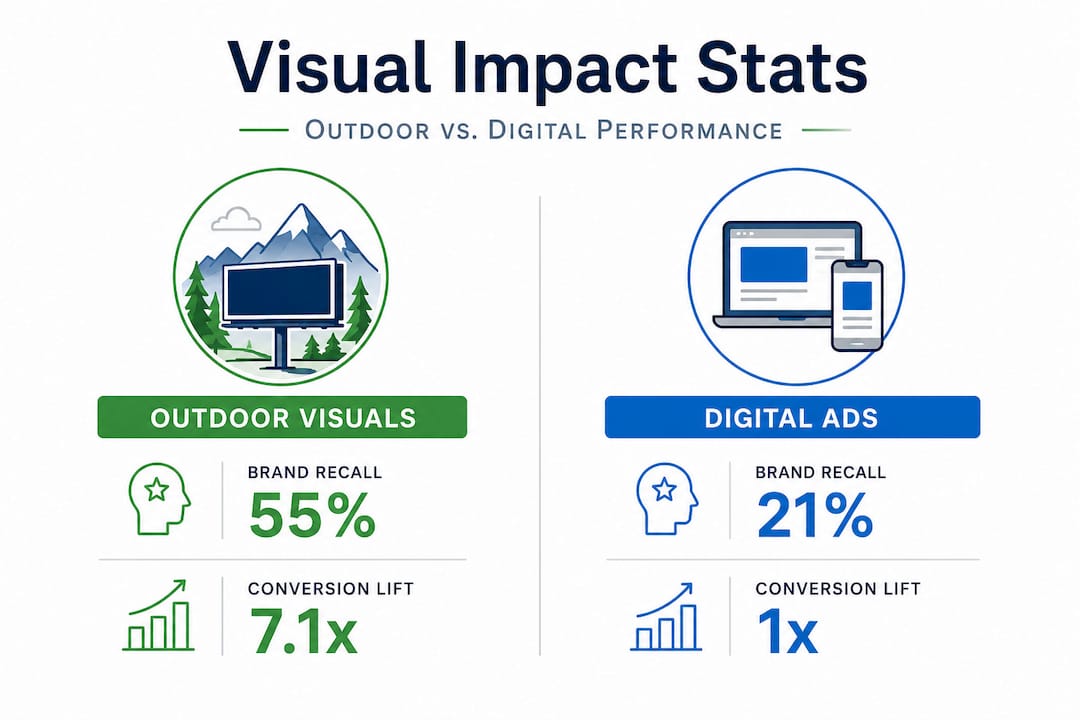
Outdoor visuals aren’t just background scenery in a media plan. According to a 2026 OAAA and Kochava study, outdoor advertising campaigns increase conversion rates by 7.1x at just 1 to 10 exposures. That number doesn’t come from impressions or reach estimates. It comes from actual conversion tracking. If you’re a marketer or brand owner in the outdoor industry still treating visuals as decoration rather than conversion infrastructure, the data from this year makes a strong argument for rethinking that position.
Table of Contents
- Key takeaways
- Why outdoor visuals convert: what the 2026 data shows
- The cognitive science behind why visuals outperform text
- Practical strategies to maximize outdoor visual conversions
- Common pitfalls that kill outdoor visual performance
- Using outdoor visuals to grow organic and search traffic
- My perspective on outdoor visuals as marketing infrastructure
- Bring your outdoor brand’s visual strategy to life
- FAQ
Key takeaways
| Point | Details |
|---|---|
| OOH visuals multiply conversions | Outdoor ad exposure at 1-10 times drives a 7.1x lift in measurable conversion rates. |
| Memory, not just impressions | Visuals encode directly into long-term memory, giving outdoor imagery a cognitive edge over text-heavy ads. |
| Consistency builds recognition | Standardized visual systems across channels reduce friction and speed up buying decisions over time. |
| Integration multiplies ROI | Combining classic and digital OOH with CTV and social delivers 39% greater ROI than digital-only campaigns. |
| Visuals amplify existing demand | Outdoor imagery accelerates conversion on pages and campaigns with established audience interest, not from scratch. |
Why outdoor visuals convert: what the 2026 data shows
The skepticism is understandable. Marketers who grew up on digital attribution models tend to distrust anything they can’t pixel-track. Outdoor advertising has historically been difficult to tie to conversion events. That gap in measurement, not performance, was what held the format back.
That’s no longer the case. The OAAA and Kochava study published in 2026 measured conversion lift across hundreds of OOH campaigns and found that outdoor campaigns generate a 20% median lift for in-person actions and a 14% lift for digital outcomes. Those numbers cover everything from app installs to store visits. The 7.1x conversion multiplier at the 1-to-10 exposure window is particularly significant because it establishes a sweet spot. You don’t need saturation-level frequency to see results.
The ROI picture gets even clearer when you layer in channel mix. Campaigns that combine classic and digital OOH deliver 39% greater ROI than strategies relying on digital alone. That’s not a marginal lift. That’s the difference between a campaign that pays for itself and one that significantly outperforms its budget.
| Metric | Outdoor advertising | Digital banner ads |
|---|---|---|
| Brand recall | 55% | 21% |
| Conversion lift (1-10 exposures) | 7.1x increase | Baseline |
| ROI vs. digital-only | +39% (combined OOH) | Baseline |
| In-person action lift | 20% median | Lower lift |
Billboard advertising achieves 55% brand recall versus 21% for digital banner ads. That’s a 2.6x memory advantage. When your visual appears on a trail sign, a transit shelter, or a mountain-facing billboard, it lands differently than an ad served between social posts. The context itself amplifies the message.
The cognitive science behind why visuals outperform text
Data tells you what happens. Cognitive science tells you why.
Visual content takes a fundamentally different path through the brain than text. According to visual literacy expert Dr. Lynell Burmark, visuals encode directly into long-term memory while text competes for space in short-term memory, which holds roughly 7 bits of information at a time. The implication for marketers is direct: a well-composed outdoor photograph of a mountain biker mid-air on a ridgeline is more likely to be remembered next Thursday than the headline copy sitting beside it.
This is why the impact of visuals in marketing goes well beyond aesthetics. The right image doesn’t just catch attention. It plants a memory trace that persists, resurfaces when a purchase trigger occurs, and influences behavior downstream.
“Images and text must work together, not independently. When they align, you transform a visual asset into a market outcome tool.” — American Marketing Association
The concept of image-text fit is often underestimated. The American Marketing Association’s research on visual analytics in marketing confirms that image-text alignment improves engagement by turning images into instruments for specific market outcomes. A trail running shoe brand that pairs a steep descent photo with “your fastest descent yet” creates a cognitive match. A generic lifestyle photo with the same copy creates friction.
Pro Tip: Review your current outdoor creative by asking one question: does the visual alone communicate the intended emotion, even without reading the copy? If not, the image and message are misaligned, and you’re leaving conversion potential on the table.
Standardized brand visuals reduce consumer friction and speed recognition over repeated exposures. Think of your visual language as brand infrastructure. The same way a company wouldn’t redesign its logo for every campaign, consistent visual tone across formats builds a recognition system that compounds over time.

Practical strategies to maximize outdoor visual conversions
Understanding the psychology is step one. Applying it systematically is where most brands fall short. Here’s a framework that works:
-
Audit your visual consistency across all touchpoints. Pull your billboard, CTV ad, Instagram post, and landing page hero image side by side. Do they feel like they belong to the same campaign? If a viewer sees your OOH ad on Monday and your landing page on Thursday, the visual cue needs to trigger immediate recognition.
-
Plan for the 1-to-10 exposure window. The 7.1x conversion lift doesn’t come from a single impression. Design media plans that place the same core visual in front of your audience across multiple formats within a defined window, long enough to build a memory anchor but short enough to stay inside the peak conversion zone.
-
Coordinate OOH with CTV, paid social, and search. Integrating outdoor visuals with digital channels significantly strengthens recall and downstream conversion. OOH creates the initial public salience. Social reinforces it. Search captures the intent it generates.
-
Invest in authentic, context-specific imagery. Stock photography of generic mountains does not build brand authority for an outdoor equipment company. Images shot in the actual environments where your customers recreate create a credibility signal that generic visuals cannot replicate.
-
Test visual formats against your conversion goals. Static imagery performs differently than video, and each channel context changes the equation. Use real performance data to allocate visual investment across formats, not assumptions based on platform popularity.
Pro Tip: Don’t wait until campaign launch to test creative. Run small-scale visual variants on paid social first to identify which image communicates your core message most clearly, then scale winning creative into your OOH placements.
The importance of outdoor marketing visuals comes into focus once you see them as a system rather than individual creative decisions. Every visual touchpoint is either building or eroding the memory structure that drives your buyer toward conversion.
Common pitfalls that kill outdoor visual performance
Knowing why outdoor visuals convert is only half the equation. You also need to know where campaigns go wrong.
The most expensive mistake marketers make is expecting outdoor visuals to create demand where none exists. Visuals are amplifiers. They accelerate conversion for audiences already within your market, but they cannot manufacture interest in a product nobody is searching for. The Search Engine Land study on custom visual content makes this clear: visuals amplify existing demand and do not generate it from zero.
Other pitfalls worth flagging:
- Inconsistent visual quality across placements. A high-resolution billboard paired with a pixelated social asset sends a mixed signal about brand professionalism. Buyers notice, even if they don’t consciously articulate it.
- Treating visuals as purely decorative. Visuals need a job inside the conversion funnel. Whether that job is triggering recall, establishing emotional relevance, or driving a click, each visual asset should be placed and designed with a specific conversion role in mind.
- Overinvesting in visuals for low-demand content. Adding premium imagery to a page that receives no organic traffic will not fix the underlying demand problem. Allocate visual investment where traffic already exists.
- Ignoring context and environment. An outdoor visual designed for a highway billboard does not translate directly to a mobile screen. Adapt the creative to fit how and where it will be seen.
| Approach | Effective | Ineffective |
|---|---|---|
| Image-text alignment | Clear, matched messaging | Disconnected copy and visual |
| Visual consistency | Uniform tone across channels | Different style per platform |
| Targeting | Visuals placed on high-demand pages | Adding imagery to low-traffic content |
| Asset quality | Professional, context-specific imagery | Generic stock or low-resolution files |
Using outdoor visuals to grow organic and search traffic
The benefits of outdoor imagery extend well beyond physical placements. Custom visuals, particularly infographics derived from outdoor photography and data, have a measurable effect on digital performance too.
A controlled experiment tracked the impact of adding custom infographics to existing content and found an average 110% increase in organic traffic for pages that already had established search demand. Not new pages. Existing pages with real visitor interest. That distinction matters enormously for how you allocate your visual production budget.
The strongest results came from layering multiple visual formats: a featured image, a data-driven infographic, and an embedded video. Each format serves a different consumption preference and search intent signal. Together, they increase time on page, reduce bounce rate, and generate the kind of backlink attraction that compounds over time.
Pro Tip: Before commissioning custom visuals for SEO purposes, check whether the target page already receives consistent organic traffic. If yes, a custom outdoor infographic or embedded video can significantly multiply that existing traction. If the page is flatlined, fix the content strategy first.
The connection between outdoor photography campaigns and digital content performance is underappreciated. Imagery shot on location, in real conditions, with professional lighting and composition, creates assets that serve both physical placements and digital content simultaneously. That dual-use value dramatically improves the ROI on a single shoot.
My perspective on outdoor visuals as marketing infrastructure
I’ve worked with outdoor brands across Europe and beyond, and the pattern I see repeatedly is this: marketers treat visual production as a creative expense rather than a strategic asset. When budgets get cut, the photography brief gets shortened or the shoot gets handed to whoever is available with a camera.
What I’ve learned from watching campaigns perform, or fail, is that the brands generating consistent conversion lifts from their outdoor visuals are the ones treating imagery as infrastructure. They build a visual system once and deploy it everywhere. They brief photographers with campaign objectives, not just aesthetic preferences. They understand that an image shot in the right terrain, at the right moment, with the right technical execution will serve their brand for years across channels.
The data on OOH’s downstream digital impact confirms something I’ve observed in practice: outdoor visuals create a public memory structure that digital channels then activate. The person who sees a stunning mountain bike trail image on a transit shelter doesn’t convert immediately. They search for the brand three days later. They click the Instagram ad that uses the same visual tone. They land on a page with a consistent image aesthetic and trust builds faster because the visual cues match.
What most brands underestimate is the compounding effect of visual coherence. Inconsistency doesn’t just look messy. It forces the consumer’s brain to relearn who you are at every touchpoint, and that friction costs conversions.
My view: stop commissioning individual images and start building a visual language. Find photographers who understand the outdoor environment your customers live in. Shoot in those environments. Build a library with enough consistency to serve every channel for the next 18 months. That’s how outdoor visuals convert at scale.
— Martin
Bring your outdoor brand’s visual strategy to life
The difference between a good outdoor campaign and one that actually moves numbers comes down to image quality, consistency, and authentic storytelling. Bissig specializes in producing professional outdoor photography and commercial videography that serves exactly this kind of systematic visual strategy. Every image is shot in real outdoor environments, built for both physical placements and digital use across the full marketing funnel.
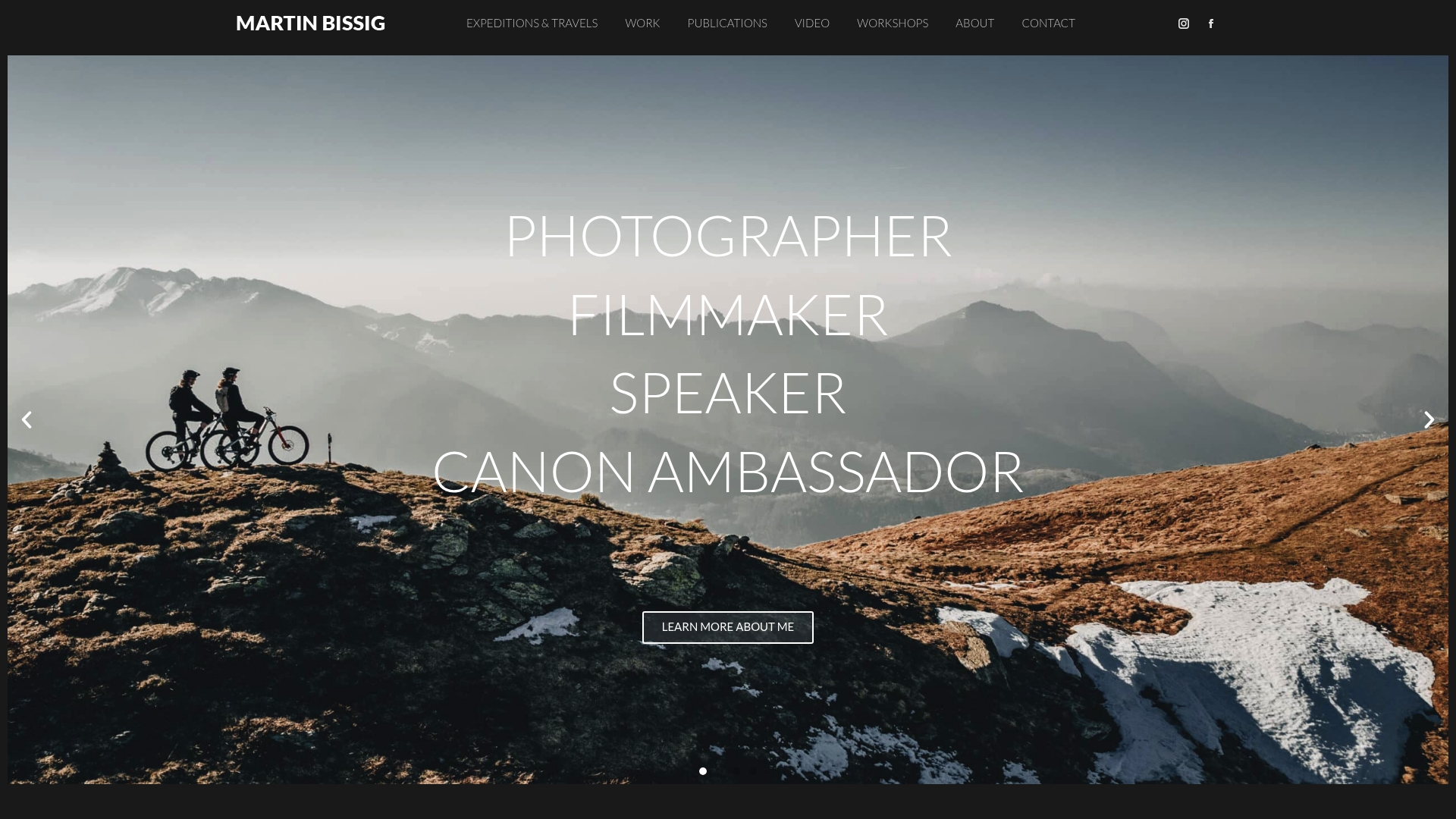
Whether you’re developing a full campaign visual library or looking to create standout assets for a single product launch, Martin Bissig’s work is designed to give outdoor brands the kind of imagery that builds memory, drives recognition, and converts. His commercial outdoor videography work follows the same principle: every frame earns its place in the conversion funnel. Explore the portfolio at bissig.ch to see what authentic, professionally executed outdoor visuals look like in practice.
FAQ
Why do outdoor visuals convert better than digital ads?
Outdoor visuals achieve 55% brand recall versus 21% for digital banner ads because they encode into long-term memory through context-rich, high-quality imagery. The physical environment amplifies credibility and attention in a way a served digital ad cannot replicate.
How many times does someone need to see an outdoor ad to convert?
Research shows that conversion rates increase by 7.1x with just 1 to 10 exposures. You don’t need mass saturation. A focused media plan that hits the same audience across a handful of placements is enough to see a significant lift.
Does combining outdoor and digital advertising improve ROI?
Yes. Campaigns that combine classic and digital OOH with digital channels deliver 39% greater ROI than digital-only strategies. The outdoor visual creates the memory anchor. Digital channels convert the intent it generates.
Can outdoor visuals boost organic search traffic?
Custom visuals added to pages with existing search demand produced an average 110% organic traffic increase in a controlled experiment. The key is applying visuals to pages that already have traffic, not to content with no established audience.
What makes an outdoor visual effective for conversions?
The most effective outdoor visuals combine image-text alignment, consistent visual tone across channels, and authentic context-specific imagery. When the visual and message work together as a matched system, they convert at significantly higher rates than generic or misaligned creative.


