

The most gripping adventure stories rarely start with a caption. They start with an image so raw and immediate that your brain processes the emotion before the words even register. In outdoor and adventure sports, where action unfolds in seconds and terrain doesn’t wait for perfect lighting, photojournalists carry an extraordinary burden: they must freeze truth. Not a posed version of it, not a brand-approved version of it, but the actual, unfiltered moment. For brands and editors working in this space, understanding what photojournalists really do and why they operate so differently from other visual professionals can fundamentally change how you brief, commission, and collaborate with them.
Table of Contents
- What defines the role of a photojournalist?
- Photojournalists versus traditional photographers: Key differences
- The impact of visual storytelling in adventure and outdoor sports
- Ethics and collaboration: The backbone of effective photojournalism
- The evolving craft: Why the best photojournalists master both grit and empathy
- Bring your brand’s stories to life with leading action photojournalism
- Frequently asked questions
Key Takeaways
| Point | Details |
|---|---|
| Photojournalism blends skills | Photojournalists unite technical photography with investigative storytelling to capture news and events authentically. |
| Storytelling drives engagement | Impactful visual narratives can inspire audiences and elevate brand campaigns in adventure sports. |
| Ethics guide reporting | Ethical standards ensure that images and stories are accurate and trustworthy for all audiences. |
| Collaboration is essential | Strong partnerships with editors and brands lead to better, more credible visual narratives. |
What defines the role of a photojournalist?
Photojournalism is not simply taking great pictures at dramatic events. It is a discipline built on the intersection of visual craft and editorial responsibility. Before a single frame is captured, the work has already begun. Photojournalists research assignments, study the terrain, anticipate key moments, and plan for conditions that can change without warning. In adventure and outdoor sports, that preparation often means scouting remote locations, understanding athlete behavior, and knowing exactly where to position yourself when a cliff drop or rapid descent happens.
The core duties are well defined. Photojournalists document news stories and current events through photography, combining photography skills with journalistic principles to create visual narratives that inform the public. That definition sounds clean on paper, but in practice it involves a constant series of judgment calls.
Here is what those duties look like in a real outdoor assignment:
- Research and planning: Studying the event format, athlete backgrounds, and environmental conditions before arrival
- Authentic capture: Shooting moments as they happen, without staging or manipulation
- Ethical editing: Adjusting for exposure and clarity without altering the factual content of an image
- Caption writing: Providing accurate, contextual descriptions that support the image truthfully
- Editorial collaboration: Working closely with reporters, editors, and art directors to ensure visual and written narratives align
“The image is never just a picture. It is a record. Every choice you make in the field or in post-production either protects that record or compromises it.”
In extreme sports and expedition contexts, the physical demands layer on top of all of this. A photojournalist covering a mountain bike descent in the Alps or a whitewater kayaking event is also managing gear in wet or cold conditions, keeping pace with athletes, and staying alert to safety. Understanding how to start collaborating with outdoor photographers who operate under these conditions helps brands set more realistic expectations and get better results.
Pro Tip: When briefing a photojournalist for an outdoor assignment, share athlete schedules, terrain maps, and key story angles in advance. The more context they have before arrival, the sharper their editorial instincts in the field.
Photojournalists versus traditional photographers: Key differences
Understanding the unique role of photojournalism leads naturally to a practical question: how is a photojournalist different from other photographers you might hire for outdoor or adventure content?
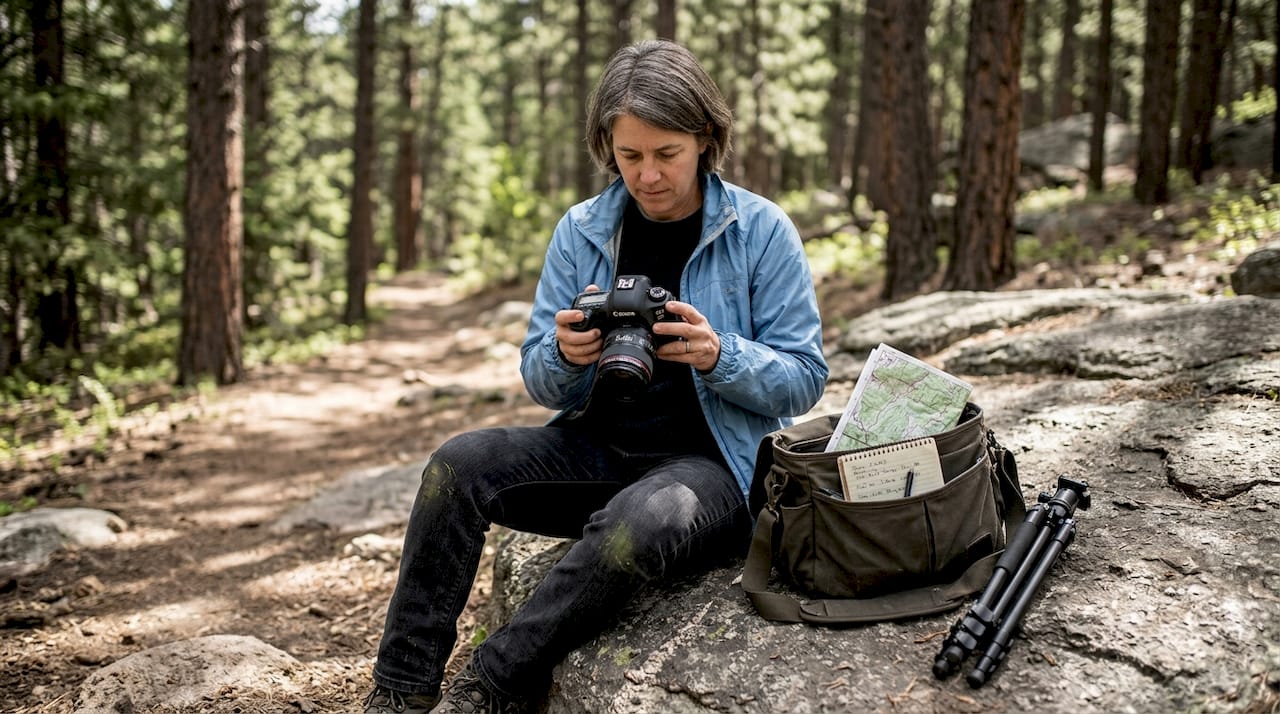
The clearest distinction is purpose. Photojournalists combine photography with journalistic principles to create visual narratives that inform public perspective. A commercial photographer, by contrast, creates images designed to serve a client brief. Both require technical excellence. The difference is in what governs their decisions.
| Role | Primary goal | Editorial independence | Ethical constraints | Typical output |
|—|—|—|—|
| Photojournalist | Inform the public | High | Strict ethical code | News and editorial images |
| Commercial photographer | Serve client brief | Low | Client-directed | Campaign and brand assets |
| Event photographer | Document occasions | Medium | Moderate | Coverage galleries |
| Editorial photographer | Support feature stories | Medium to high | Publication standards | Magazine and feature visuals |
The implications for brands are significant. When you hire a commercial photographer, you control the narrative almost entirely. When you bring in a photojournalist, you are inviting someone whose professional obligation is to the truth of the moment, not your marketing message. That is not a limitation. For brands with genuine stories to tell, it is one of the most powerful things you can do.
A few other key distinctions worth noting:
- Photojournalists are trained to work under pressure without sacrificing accuracy
- Nearly all major news agencies enforce strict ethical guidelines that prohibit image manipulation beyond basic adjustments
- Traditional photographers may retouch, composite, or stylize without restriction
- Event photographers prioritize complete coverage rather than singular, story-driving images
For brands planning mixed coverage strategies, reviewing a solid event photography guide alongside photojournalism best practices helps clarify which visual professional fits which brief. If you are actively finding an event photographer for a specific outdoor activation, the roles and expectations differ considerably from a photojournalism commission.
The impact of visual storytelling in adventure and outdoor sports
Now that the comparison is clear, consider what photojournalists specifically deliver when adventure brands use their work strategically.
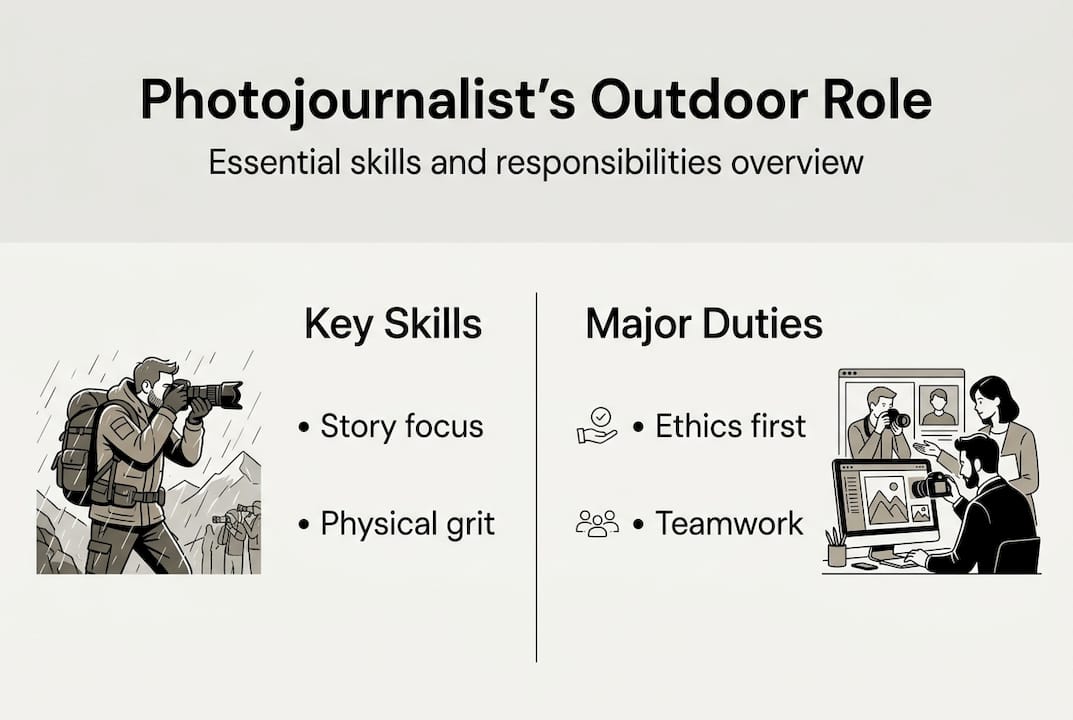
Strong visuals do more than document events. Photojournalists use imagery to inform the public and influence awareness, making ethical editing crucial. For outdoor brands, this translates directly into campaign performance. Authentic, story-driven imagery consistently outperforms polished, staged photography in engagement metrics across social media, editorial placements, and brand advertising.
| Content type | Average engagement rate | Audience trust rating | Editorial placement success |
|---|---|---|---|
| Authentic photojournalistic imagery | High | Very high | Frequent |
| Staged commercial photography | Medium | Moderate | Occasional |
| User-generated content | Variable | High | Rare |
| Stock photography | Low | Low | Uncommon |
Here is a practical framework for brands looking to leverage photojournalistic imagery in their campaigns:
- Define the human story first. Identify the athlete, the challenge, or the journey that will resonate with your audience before thinking about visual format.
- Commission the right professional. Match the photojournalist’s experience to the environment, whether alpine, river, trail, or urban outdoor.
- Grant creative latitude. Resist the urge to over-direct. Authentic moments require space.
- Integrate across channels. Use editorial imagery in paid media, organic social, and press materials for consistent visual identity.
- Pair stills with motion. Amplifying outdoor marketing with both photography and video creates a richer, more immersive audience experience.
For brands developing strategies for unforgettable visual storytelling, the lesson is consistent: audiences can feel the difference between content crafted to tell a real story and content crafted to sell a product. The former builds loyalty. The latter builds transactions.
Pro Tip: Focus on stories that highlight real action and human emotion. The image of a rider’s expression mid-descent will outperform a perfectly lit product shot every time because it triggers empathy, not just awareness. Learning how to create action video content that captivates applies equally to photography strategy.
Ethics and collaboration: The backbone of effective photojournalism
Having explored their impact, we must consider what guides a photojournalist’s decisions when the stakes are high and the pressure is real.
Photojournalists must edit images ethically, write accurate captions, and work closely with reporters and editors to ensure credible storytelling. That sentence describes a workflow built entirely on trust. Trust between the photographer and the subject, between the photographer and the publication, and between the publication and the audience.
“Ethics are not a constraint on creativity. They are what makes the creative work worth trusting.”
For brands and editors commissioning photojournalistic work, here are best practices that protect the integrity of the collaboration:
- Align on editorial guidelines early. Establish what manipulation is acceptable and what constitutes misrepresentation before the shoot.
- Respect the photojournalist’s independence. Avoid requesting reshoots or alt versions that change the factual nature of an image.
- Provide full context for captions. Supply accurate information about athletes, locations, and event details so captions reflect reality.
- Review content through an editorial lens. Ask whether the image informs and accurately represents, not only whether it looks good.
- Build long-term relationships. Repeated collaboration with the same photojournalist builds trust and results in progressively stronger storytelling.
For high-profile events like ethical coverage at WEF Davos, these principles become non-negotiable. The reputational stakes are too high for ethical shortcuts. If you are new to working with outdoor photographers in a formal editorial context, consider attending a photo and video workflow workshop to understand how professionals manage these processes in practice.
Pro Tip: Establish clear editorial guidelines before the assignment begins. A one-page brief outlining acceptable editing standards and caption requirements eliminates the most common sources of conflict and protects both the brand and the photojournalist.
The evolving craft: Why the best photojournalists master both grit and empathy
Ethics and collaboration matter enormously, but they don’t fully explain what separates a competent photojournalist from a truly exceptional one. After years working in outdoor, adventure, and action photography, one pattern stands out: the photographers who consistently deliver images that stop audiences mid-scroll are not always the ones with the most technical gear or the fastest lenses. They are the ones who read the room.
In adventure sports, reading the room means anticipating athlete behavior, sensing when a moment is building before it peaks, and knowing when to stay invisible and when to move. It requires empathy: the ability to understand what an athlete feels during a hard climb or a dangerous rapid, and to position yourself where that emotion will be visible to a camera. That is not a technical skill. It is a human one.
The physical grit required is obvious. Less obvious is the emotional intelligence required to earn trust from athletes, guides, and subjects who are often operating at their limits and have no patience for photographers who slow things down or disrupt the moment. The best photojournalists become part of the environment rather than observers of it.
For brands, this is the insight that should shape how you select and partner with outdoor photographers. Look beyond portfolios. Ask how they operate in the field, how they build rapport with athletes, and how they handle logistical pressure. Those answers reveal whether you are working with someone who captures adventure, or someone who understands it.
Bring your brand’s stories to life with leading action photojournalism
If this guide has clarified the power of authentic photojournalistic storytelling, the next step is applying that understanding to your own campaigns and editorial projects.
Martin Bissig is a Switzerland-based action photojournalist specializing in outdoor sports, mountain biking, and adventure expeditions for commercial and editorial clients worldwide. His work combines technical precision with genuine field experience in some of the world’s most demanding environments. Explore his portfolio to see how authentic visual storytelling translates to brand results, or review how videography for marketing results can complete your content strategy. For a full picture of what is possible, browse his outdoor photography services and start a conversation about your next project.
Frequently asked questions
What core skills should a photojournalist have?
A photojournalist needs strong photography abilities, journalistic ethics, and the capacity to work under extreme pressure. Photojournalists combine photography skills with journalistic principles to create visual narratives that genuinely inform audiences.
How do photojournalists add value to adventure brands?
They capture candid, authentic moments that staged photography cannot replicate, building emotional connections between brands and audiences. Photojournalists document events and collaborate with editors, producing visual narratives that inform and engage far beyond a standard campaign image.
What ethical standards guide photojournalistic work?
Photojournalists follow strict guidelines requiring truthful reporting, accurate captions, and minimal image manipulation. Photojournalists must edit images ethically and write accurate captions to preserve credibility and public trust.
How does photojournalism differ from event photography?
Photojournalism is driven by editorial independence and unbiased storytelling, while event photography focuses on thorough, aesthetic documentation for a specific client. Photojournalists have unique responsibilities compared to event photographers, with journalistic integrity guiding every creative decision.


