

The action camera market hit $4.39 billion in 2025 and is projected to reach $10.96 billion by 2033, driven almost entirely by demand for adventure sports content. That number tells you something important: audiences are hungry for footage that puts them inside the experience, not just watching from the sidelines. For brands and publications operating in the outdoor and adventure space, action sports videography is no longer optional. It is the standard by which your content will be judged, shared, and remembered.
Table of Contents
- What is action sports videography?
- The equipment behind action sports videography
- Choreographing movement and adventure: Techniques and approaches
- Impact on brand storytelling and audience engagement
- Our take: What most brands miss about action sports videography
- Connect with action sports videography experts
- Frequently asked questions
Key Takeaways
| Point | Details |
|---|---|
| Dynamic definition | Action sports videography is about capturing motion-packed, outdoor adventure sports for brands and publishers. |
| Latest gear matters | Advanced action cameras and technology help brands achieve immersive, professional results. |
| Creative techniques | Careful choreography and storytelling drive authentic, emotionally resonant footage. |
| Brand impact | Dynamic outdoor videography helps brands engage audiences and amplify marketing campaigns. |
| Practical next steps | Brands benefit most when combining creative vision with expert-led action sports videography services. |
What is action sports videography?
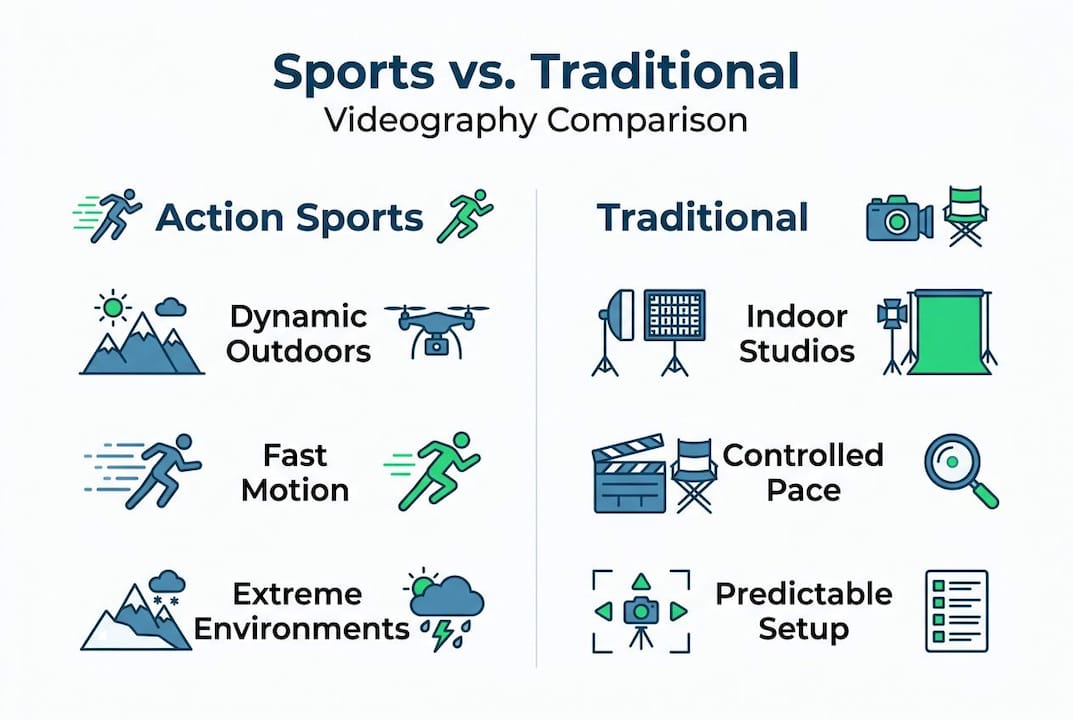
Action sports videography is the practice of filming dynamic, fast-moving sporting events in outdoor and often extreme environments. Think mountain biking descents, big mountain skiing, whitewater kayaking, or paragliding over alpine terrain. It is fundamentally different from standard commercial or event videography in three ways: the physical risk involved, the speed of the subject, and the unpredictability of the environment.
Standard event videography works with controlled settings, predictable lighting, and stationary subjects. Action sports videography does the opposite. The athlete moves fast, the terrain changes, and weather can shift in minutes. A videographer in this field needs to anticipate action before it happens, not react to it after the fact.
Here is what separates action sports videography from other formats:
- Subject speed: Athletes move at speeds that demand high frame rates and precise timing.
- Environment: Shoots happen on mountains, rivers, and trails where conditions are rarely stable.
- Risk factor: Both the athlete and the videographer operate in physically demanding, sometimes dangerous situations.
- Authenticity: The footage must feel real and immersive, not staged or polished in a way that kills the energy.
- Storytelling depth: The best work, like creating captivating action video content that resonates, goes beyond the trick or the jump to reveal the human behind it.
| Feature | Action sports videography | Traditional commercial videography |
|---|---|---|
| Environment | Outdoor, extreme, unpredictable | Studio or controlled location |
| Subject movement | High speed, dynamic | Slow or stationary |
| Gear requirements | Weatherproof, ruggedized | Standard broadcast equipment |
| Storytelling style | Immersive, raw, emotional | Polished, scripted |
| Risk level | High | Low |
Brands like Red Bull have built entire media empires on this format, producing immersive 8K 3D ski films that set new benchmarks for production quality. Teton Gravity Research evolved from 16mm film to cutting-edge digital formats over decades, proving that the format grows with technology. For brands and publications looking to commission this work, understanding these fundamentals is the first step. Exploring a solid action photography guide alongside videography resources gives you a fuller picture of what professional outdoor content production actually involves.
The equipment behind action sports videography
Equipment is not everything in this field, but the wrong gear will cost you the shot. Action sports videography demands tools that can handle physical stress, changing light, and extreme temperatures while still delivering cinematic image quality.
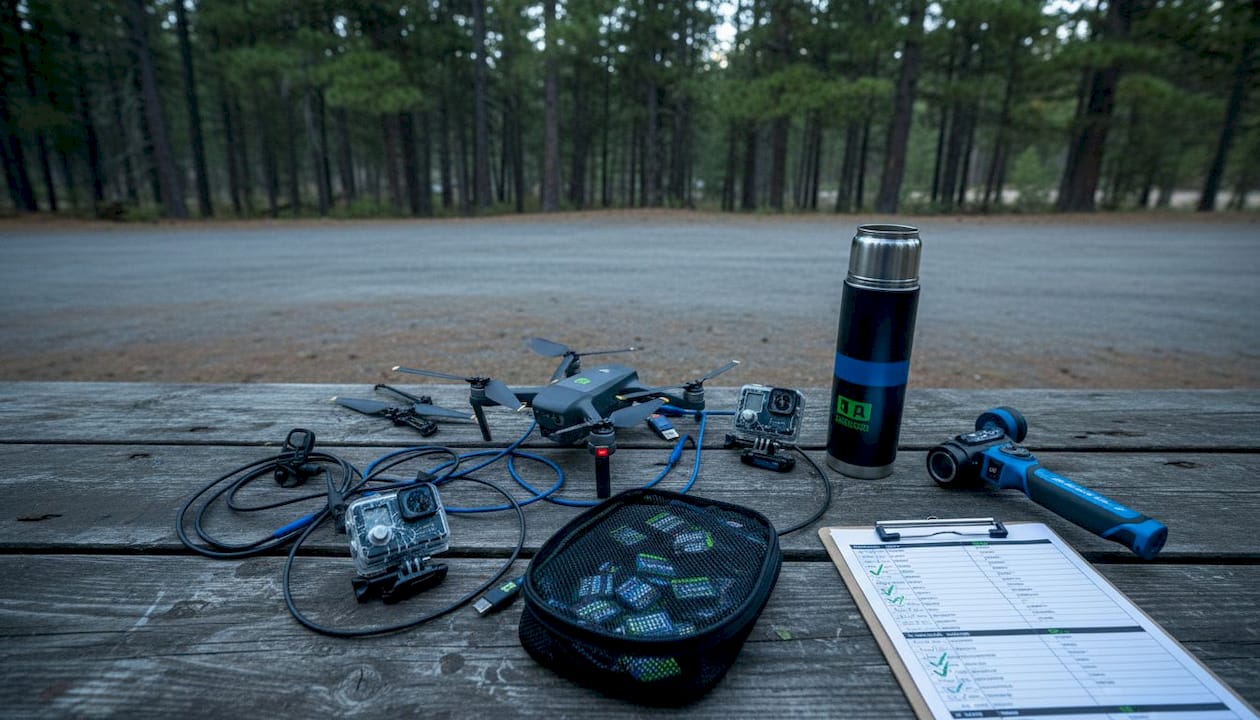
The action camera market’s growth to $10.96 billion by 2033 reflects real innovation at every price point. Mirrorless cinema cameras, compact action cameras, and drone systems are now all viable tools depending on the shoot context.
Here is a breakdown of the core equipment categories:
- Primary camera body: A mirrorless or cinema-grade camera capable of shooting at least 4K at 120fps for slow-motion sequences. Canon’s cinema line and Sony’s FX series are industry staples.
- Action cameras: Compact, ruggedized units like the GoPro Hero series for helmet mounts, bike frames, or tight spaces where a large camera cannot go.
- Stabilization systems: Gimbals and electronic image stabilization are non-negotiable when filming moving athletes. Handheld footage without stabilization looks amateur.
- Drone systems: Aerial perspectives transform action sports footage. A drone following a mountain biker through a forest trail creates a cinematic quality no ground camera can match.
- Long telephoto lenses: For capturing athletes at distance without disrupting their flow, a 400mm or 600mm lens lets you stay out of the way while still getting tight, impactful shots.
| Equipment | Primary use | Key spec to prioritize |
|---|---|---|
| Cinema camera | Main A-roll footage | 4K minimum, high frame rate |
| Action camera | POV and tight spaces | Waterproof, wide angle |
| Gimbal | Smooth tracking shots | Payload capacity, battery life |
| Drone | Aerial cinematography | Wind resistance, flight time |
| Telephoto lens | Distance shooting | Image stabilization, aperture |
Pro Tip: Always bring redundant batteries and weatherproof storage on outdoor shoots. A dead battery or corrupted card on a once-in-a-season moment is a loss you cannot recover from.
The evolution from film to digital has also opened up post-production possibilities that were unthinkable a decade ago. Color grading tools, speed ramping in editing, and stabilization in post all contribute to the final look. But they only work if the source footage is technically solid. Reviewing professional action shot tips before a major shoot helps ensure you are capturing usable material, not just hoping for the best in the edit.
Choreographing movement and adventure: Techniques and approaches
Equipment is only as effective as the techniques applied. The difference between footage that stops a scroll and footage that gets skipped in three seconds comes down to how the videographer plans, positions, and executes each shot.
The biggest mistake brands make when commissioning action sports content is treating it like a standard commercial shoot with a shot list and a rigid schedule. Outdoor action does not work that way. A skilled videographer working in this space reads the terrain, the athlete, and the light simultaneously, then makes fast decisions.
Key techniques that define professional action sports videography:
- Pre-visualization: Walk the location before the shoot. Identify where the light hits best, where the athlete will be moving fastest, and where you can position yourself safely.
- Multiple camera angles: A single angle never tells the full story. Combine wide establishing shots, medium tracking shots, and tight close-ups to build a sequence with rhythm.
- Speed ramping: Shooting at high frame rates (120fps or 240fps) and then slowing down key moments in editing creates dramatic impact without losing the energy of the full-speed action.
- Sound design: Natural audio, wind, tire noise, water, adds authenticity that stock music alone cannot replicate.
- Athlete collaboration: The best footage happens when the videographer and athlete work together. Discuss the run, the line, or the maneuver in advance so both parties know what to expect.
“The shot you plan for is rarely the shot you remember. The best action sports footage comes from being ready for what you did not expect.”
Red Bull’s 8K 3D productions and Teton Gravity Research’s catalog both demonstrate that immersive storytelling requires more than technical execution. It requires a narrative arc. The athlete is not just performing a trick; they are on a journey. The terrain is not just a backdrop; it is a character. Applying this thinking to dynamic outdoor videography separates brands that produce forgettable content from those that build genuine audience loyalty.
For publications, this means commissioning videographers who understand story structure, not just camera operation. For brands, it means briefing your production partner on the emotional outcome you want viewers to feel, not just the product you want featured.
Impact on brand storytelling and audience engagement
After exploring camera technique, it is essential to see how this translates to real-world brand impact. Action sports videography does something standard advertising cannot: it creates genuine emotional investment in the viewer.
Adventure sports content demand is driving a 12.1% compound annual growth rate in the action camera market. That growth is not happening in a vacuum. It reflects a shift in how audiences want to experience brands. They want to feel the speed, the exposure, and the effort. Static images and talking-head videos no longer cut it in a feed dominated by immersive content.
Here is how action sports videography directly benefits brands and publications:
- Authenticity at scale: Real athletes in real environments signal credibility. Audiences can spot staged content instantly, and they reject it.
- Social media performance: High-energy action footage consistently outperforms standard product videos in shares, saves, and comments across Instagram, YouTube, and TikTok.
- Editorial placement: Publications actively seek dynamic footage that can anchor a feature story or a digital campaign. Quality action video increases your chances of editorial coverage.
- Brand differentiation: In a crowded outdoor market, the brand with the most compelling footage wins the attention battle.
- Long-term asset value: A well-produced action sports film can be repurposed across channels for years, making the investment in professional production highly efficient.
Stat to know: The action camera market’s projected 12.1% CAGR growth through 2033 signals that audience appetite for this content format is accelerating, not plateauing.
Brands that invest in amplifying outdoor marketing through professional videography consistently report stronger community engagement and higher conversion rates on campaigns tied to adventure content. The role of a photojournalist in outdoor storytelling also matters here because editorial credibility and brand storytelling increasingly overlap in the adventure space.
Our take: What most brands miss about action sports videography
Most brands approach action sports videography as a technical problem. They focus on camera specs, frame rates, and drone permits. Those things matter, but they are not what makes footage memorable. What makes footage memorable is emotional truth.
The brands that consistently produce the most impactful action sports content treat their videographer as a creative collaborator, not a camera operator for hire. They share the brand’s values, the athlete’s story, and the audience they are trying to reach before a single frame is shot. That context changes everything about how a shoot is planned and executed.
There is also a common misconception that more equipment equals better results. It does not. A videographer who knows one location deeply, who has hiked the trail and watched the light change across a full day, will outperform a crew with twice the gear who showed up that morning. Local knowledge and preparation are the real competitive advantages in this field.
The uncomfortable truth for brands is that cutting the production budget rarely saves money in the long run. Mediocre footage gets ignored. It does not earn placements, it does not drive shares, and it does not build the brand equity that justifies the marketing spend. Investing in a professional with a proven track record in outdoor and adventure content, someone who understands the photojournalist perspective and brings genuine storytelling instincts to the field, pays dividends that a cheaper option simply cannot match.
The brands winning in this space are not the ones with the biggest budgets. They are the ones who treat their content as seriously as their product.
Connect with action sports videography experts
Turning these insights into real content requires more than a checklist. It requires working with professionals who have spent years in the field, understanding how light behaves at altitude, how athletes move under pressure, and how to build a story that earns a viewer’s attention from the first frame.
The master action videography guide at bissig.ch offers practical frameworks for brands and publications ready to raise their production standards. Whether you are planning your first outdoor shoot or looking to elevate an existing content program, working with an experienced outdoor photographer in Switzerland who has shot across alpine terrain, international expeditions, and branded campaigns gives you a creative partner who understands the full scope of what great adventure content demands. Start with the complete action photography guide to align your visual goals with a production approach that delivers.
Frequently asked questions
What makes action sports videography different from traditional videography?
Action sports videography requires unique skills, gear, and techniques to capture fast motion, unpredictable environments, and high-risk scenarios. Content-driven camera innovation in this space has pushed the entire industry toward higher frame rates, better stabilization, and more ruggedized systems.
Why is immersive videography important for outdoor brands?
Immersive action sports videography delivers authenticity and emotional engagement, helping brands stand out and connect with adventure-focused audiences. Adventure sports content demand is fueling rapid market growth, which signals that audiences are actively seeking this type of experience.
What equipment is essential for action sports videography?
High-performance cameras, stabilization rigs, drones, and weatherproof gear are critical for shooting in extreme conditions. The action camera market at $4.39B in 2025 reflects how rapidly this equipment category is evolving to meet professional production demands.
How does action sports videography benefit marketing campaigns?
Dynamic and authentic footage boosts audience engagement, brand loyalty, and drives social media sharing among adventure enthusiasts. 12.1% CAGR growth in the action camera market confirms that consumer appetite for this content format is growing fast and shows no signs of slowing.


