

Hiring a photographer for an alpine or adventure project is not as simple as browsing portfolios online. The assumption that any skilled photographer can parachute into the Swiss Alps and deliver world-class imagery is one of the most expensive mistakes brands and individuals make. Why choose Swiss photographers? Because the gap between knowing how to operate a camera and knowing how to operate in the Swiss mountains is enormous. Local expertise, professional infrastructure, a deeply distinctive artistic vision, and logistics fluency separate Swiss photographers from everyone else trying to capture this terrain.
Table of Contents
- Key Takeaways
- Why choose Swiss photographers for alpine projects
- Switzerland’s photography community and professional standards
- The artistic style that sets Swiss photographers apart
- Practical benefits for your project
- My perspective on what Swiss photographers do differently
- See what Swiss outdoor photography can do for your project
- FAQ
Key Takeaways
| Point | Details |
|---|---|
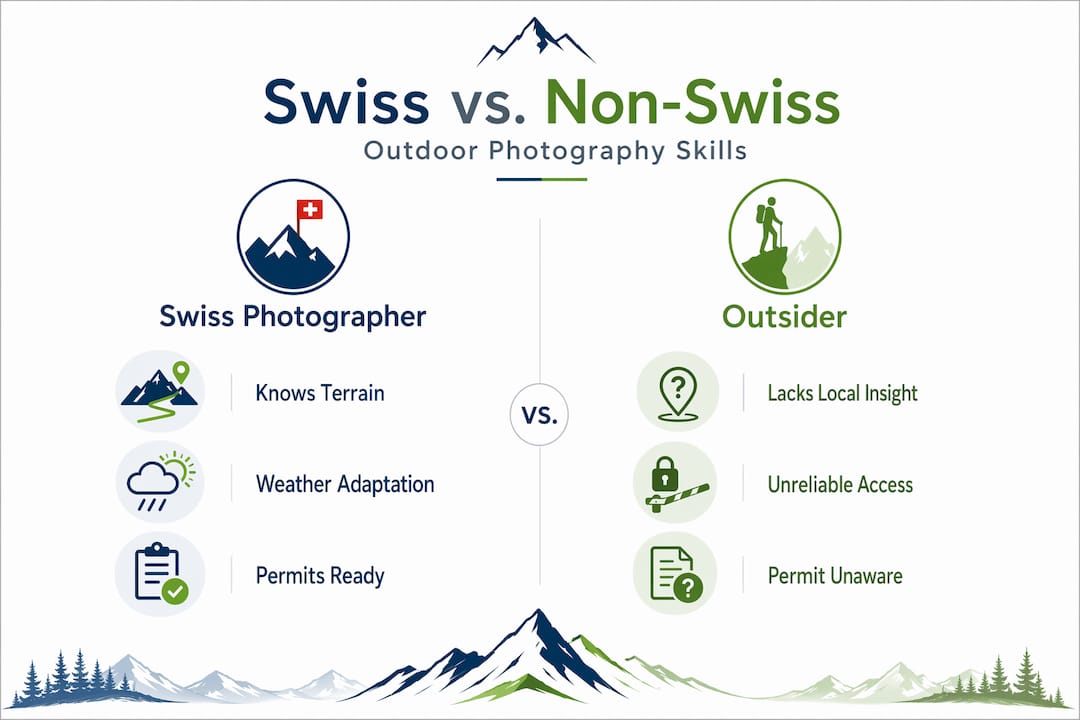
| Local knowledge changes outcomes | Swiss photographers understand alpine weather, access routes, and regulations that outside photographers routinely underestimate. |
| Organized professional community | Switzerland’s photography ecosystem links professionals to international bodies, maintaining high standards of craft and accountability. |
| Distinctive artistic style | Swiss photographers favor natural, precise, and environment-driven imagery over staged or heavily directed shots. |
| Concierge-level logistics | From vendor coordination to weather contingency planning, Swiss photographers protect your shoot from preventable failures. |
| Hybrid workflows save time | One professional delivering both photo and video content creates consistency and reduces production complexity. |
Why choose Swiss photographers for alpine projects
The single biggest misconception clients bring to outdoor photography projects in Switzerland is that great gear travels well. It does. Local knowledge does not.
Planning a mountain shoot involves layers that most outside photographers have never managed. Access to certain alpine locations requires permits. Drone regulations vary by region and altitude. Trail etiquette, wildlife buffer zones, and seasonal closures all affect which shots are physically possible on a given day. Swiss photographers already know these systems. They have relationships with local authorities and vendors, and they build that knowledge into every project from the start.
Weather in the Swiss Alps is genuinely unpredictable at short notice, and planning a 2–3 day flexible window in locations like Zermatt measurably improves both image quality and client experience. A non-local photographer arriving on a fixed one-day schedule has no margin for the kind of fog, wind, or afternoon thunderstorm that rolls in without warning at altitude. Swiss photographers build that margin in by default.
- Terrain fluency: They know which approach gives you the morning light, which ridge becomes inaccessible after fresh snowfall, and which lake reflects color that only lasts 20 minutes after sunrise.
- Regulatory awareness: Respecting marked trails, wildlife distances, and drone rules protects your shoot legally and preserves access for future projects.
- Vendor networks: Trusted relationships with local guides, transport providers, and equipment rental companies reduce last-minute scrambling and cost overruns.
- Backup planning: Secondary locations and timing windows are part of the pre-shoot strategy, not an afterthought.
Pro Tip: Ask any photographer you’re considering hiring to describe their contingency plan for weather disruption before you sign a contract. A Swiss photographer with real alpine experience will answer immediately and in detail. Hesitation is a warning sign.
Switzerland’s photography community and professional standards
One of the less-visible Swiss photography advantages is the formal professional infrastructure surrounding photographers who work here. Switzerland is not simply a beautiful backdrop. It is home to a genuinely organized photography community with international reach.
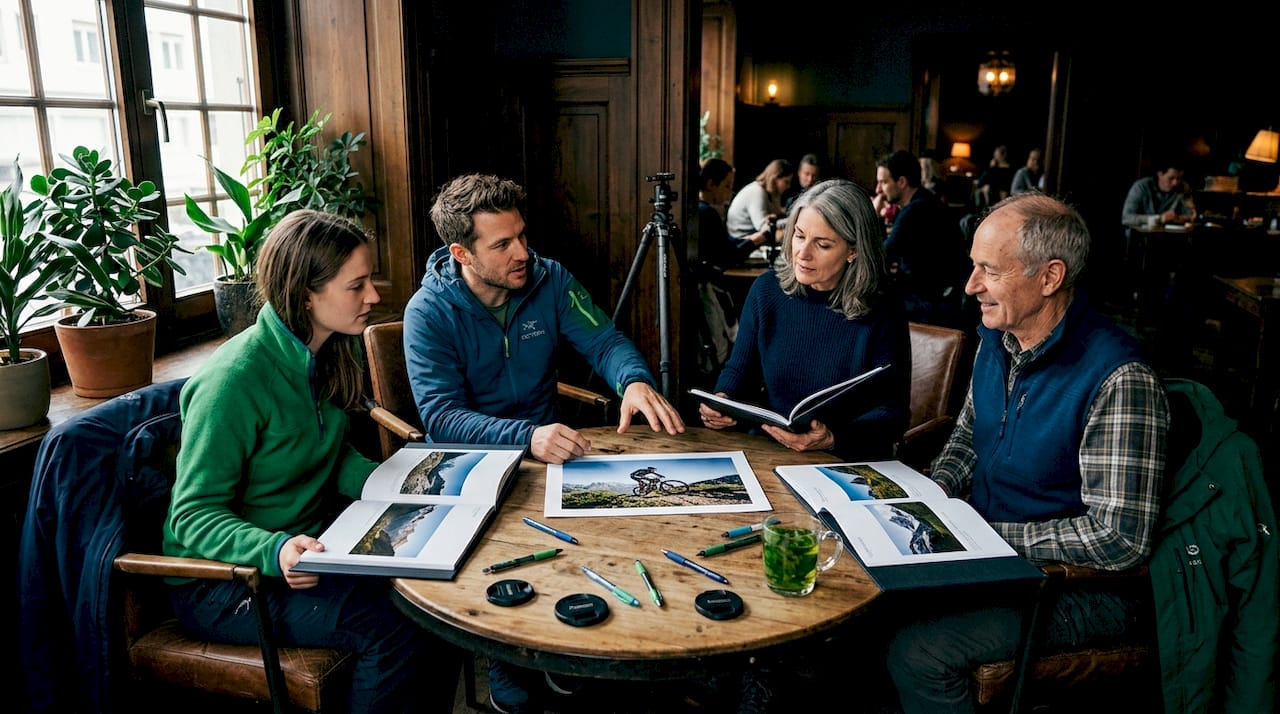
PHOTOSUISSE unites Swiss photography clubs and individual members under a national umbrella body, and membership automatically connects photographers to FIAP, the international federation spanning more than 90 countries. That affiliation matters because it links Swiss photographers to global standards, cross-border competitions, and peer review processes that raise the baseline quality of the entire community.
The table below shows how the Swiss photography ecosystem compares to working with a freelance photographer operating outside any formal structure.
| Criterion | Swiss professional ecosystem | Unaffiliated freelancer |
|---|---|---|
| Accountability | Peer review, club membership, competition track record | Self-reported credentials only |
| International standards | FIAP-affiliated, exposed to global jury feedback | Variable, dependent on individual background |
| Ongoing development | Access to national competitions and exhibitions | No formal continuing education path |
| Ethical practice | Community norms and environmental guidelines | No formal code of conduct |
| Client recourse | Reputation within structured community | Limited options if quality falls short |
Swiss photographers who participate actively in this ecosystem are accustomed to having their work evaluated at a high level. That regular exposure to constructive criticism, international comparison, and exhibition standards sharpens output in ways that isolated practice rarely replicates.
The artistic style that sets Swiss photographers apart
You can learn to recognize Swiss outdoor photography without being told what you are looking at. There is a clarity and restraint to the images. The environment is never fighting the subject. The two exist in deliberate, considered balance.
Swiss photographers tend toward what photographers describe as an under-directed approach. Rather than positioning subjects heavily and forcing the frame, they focus on clarity, precision, and documentary awareness that captures what is actually happening rather than what was staged to happen. For brands, this means your imagery feels real, not produced. For individuals, it means the photographs actually look like you, in that place, in that moment.
“Discretion and respect for place allow Swiss photographers to capture intimate moments that fit the alpine environment rather than impose on it.”
This philosophy runs deeper than aesthetics. It shapes the entire relationship between photographer and location. Because photography outside controlled urban settings requires a deep relationship with nature to retain authenticity, Swiss photographers who work regularly in alpine terrain develop an attunement to their environment that produces images with genuine emotional weight.
The specific qualities that define this approach include:
- Composition driven by environment: Light, terrain, and weather shape the frame. The photographer responds to the landscape rather than overriding it.
- Restraint in post-processing: Swiss outdoor photographers tend to preserve natural tones rather than push images toward hyper-saturated or heavily filtered results.
- Timeless framing: The goal is imagery that holds up not just for a current campaign but for years. Trends in editing come and go; the mountain does not.
- Cultural and environmental sensitivity: Subjects are treated with dignity. Locations are left exactly as found.
This is not a passive approach. It requires significantly more skill than directing a subject into a pose, because the photographer must read the environment, anticipate the moment, and be technically ready before the opportunity disappears.
Practical benefits for your project
Beyond artistry and professionalism, there are hard practical reasons why hiring Swiss photographers makes commercial sense for businesses and individuals with complex outdoor projects.
-
Location scouting at a professional level. Swiss photographers who specialize in outdoor work in Switzerland already maintain mental and digital libraries of locations tied to specific seasons, times of day, and weather conditions. You are not paying for their learning curve on your budget.
-
Concierge-style coordination. Building flexibility with multi-vendor shoots and ordering equipment in advance is standard practice for experienced Swiss photographers. They coordinate styling teams, guides, transport, and timing in a way that minimizes your operational involvement.
-
Weather contingency as a feature, not an exception. Swiss alpine photographers treat backup planning as a non-negotiable part of project design. Multiple location options and flexible scheduling windows are built into the proposal from day one.
-
Hybrid photo and video delivery. One professional delivering both photo and video content cuts production complexity significantly. Visual consistency is maintained across all assets because they were captured with the same eye, same light, and same context. For brand campaigns, this matters enormously.
-
Reputation as a filter. When you read Swiss photographer reviews and see consistent feedback about reliability, responsiveness, and high-quality delivery in challenging environments, that is the professional ecosystem doing its job. Reputation in a structured community is harder to fake than a portfolio.
Pro Tip: When briefing a Swiss photographer for an outdoor project, share your brand’s visual language reference points before the first call. Photographers who have worked across multiple outdoor categories will immediately understand the visual territory and can tell you whether your reference points are achievable given the season, location, and budget.
My perspective on what Swiss photographers do differently
I’ve spent years working in alpine and adventure photography, and the thing I keep coming back to is this: the mountain does not care about your shoot schedule. Clients who understand that upfront have a fundamentally different experience than those who arrive expecting the environment to cooperate on command.
What separates the best Swiss photographers is not just technical skill. It is earned patience combined with the ability to move fast when the window opens. You read the mountain all morning. You wait. Then the light breaks exactly right, and you have maybe four minutes. That kind of responsive precision does not come from watching tutorials. It comes from doing this hundreds of times in the same terrain.
I’ve seen well-funded projects fail because the team flew in an internationally recognized photographer who had never shot in alpine conditions. The gear was excellent. The instincts were urban. The images showed it.
The other thing clients miss is how much the preparation before the shoot day determines the outcome. Location scouting, permit timing, relationship with the forecast, backup locations already walked and assessed. By the time the actual shoot day arrives, a good Swiss outdoor photographer has already made most of the critical decisions. As a freelance outdoor photographer, I plan for every scenario that could derail a shoot before I ever meet my client on location. That’s not overcaution. That’s what professionalism looks like in this environment.
The Swiss photographic tradition of precision and restraint is not an accident. It reflects a deep respect for what the landscape already provides, and a discipline to get out of its way.
— Martin
See what Swiss outdoor photography can do for your project
If this article has clarified your thinking about the Swiss photography advantages for outdoor and adventure projects, the next step is seeing those principles applied in practice.
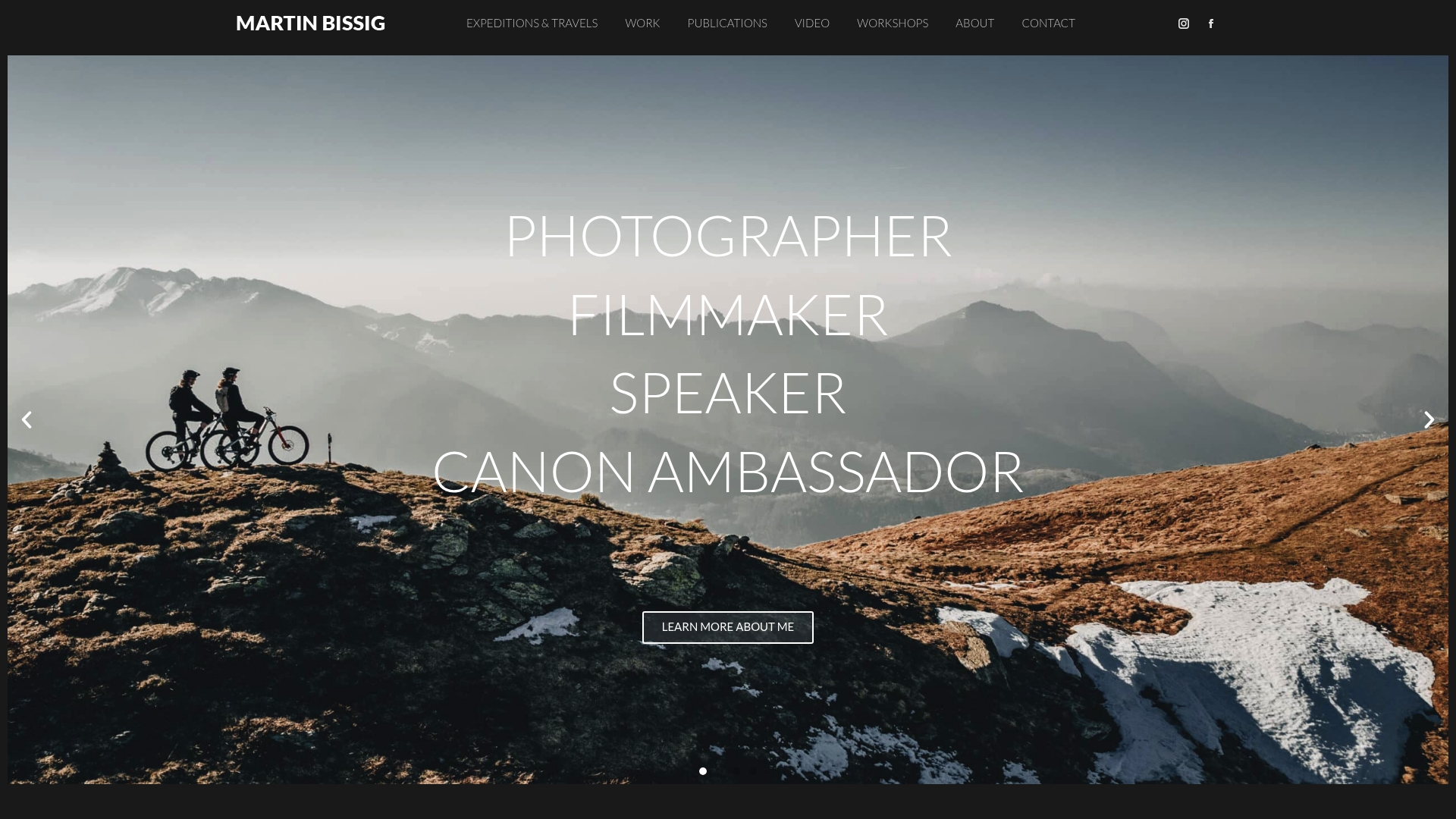
Bissig brings years of commercial and editorial outdoor photography experience to every project, with deep local knowledge of Swiss terrain, alpine logistics, and the kind of contingency planning that protects your investment from weather and access challenges. Whether you need images for a brand campaign, editorial feature, or adventure sports project, the work is built around your visual goals from the first conversation.
Start with the outdoor photography guide to understand the styles and techniques that define great outdoor imagery. When you’re ready to discuss a specific project, explore the outdoor photography portfolio to see how Swiss expertise translates into finished work. For adventure and action-specific projects, the action photography work showcases what’s possible when technical precision meets alpine terrain.
FAQ
Why do Swiss photographers excel at outdoor and alpine photography?
Swiss photographers combine local terrain knowledge, weather fluency, and regulatory awareness that outside photographers cannot replicate without years working in the same environment. Their experience means fewer shoot failures and stronger final imagery.
What should I ask when choosing a Swiss photographer?
Ask about their contingency plan for weather disruption, their familiarity with permit requirements for your specific location, and whether they offer hybrid photo and video delivery. A prepared photographer will answer all three immediately.
How does the Swiss photography professional community benefit clients?
Organizations like PHOTOSUISSE link Swiss photographers to FIAP and a network of 90-plus affiliated countries, creating accountability, ongoing peer review, and exposure to international quality standards that directly benefit client outcomes.
What makes Swiss outdoor photography style distinctive?
Swiss outdoor photographers favor natural, restrained composition where the environment shapes the frame rather than competing with the subject. The result is imagery that reads as authentic rather than produced, which performs consistently well in both editorial and commercial contexts.
Is hiring a local Swiss photographer more expensive than hiring externally?
The upfront rate may be similar, but local photographers eliminate hidden costs including location learning time, failed shoot days due to weather misjudgment, permit errors, and logistical failures that non-local photographers routinely encounter in Swiss alpine environments.


