

Video is the single most influential medium in tourism marketing today, directly shaping how travelers discover, evaluate, and book destinations. 54% of travelers watch video content when choosing accommodations. That number alone tells you where attention lives. This guide covers the psychological mechanisms behind video’s power, the content types that convert, how AI is changing production economics, and the deployment strategies that move viewers from inspiration to booking.
How does video enhance travel marketing effectiveness?
Video works in tourism marketing because it triggers emotional responses that static images and text cannot replicate. Research from january 2026 confirms that emotional activation drives viewer engagement more directly than narrative immersion alone. That distinction matters for how you structure your content.
Two theoretical frameworks explain the mechanism. The Stimulus-Organism-Response model treats video as a stimulus that activates internal emotional states, which then produce behavioral responses like clicking “book now.” Source Credibility Theory explains why user-generated content and vlogs outperform polished brand ads: viewers trust presenters they perceive as real people with genuine experience. A 2026 systematic review of 51 peer-reviewed studies confirmed that presenter credibility and content quality are the strongest predictors of travel intention from video.
Short-form and long-form video serve different purposes in the funnel. Short-form content on Instagram Reels and TikTok captures attention and creates emotional spikes in under 60 seconds. Long-form content on YouTube builds narrative depth and sustains consideration for higher-cost trips. Neither format is universally superior. The format you choose should match where your audience is in the decision process.
The formats that consistently produce strong emotional responses include:
- Cinematic destination reels (30–90 seconds) that prioritize sensory detail over information
- First-person vlogs that activate Source Credibility Theory by mimicking peer recommendations
- Time-lapse and aerial footage that convey scale and atmosphere without narration
- Testimonial videos where real travelers describe specific emotional moments
Pro Tip: Front-load your strongest visual within the first three seconds. Emotional activation drops sharply after that window on social platforms, and most algorithms measure completion rates from that opening moment.
What types of video content best support tourism marketing goals?
91% of travel-related businesses use video as a core marketing tool. The gap between businesses that use video and those that use it well is significant. Content type selection is where most tourism marketers leave performance on the table.
The five video types that dominate effective tourism marketing are:
- Destination highlights — Short, visually driven reels that establish place identity and emotional tone
- Itinerary walkthroughs — Step-by-step video guides that reduce booking anxiety by making the trip feel familiar
- Client testimonials — Peer-to-peer trust signals that address objections without a sales pitch
- Behind-the-scenes content — Raw, unpolished footage that builds authenticity and brand personality
- Destination comparisons — Side-by-side format videos that help undecided travelers commit to a choice
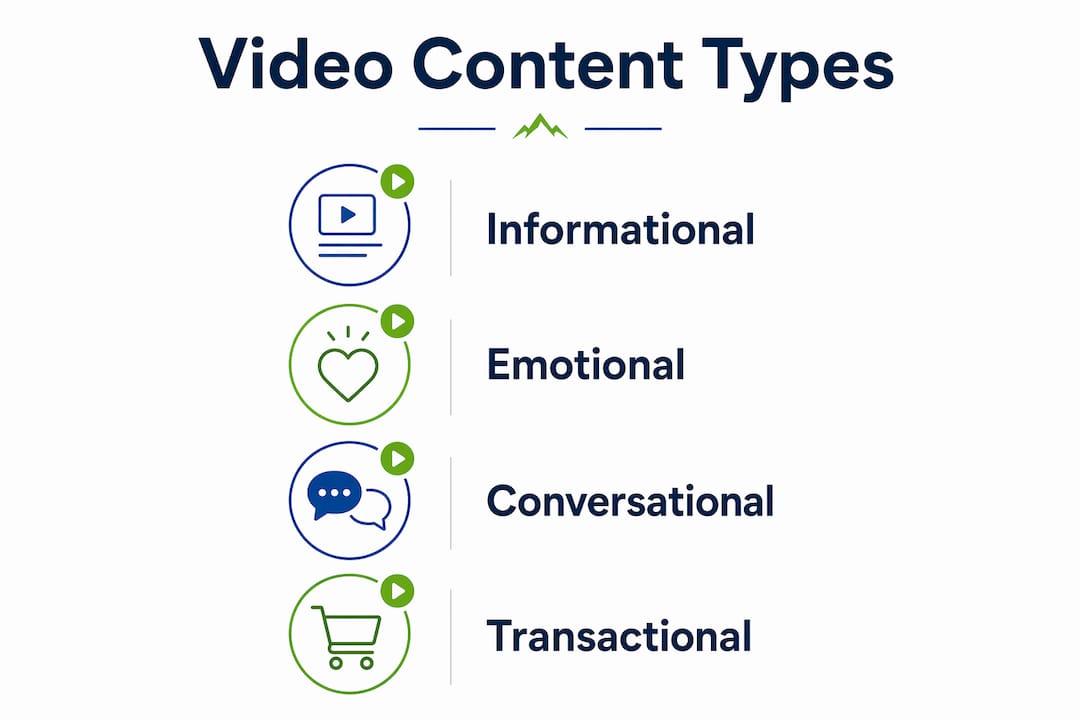
The IECT framework (Informational, Emotional, Conversational, Transactional) gives you a structured way to categorize and plan content. Informational videos answer questions. Emotional videos create desire. Conversational videos build community. Transactional videos drive direct bookings. A healthy content calendar uses all four types in rotation, not just the ones that feel easiest to produce.
Authenticity consistently outperforms production polish on social platforms. Travelers prefer lo-fi content that feels like a peer recommendation over a broadcast advertisement. A shaky handheld clip of a local market at dawn will outperform a color-graded hotel promo on TikTok almost every time. This does not mean production quality is irrelevant. It means the emotional register of the content must feel real, regardless of the technical execution.
Platform considerations also shape format decisions. Instagram Reels favor vertical 9:16 video under 60 seconds. YouTube rewards horizontal 16:9 content with strong retention curves past the two-minute mark. TikTok rewards trend participation and audio synchronization over cinematic quality.

Pro Tip: Apply the “One Trip, Five Videos” approach. One shoot produces a destination highlight reel, a behind-the-scenes clip, a testimonial cut, a short-form social teaser, and a long-form YouTube walkthrough. You get five distinct assets from a single production day, each tailored for a different platform and funnel stage.
How can AI and technology transform video production for tourism?
AI video generation removes the three biggest barriers to consistent video output: cost, speed, and geographic access. Traditional video production requires crew travel, location permits, weather windows, and post-production cycles that can stretch weeks. AI tools generate cinematic destination footage in minutes, without a crew on location.
The business case is concrete. Hotels using AI video report 3x higher conversion rates compared to static image listings. The same data shows 78% higher watch times when AI-dubbed videos use localized language, including regional accents and culturally specific phrasing. Generic AI voiceovers do not produce that result. Localization is the variable that drives the lift.
For small agencies and multi-property operations, the implications are significant:
- Campaign-specific videos can be produced without scheduling on-location shoots
- Multilingual versions of the same video can be generated for different target markets simultaneously
- Seasonal content can be updated quickly without re-shooting
- A/B testing different visual styles or narratives becomes affordable at scale
The critical caution is humanization. AI-generated video that sounds generic or culturally misaligned damages brand credibility faster than no video at all. Incorporating local linguistic and cultural elements into AI outputs is not optional. It is the difference between content that converts and content that signals inauthenticity to the exact audience you are trying to reach.
AI video works best as a production accelerator, not a replacement for genuine destination storytelling. The strongest results come from combining AI efficiency with real footage and authentic human narration.
What practical strategies maximize video impact in tourism campaigns?
Video placement and scheduling matter as much as video quality. Landing pages with video convert over 80% better than those without. That figure reflects immediate availability: the video must load fast and autoplay silently above the fold, not sit behind a click.
Client testimonial videos posted weekly build the trust that drives bookings over time. Consistency matters more than production frequency spikes. One authentic testimonial every week outperforms a batch of ten uploaded in a single month.
Audience familiarity with a destination should shape your content design. Research with 915 respondents confirmed that destination familiarity moderates engagement: viewers who already know a place respond to recognition cues and emotional depth, while unfamiliar audiences need clearer narrative structure and orientation. Segment your video strategy accordingly.
| Audience type | Video priority | Format recommendation |
|---|---|---|
| Unfamiliar with destination | Orientation and narrative clarity | Long-form YouTube walkthroughs |
| Familiar, considering booking | Emotional depth and social proof | Testimonials, behind-the-scenes |
| Ready to book | Transactional clarity | Short-form with direct booking links |
| Post-trip, potential repeat | Community and loyalty | User-generated content reposts |
Integrating video directly with booking engine functionality closes the gap between inspiration and conversion. A destination reel that ends with a clickable booking link, or a testimonial that links to a specific package page, removes friction at the moment of highest intent.
Pro Tip: Use emotional pacing deliberately. Open with a sensory hook, build narrative tension through the middle, and resolve with a clear emotional payoff before your call to action. Viewers who reach the emotional resolution are significantly more likely to click through than those who drop off mid-video.
Key takeaways
Video drives tourism bookings because it combines emotional activation, social proof, and platform-native formats that static content cannot replicate.
| Point | Details |
|---|---|
| Emotional activation over immersion | Prioritize emotional cues in video design; they drive engagement more directly than story depth alone. |
| Content type diversity | Rotate across destination highlights, testimonials, itinerary walkthroughs, and behind-the-scenes formats. |
| AI as a production accelerator | Use AI video for scale and localization, but humanize outputs with regional accents and cultural context. |
| Landing page video placement | Add video above the fold on booking pages to capture the 80%+ conversion lift. |
| Audience familiarity segmentation | Match video narrative complexity to how well your audience already knows the destination. |
What I’ve learned about video and authentic destination storytelling
After years of shooting outdoor and adventure content across locations from Pakistan to California, the pattern I keep seeing is this: the videos that move people are almost never the ones with the biggest budgets. They are the ones that capture a moment that feels genuinely unscripted.
Tourism marketers often chase production quality as a proxy for credibility. The logic makes sense on paper. A polished video signals investment and professionalism. But travelers have developed a sharp instinct for content that was made to impress versus content that was made to show them something real. The gap between those two registers is immediately felt, even if viewers cannot articulate why.
The practical mistake I see most often is reusing the same footage across every platform without adapting the edit. A 90-second cinematic reel that works on YouTube will feel slow and disconnected on TikTok. The footage might be identical, but the pacing, the audio, and the opening frame need to be rebuilt for each context. Treating video as a single asset rather than a source of multiple platform-native edits is where most campaigns underperform.
AI tools are genuinely useful for scaling output, and I am not dismissive of them. But the footage that makes someone actually want to go somewhere still requires a human being in the right place at the right moment, with the skill to capture what is actually there. Technology can distribute that moment. It cannot manufacture it.
The future of tourism video marketing belongs to teams that combine authentic field production with smart distribution strategy. Neither alone is enough.
— Martin
Professional video production for tourism marketing
Tourism marketing demands footage that makes people feel a destination before they book it. Bissig specializes in outdoor videography techniques that capture the energy, scale, and atmosphere of adventure destinations with the kind of authenticity that drives real engagement.
Whether you need destination reels, behind-the-scenes content, or multi-format assets from a single production, Bissig’s filmmaking for outdoor brands approach delivers footage built for the platforms and audiences that matter to your campaigns. Every shoot is designed to produce multiple usable formats, so your production investment goes further across channels.
FAQ
What is the role of video in tourism marketing?
Video combines emotional storytelling with credible destination presentation to influence travel decisions. It is the format most directly linked to booking intent, with 54% of travelers watching video content before choosing accommodations.
What video types work best for travel agencies?
Destination highlights, client testimonials, itinerary walkthroughs, behind-the-scenes content, and destination comparisons are the five formats that consistently drive engagement and bookings for travel agencies.
How does AI video benefit tourism marketing?
AI video removes production barriers by generating destination footage quickly and enabling multilingual dubbing. Hotels using AI video report 3x higher conversion rates, with localized AI dubbing producing 78% higher watch times.
How often should tourism brands post video content?
Client testimonial videos posted weekly build the consistent trust that drives bookings over time. Frequency and authenticity matter more than production volume spikes.
Does video on landing pages actually improve conversions?
Landing pages with video convert over 80% better than those without. The video must be immediately visible and load fast to capture that lift at the moment of highest booking intent.


