

Buying a new camera body or a sharper lens feels like the obvious next move when your outdoor shots keep falling flat. The problem is that gear doesn’t teach you how to read golden-hour light on a mountain ridge, anticipate a wildlife moment, or frame a composition that tells a genuine story. Many enthusiastic photographers plateau for years because they’re solving the wrong problem. Field-based learning workshops offer something no equipment upgrade can: real-time, immersive instruction that closes the gap between knowing what a good photo looks like and actually capturing one.
Table of Contents
- What makes outdoor and adventure photography workshops unique?
- Core skills and techniques learned in workshops
- The impact of technology and feedback in modern workshops
- Are workshops worth it? Limits, benefits, and real-world application
- Why most people miss the real value of photography workshops
- Ready for your next adventure? Join or collaborate with experienced outdoor pros
- Frequently asked questions
Key Takeaways
| Point | Details |
|---|---|
| Hands-on learning | Outdoor workshops teach by doing, putting you in real adventure scenarios for the best experience. |
| Tech boosts skill | Modern workshops leverage AI, AR, and apps to deliver faster, data-backed improvement for photographers. |
| Community matters | Workshops foster supportive networks, creative idea exchanges, and lasting mentorship for growth. |
| Practice cements gains | Continuous, intentional practice after a workshop is key to long-term improvement. |
| Not just technical | The true workshop value is creative growth, conservation ethics, and discovering your photographic voice. |
What makes outdoor and adventure photography workshops unique?
Standard photography classes often take place in controlled studio environments or lecture halls. You learn theory, you see slides, and maybe you practice on a tabletop still life. Outdoor and adventure photography workshops are a completely different animal. They put you directly in the environment where the real challenges live.
Outdoor photography techniques like exposure control in harsh backlighting, tracking a moving subject downhill, or finding a compelling foreground on a featureless snowfield can’t be learned from a workbook. These skills click into place when you’re standing in the actual conditions, camera in hand, with an experienced instructor showing you what to look for. That’s the irreplaceable core of the workshop model.
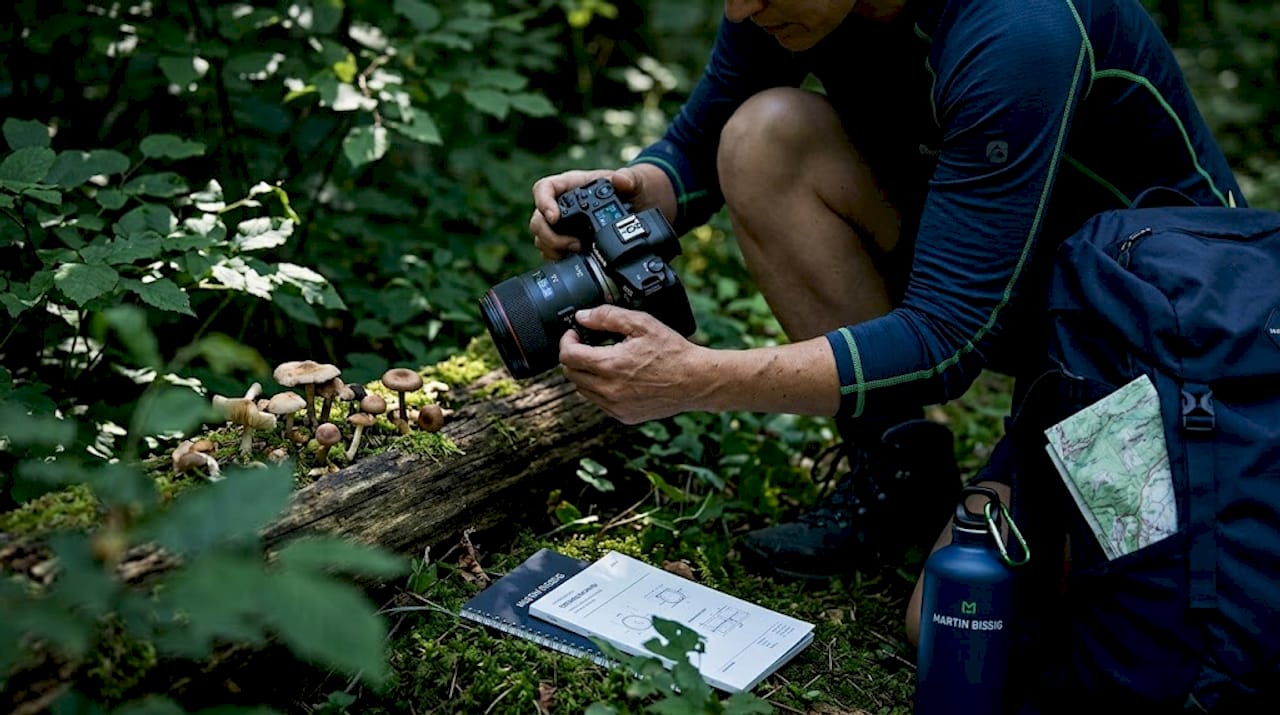
The core mechanics covered in outdoor workshops include composition, exposure control, light reading, lens selection, focus techniques, and ethical wildlife practices, all taught through hands-on field sessions and classroom modules. This isn’t a checklist of theory. It’s integrated learning where each concept gets tested against real terrain within hours of being introduced.
Methodologies push participants hard: immersive field hikes reaching up to 9 miles and 1,500 feet of elevation, trail demonstrations, group critiques, post-processing workflows, and structured light and weather planning using dedicated apps. That physical commitment mirrors the actual demands of adventure photography in the field. If you’re not used to hiking while carrying a camera system and thinking about exposure simultaneously, a workshop teaches you how to do both at once.
The community element is one of the most underrated aspects. Shooting alongside other passionate photographers generates real-time creative feedback. Someone else will notice a better angle. A peer critique after a morning shoot reveals blind spots that solo practice never would. This is why even photo-realistic CGI images have trouble fully replacing the emotional depth of genuine outdoor photography: authenticity requires real experience, and community accelerates that growth.
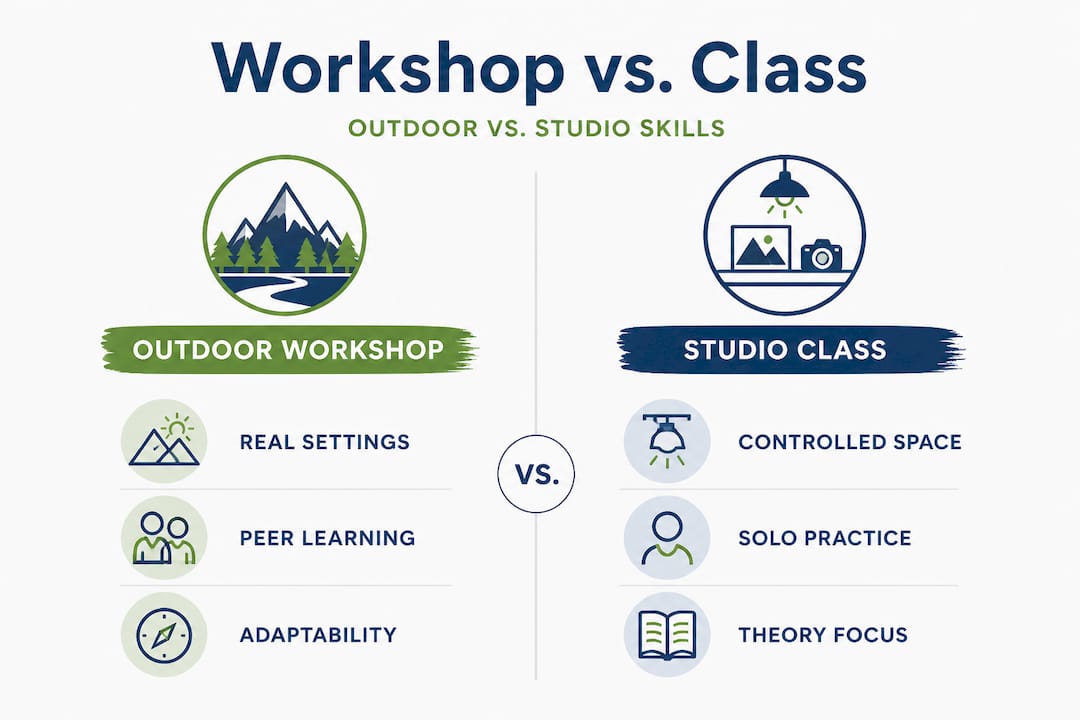
| Feature | Outdoor/adventure workshop | Standard photography class |
|---|---|---|
| Learning environment | Active outdoor locations | Studio or classroom |
| Physical demands | High (hiking, weather, terrain) | Low |
| Feedback timing | Immediate, in the field | Delayed, post-session |
| Skill focus | Composition, light, movement, ethics | Theory, technique basics |
| Community dynamic | Collaborative, immersive | Mostly individual |
| Weather/light variables | Real and unpredictable | Controlled |
The contrast is stark. When conditions change unexpectedly, a workshop participant learns to adapt. That adaptability is the mark of a confident outdoor photographer.
Core skills and techniques learned in workshops
A well-structured outdoor photography workshop follows a deliberate learning arc. It doesn’t dump every concept on day one. Instead, it builds from foundational principles toward complex, real-world integration over the course of the program.
Here’s how a typical workshop learning arc unfolds:
- Orientation and pre-visualization. The first session focuses on reading a scene before lifting the camera. You learn to identify the light direction, the strongest compositional anchor, and the story you’re trying to tell.
- Technical calibration in the field. Instructors guide you through metering modes, aperture and shutter speed choices for the specific environment, and lens selection for the subject you’re tracking.
- Practical shooting with live critique. You shoot, review, and get immediate feedback. This loop is fast and efficient.
- Post-processing integration. Evening classroom sessions show how to develop a consistent editing workflow that enhances what you captured rather than trying to fix fundamental errors.
- Final portfolio review. The closing session is a group critique where each participant’s work is evaluated against the techniques discussed. This creates accountability and reveals measurable improvement.
The core mechanics emphasized throughout include composition, exposure control, light reading, lens selection, focus techniques, and ethical wildlife practices. Ethical wildlife photography deserves special attention here: understanding how your presence affects animal behavior is a skill that takes explicit instruction. Many photographers learn it too late and compromise both their shots and the animals’ wellbeing.
| Skill area | Workshop delivery method | Real-world application |
|---|---|---|
| Composition | Field demonstrations + group critique | Framing shots without guides |
| Exposure control | Live metering in variable conditions | Handling backlit scenes |
| Light reading | Sunrise/sunset field sessions | Anticipating optimal windows |
| Ethical wildlife practice | Trail briefings + guided interaction | Responsible wildlife work |
| Post-processing | Evening classroom workflow session | Consistent editing style |
The theory and practice integration that strong workshops offer is what makes the learning stick. When you hear a concept and apply it within the same afternoon, retention skyrockets compared to passive learning.
Pro Tip: During field sessions, keep a small notebook or use your phone’s memo app to jot down composition ideas and light notes immediately after each shot sequence. Reviewing these notes against your images in the evening session accelerates pattern recognition faster than any app.
Outdoor storytelling is also a key component that separates adventure photography from simple landscape snaps. The role of storytelling in outdoor work comes down to sequencing, emotion, and context. Workshops teach you how to build a narrative across a series of images, not just optimize individual frames.
The impact of technology and feedback in modern workshops
Technology has quietly transformed what’s possible in a photography workshop setting. It’s not just about better cameras or faster computers. AI and augmented reality tools are now actively woven into instruction, giving participants feedback that used to require hours of one-on-one instructor time.
AI and AR-enhanced workshops now deliver measurable improvements: accuracy rates of 97.18%, precision of 97.33%, recall of 96.95%, and F1 scores of 97%. Feedback-focused training boosts scene memorability judgment accuracy from 56.7% to 59.4%. Participants consistently report gains in composition confidence, editing fluency, and overall technical skill. These aren’t marginal improvements. They represent a fundamental acceleration of learning timelines.
Apps for light and weather planning have also changed workshop preparation and execution. Tools that predict golden hour timing down to the minute, show sun angle relative to terrain, or model incoming weather patterns allow instructors and participants to plan shooting sessions with much greater precision. Location scouting has similarly evolved, with satellite imagery and topographic overlays helping groups identify the best vantage points before hiking to them.
The media-focused workshops that integrate video production alongside photography benefit even more from these tools. Analyzing motion sequences, reviewing video composition in real time, and applying color grading workflows in structured evening sessions are all enhanced by modern feedback systems.
Key tech-enabled benefits in modern outdoor photography workshops include:
- Instant composition analysis using AI tools that flag common framing errors before you move on
- Weather and light prediction apps that maximize field session timing
- AR overlays for scene visualization before shooting begins
- Post-processing workflow software with live instructor annotation
- Cloud-based portfolio review allowing remote expert critique between sessions
- Wearable data feedback tracking how long participants spend on each shot setup
The workflow strategies that combine these technologies with traditional field instruction create a learning environment that simply didn’t exist a decade ago.
Pro Tip: Don’t wait until the end of a workshop to use feedback tools. Run a quick AI composition check on your first-morning shots and bring the flagged images to that afternoon’s group critique. This creates a direct feedback loop that accelerates improvement across the entire program.
Are workshops worth it? Limits, benefits, and real-world application
Workshops genuinely accelerate skill development. There’s no reasonable debate about that. But it’s important to go in with realistic expectations rather than treating a three-day experience as a complete transformation.
“Workshops are not substitutes for consistent personal practice; empirical gains are modest without sustained application, and benefits vary by participant strategy and motivation.” Scientific Reports research on workshop impact
This is the honest reality. A workshop can compress months of trial-and-error learning into a few intense days, but the gains fade quickly if you don’t continue applying what you’ve learned. Participants who go home energized but put their camera down for three months rarely retain the full benefit. The ones who make a deliberate effort to shoot regularly after the workshop are the ones who actually level up.
The real-world photographic impact of strong visual storytelling skills is significant. Brands, editorial clients, and tourism organizations pay for consistency, not just lucky shots. Workshops build that consistency by creating repeatable habits and technical frameworks.
To maximize post-workshop growth, follow this sequence:
- Schedule a personal shooting project within two weeks. Use it to apply the specific techniques from the workshop. Give yourself a clear brief so you’re forced to make compositional decisions.
- Join or form a small critique group. Even a monthly online review with two or three peers from your workshop cohort maintains the feedback loop.
- Revisit your workshop notes every 30 days. Skills like light reading and composition require active reinforcement, not just initial exposure.
- Intentionally seek conditions that challenge you. If your workshop focused on mountain light, go shoot in flat midday light on purpose and figure out how to make it work.
- Document your progress with a before-and-after portfolio. Comparing work from just before the workshop to work six months later is both motivating and instructive.
The honest value of a workshop is this: it removes the guesswork from a critical phase of your development and replaces it with structured experience. That’s worth a great deal. But your motivation and follow-through determine whether it becomes a permanent upgrade or just an exciting memory.
Why most people miss the real value of photography workshops
Here’s the uncomfortable truth from experience in the field: most people show up to workshops looking for shortcuts. They want the camera setting that makes every sunset shot perfect, or the single compositional rule that removes all doubt. That mindset leads to frustration, because those shortcuts don’t exist.
The photographers who transform their work through workshops are the ones who come open to something less tangible: a shift in how they see, not just how they operate their equipment. The real breakthrough in any outdoor photography workshop isn’t the moment you nail exposure on a fast-moving subject. It’s the moment you start thinking like an outdoor visual storyteller rather than a person pointing a camera at impressive scenery.
Community and mentorship play a bigger role in this shift than any technique module. Shooting alongside someone who notices light you missed, hearing how an instructor chose a shot angle for emotional rather than technical reasons, or discussing conservation ethics around a campfire at the end of a day in the field, these experiences build something that’s genuinely difficult to acquire any other way.
Ethical awareness is another invisible gain that most workshop reviews barely mention. Outdoor photography has a real relationship with conservation. Understanding wildlife behavior, respecting fragile ecosystems, and thinking about the environmental footprint of your shoots changes how you work permanently. Collaborative creativity in photography extends this further: when you build a creative network through workshop experience, you gain long-term collaborators who share your values, not just your technical vocabulary.
The creative voice you develop by being challenged in real conditions, surrounded by peers, and pushed by experienced instructors is the most lasting thing you take home. Gear is replaceable. That voice is yours.
Pro Tip: At every workshop, prioritize one genuine conversation with someone whose photography style is nothing like yours. The creative friction from seeing a scene differently than another photographer sees it is the fastest path to developing your own perspective.
Ready for your next adventure? Join or collaborate with experienced outdoor pros
Taking everything you’ve learned here and turning it into action is the step that separates photographers who keep improving from those who stay stuck.
Martin Bissig’s workshops and creative collaborations offer exactly the immersive, field-tested environment this article has described. Whether you’re looking to sharpen your craft in a hands-on workshop setting or you want to partner on a larger project that demands genuine outdoor storytelling expertise, the current workshop calendar is the place to start. For brands and creative teams, exploring adventure branding with a pro opens possibilities far beyond what stock imagery delivers. And if you want to understand the deeper creative and editorial potential of what outdoor photography can achieve, the role of photojournalism in outdoor storytelling is worth exploring as a foundation. Your next level of work starts with the right environment and the right people around you.
Frequently asked questions
How do I choose the right photography workshop for my skill level?
Check course prerequisites, sample images from past participants, and the session structure. Beginner-friendly workshops emphasize foundational techniques and provide more guided field instruction rather than assuming prior technical knowledge.
Will a single workshop make me a professional photographer?
A workshop accelerates learning significantly, but real mastery requires continuous practice and applied experience long after the session ends. Sustained application is what converts workshop gains into permanent skill.
What skills can I expect to gain from an outdoor/adventure workshop?
Expect hands-on learning of core techniques including exposure control, composition, lens selection, ethical wildlife photography, and real-time creative problem-solving in genuine outdoor conditions.
How does technology like AI and AR make workshops more effective?
AI and AR tools provide instant, precise feedback that dramatically accelerates skill development. AI and AR-enhanced workshops deliver measurable improvements in accuracy, precision, and scene memorability judgment that traditional instruction alone can’t match.
Are workshops suitable for solo travelers interested in nature photography?
Yes. Outdoor workshops foster camaraderie, mentorship, and guided safety protocols that make them ideal for individuals seeking both immersive outdoor experiences and structured creative learning, regardless of prior social connections in the field.


