

A strong photo story pitch combines a clear narrative concept, a curated image set, and a tailored presentation that shows editors you understand their publication. For photographers targeting adventure and outdoor media, this means going beyond beautiful images. Editors at outlets covering mountain biking, alpine expeditions, or trail running want a visual journey with a beginning, middle, and end. They want to know why the story matters now. Getting that across in a concise, professional package is exactly what separates accepted pitches from ignored ones. This guide covers how to pitch a photo story from research through follow-up.
How to pitch a photo story: research and target the right outlets
The most common reason a strong pitch fails is a wrong match. Sending a mountain biking feature to a publication that focuses on ocean adventure wastes everyone’s time, including yours.
Start by studying three to five issues of any publication you want to target. Look at the types of stories they run, the visual style they favor, and the geographic range they cover. Adventure and outdoor brands are equally worth researching. A gear company’s Instagram feed and recent campaign work tells you more about their visual identity than their media kit ever will.
When you identify a good fit, find the specific editor who handles photo features. Pitching to a generic editorial inbox is far less effective than addressing the photo editor or features editor by name. Many publications list editorial contacts on their masthead or contributor guidelines page.
Key steps for targeting the right outlet:
- Read the submission guidelines in full before writing a single word of your pitch
- Note the publication’s preferred story length, image specs, and contact method
- Identify two or three recent stories similar in theme to yours and reference them in your pitch to show genuine familiarity
- Check whether the outlet accepts unsolicited pitches or requires an introduction through a mutual contact
- For brands, review their content calendar or seasonal campaigns to time your pitch well
Pro Tip: Mentioning a specific story the publication ran recently, and explaining how your project builds on or contrasts with it, signals that you are a reader first and a contributor second. Editors notice that.
Aligning your story’s theme with a publication’s mission is not flattery. It is the minimum standard. Editorial photography standards vary significantly between consumer outdoor magazines, trade publications, and brand content teams, so treat each pitch as a custom document.

What should a photo story pitch include?
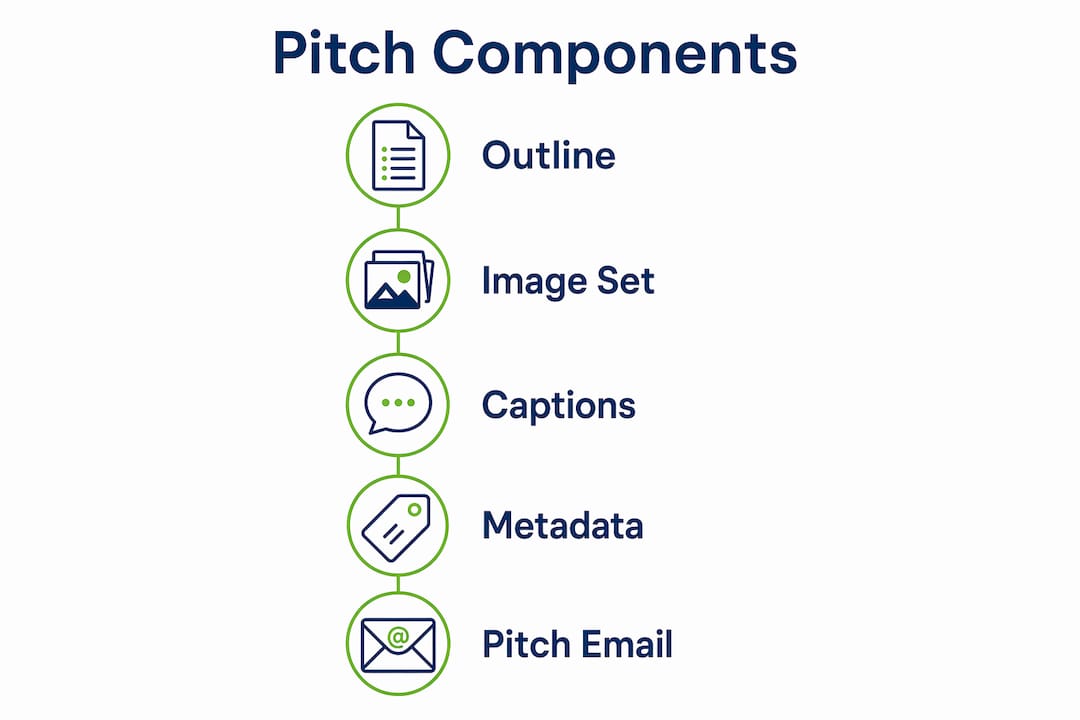
A complete pitch package has three core components: a text outline, a curated image set, and detailed captions. Each one carries equal weight with editors.
The text outline
Your written outline should run 250–300 words. It answers three questions: why this story, why now, and why you. Strong photo stories include a clear narrative arc with a beginning, middle, and end, plus a timely reason the story matters. For an adventure pitch, that might mean tying a mountain biking expedition to a newly opened trail network or a climate-driven change in a familiar landscape. Specificity is what makes an outline compelling rather than generic.
The image set
A professional pitch should include 5–15 curated images shared via a digital gallery link, not email attachments. Use Google Drive, Dropbox, or a portfolio platform. Editors work fast, and a link they can open in one click is far more likely to get viewed than a 40MB attachment sitting in their inbox.
Your image selection should show variety. A complete visual story includes establishing shots, portraits, close-ups, detail images, and action frames. Arrange them in narrative order so the editor can feel the story’s flow without reading a single word of your outline first.
For projects that are not yet complete, a visual teaser PDF with 4–6 high-impact images or a mood board shows editors the project’s potential and your capability. This approach works well for expedition pitches where the shoot is still weeks away.
Captions and metadata
Captions must answer who, what, where, when, and why in 2–3 sentences or under 500 characters. Captions are not optional context. They are a core editorial expectation. An image of a rider dropping into a canyon means nothing to a photo editor without knowing the location, the athlete’s name, and the story behind the moment.
Full EXIF and IPTC metadata, including copyright information, must be embedded in every file. Stripped metadata files are frequently rejected before an editor even views the image. This is a technical step that costs nothing to get right and everything to get wrong.
Pro Tip: Build a pre-send checklist covering metadata, caption completeness, file naming, rights clearance, and gallery link access. Running through it before every pitch eliminates the most common avoidable rejections.
One additional detail that strengthens adventure pitches specifically: including logistical proof such as permits, access agreements, or named local contacts reduces editorial risk. It tells the editor you can actually execute the story, not just imagine it.
How do you write a pitch email that gets read?
Editors’ workflows reward pitches that are easy to scan. A scan-friendly pitch has a concise subject line, a brief personal introduction, a clear story hook, and a direct link to images. Every element should minimize the editor’s effort.
Structure your pitch email like this:
- Subject line: Be specific. “Mountain Bike Feature: Graubünden’s New Alpine Trails, Spring 2026” beats “Photo Story Submission” every time.
- Opening sentence: State who you are and your most relevant credential in one sentence. “I’m an outdoor photographer based in Switzerland with editorial credits in [publication name] and [publication name].”
- Story hook: In two to three sentences, explain what the story is, why it matters now, and what makes your images the right fit for this outlet.
- Image access: Provide a single clean link to your gallery. Do not embed images directly in the email body.
- Closing: Keep it brief. Express openness to discussing the project and thank the editor for their time.
The entire email body should fit on one screen without scrolling. If an editor has to scroll to find your gallery link, you have already lost their attention.
Pro Tip: Write your subject line last. Once your pitch is complete, you will know exactly which detail is most compelling. Lead with that.
Good visual storytelling techniques apply to your pitch email as much as to your images. The email is the first impression of how you communicate, and editors read it as a signal of how you will work as a collaborator.
What mistakes kill a photo story pitch?
Most pitch rejections trace back to a small set of avoidable errors. Recognizing them before you send is the difference between a professional submission and a deleted email.
Ignoring submission instructions is the fastest path to rejection, regardless of image quality. If the guidelines say no attachments, send a link. If they specify JPEG files under 5MB, do not send RAW files. Editors treat guideline violations as a signal that you will be difficult to work with.
Generic pitches are equally damaging. A pitch that could have been sent to any publication tells an editor that you did not care enough to research theirs. Every pitch should contain at least one detail that only applies to that specific outlet.
Common technical mistakes to avoid:
- Missing or stripped EXIF and IPTC metadata
- File names like “IMG_4892.jpg” instead of descriptive labels like “Athlete-Name_Location_2026.jpg”
- Oversized attachments instead of gallery links
- Captions that describe the image visually instead of providing editorial context
- Omitting your contact information and usage rights from the pitch document
“Pitching is more than cold emails. Relationship-building is key. Editors favor pitches from photographers who have built authentic connections and who support others’ work in the field.”
On follow-up: wait at least two weeks before checking in. When you do follow up, add something new. Share a related image you captured recently, or mention a development in the story. Following up with added value rather than just a reminder increases your chances of engagement significantly.
One ethical note specific to adventure and outdoor pitches: sensitive location data for wildlife habitats or vulnerable environments should be omitted or generalized in captions and metadata. Responsible storytelling protects the places and subjects that make outdoor photography worth doing.
Key Takeaways
A successful photo story pitch requires a narrative arc, curated images with full metadata, and a pitch email built for editors who have limited time and high standards.
| Point | Details |
|---|---|
| Research before pitching | Study the publication’s past features and submission guidelines before writing a single word. |
| Curate 5–15 images | Share images via a gallery link in narrative order, showing variety across shot types. |
| Write tight captions | Answer who, what, where, when, and why in under 500 characters per image. |
| Keep the email scannable | Use a specific subject line, a one-sentence bio, a story hook, and a single gallery link. |
| Follow up with value | Wait two weeks, then add something new to your follow-up rather than just checking in. |
What pitching taught me about patience and editors
Pitching is a long game. I learned that the hard way after sending what I thought were strong packages and hearing nothing back for weeks. The instinct is to assume the work was not good enough. Usually, the real issue was something simpler: a generic subject line, a caption that described the frame instead of telling the story, or a pitch sent to the wrong editor entirely.
The shift that changed everything for me was treating every pitch as the start of a conversation, not a transaction. Editors want collaborators who bring genuine creative energy, not just contributors submitting content. When I started referencing specific stories a publication had run, explaining exactly why my project fit their audience, and following up with something useful rather than just a nudge, my response rate improved noticeably.
Building relationships with editors takes time. Attending workshops, engaging with editorial photographers on social media, and showing up consistently in the spaces where outdoor media professionals gather all matter. Credibility accumulates slowly and disappears fast. One sloppy pitch to an editor you have been building a relationship with can set you back months.
The photographers I respect most in the adventure space treat rejection as information. A “not right for us now” response tells you something about timing or fit. A non-response after a technically sound pitch tells you something about the outlet’s bandwidth. Neither is personal. Adapt, refine, and send again.
Humility is underrated in this field. The best pitches I have seen from emerging photographers are not the most technically perfect ones. They are the ones where the photographer clearly cares about the story more than the credit.
— Martin
Bissig’s resources for outdoor photographers ready to pitch
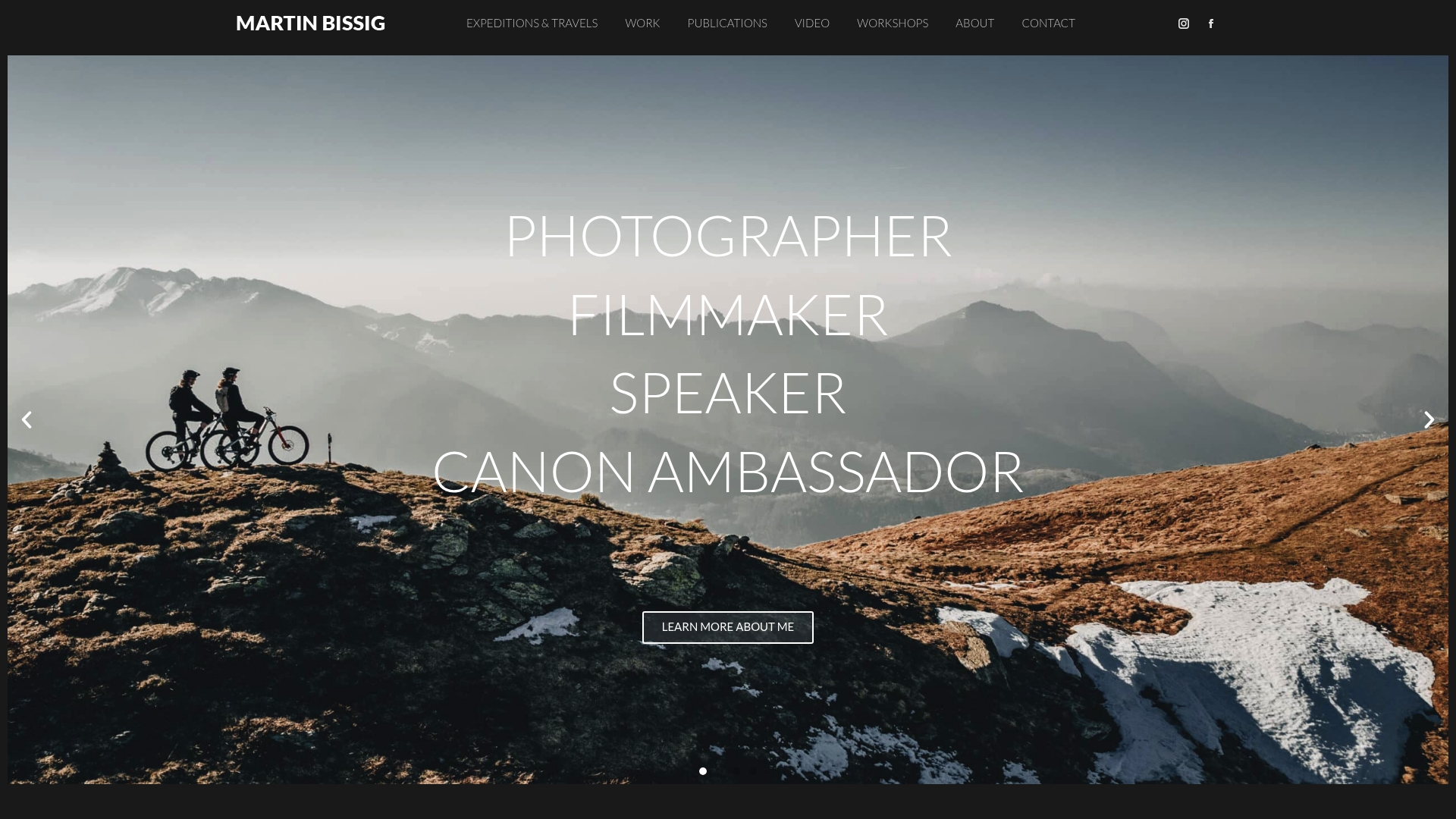
Pitching well starts with understanding what makes outdoor and adventure photography editorially strong. Bissig has built a body of work across mountain biking, alpine expeditions, and trail environments that speaks directly to what editors and brands in this space are looking for.
The adventure sports photography guide covers the technical and narrative foundations that make outdoor images pitch-ready, from shot selection to storytelling structure. For photographers looking to sharpen their editorial eye, the visual storytelling guide addresses how to build a narrative arc across a full image set. Both resources are built for photographers who want to move from capturing great moments to telling stories that editors actually publish.
FAQ
What is a photo story pitch?
A photo story pitch is a formal submission to an editor or brand that includes a written story outline, a curated image set, and detailed captions, all packaged to show the story’s narrative and editorial fit.
How many images should I include in a pitch?
Include 5–15 curated images shared via a digital gallery link. Arrange them in narrative order to show establishing shots, action frames, portraits, and detail images.
How long should the written outline be in a pitch?
The text outline should run 250–300 words and answer why the story matters, what it covers, and why you are the right photographer to tell it.
What kills a photo story pitch fastest?
Ignoring submission guidelines and sending generic pitches are the two most common reasons editors reject submissions, regardless of image quality.
When should I follow up after sending a pitch?
Wait at least two weeks before following up. When you do, include something new, such as a fresh image or a story development, rather than simply asking for a status update.


