

Editorial standards in photography are the documented rules that govern how images are captured, edited, and presented to ensure they truthfully represent the subject without misleading the audience. The National Press Photographers Association (NPPA), Reuters, and Getty Images each publish formal codes that set the industry benchmark. Defining editorial standards in photography is not optional for anyone submitting work to magazines, wire services, or digital publications. These standards protect your credibility, your client relationships, and the audience’s right to accurate visual information.
What are the key professional standards and ethical guidelines in editorial photography?
The foundation of every photography editorial guideline is a single principle: the image must represent reality as it existed at the moment of capture. The NPPA prohibits staging or any content alteration, permitting only technical corrections like contrast or color adjustments as of 2026. That means you cannot add a cloud, remove a bystander, or use AI tools to reconstruct a scene, regardless of how subtle the change appears.
Reuters enforces a zero-tolerance policy against adding or removing elements from an image. Their policy draws a clear line between tonal enhancement and fabrication. Trust in a news photograph collapses the moment that line blurs.
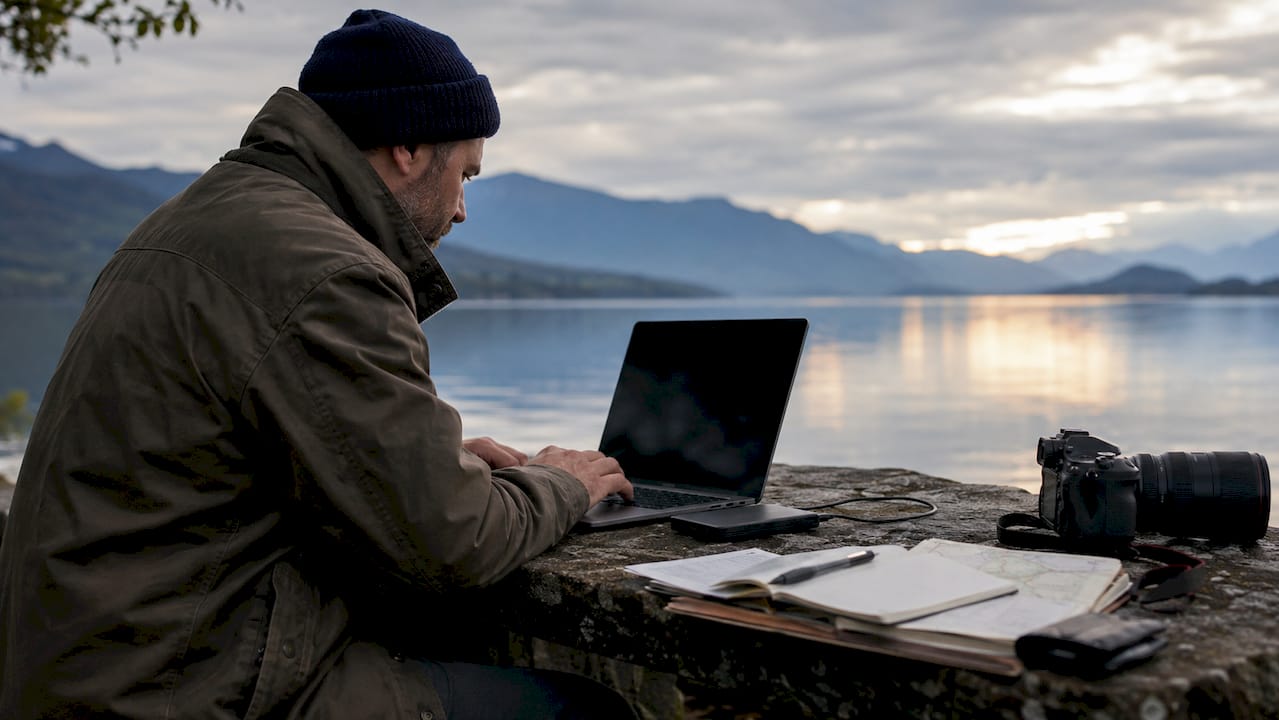
Basic post-production such as exposure correction, cropping, and minor color grading mirrors traditional darkroom techniques and is universally accepted. These edits must not mislead the audience about what actually occurred. The test is simple: does the edit change what the viewer understands about the scene?
Objectivity is the other pillar. Photographers must actively avoid bias, ensure captions align precisely with what is shown, and provide full context to prevent misleading narratives. A technically perfect image with a misleading caption violates editorial standards just as surely as a manipulated file does.
The core ethical requirements across NPPA, Reuters, and Getty Images break down as follows:
- No staging: Do not arrange subjects, props, or environments to create a false impression of events.
- No AI manipulation: Do not use generative AI tools to add, remove, or reconstruct image content.
- Accurate captions: Every caption must match the factual content of the image, including correct identification of subjects.
- Fair representation: Avoid image selections that reinforce stereotypes or misrepresent communities.
- Transparency: Disclose any edits that go beyond standard technical correction.
Photojournalism carries the strictest interpretation of these rules. Standards for photojournalism require impartiality at every stage, from the moment you frame the shot to the final file you submit.
How do technical standards and submission requirements shape editorial workflows?
Technical compliance is where many photographers lose assignments they deserve. Meeting a publication’s file and metadata requirements is not bureaucratic overhead. It is proof that your workflow is professional and your images are verifiable.
Here is the standard submission sequence that leading publications expect:
- Shoot in RAW. Capture in RAW format to preserve full image data. Backcountry Magazine specifies .DNG files with JPEG previews sized at 10×15 inches at 150 dpi.
- Embed IPTC metadata. Every file must carry embedded metadata including your name, location, subject identification, and a factual description. Shutterstock editorial guidelines require the format: CITY, STATE/COUNTRY, MONTH DAY, YEAR.
- Apply only permitted edits. Process your RAW files with exposure, white balance, and contrast corrections only. Do not clone, heal, or composite before submission.
- Follow naming conventions. Use consistent file naming that includes your last name, date, and a sequence number. Editors managing hundreds of submissions rely on this to track and verify images.
- Meet minimum image counts. Most publications require a minimum number of selects per story or assignment. Submitting too few images signals a weak shoot, not editorial restraint.
The table below summarizes technical requirements across three major editorial contexts:
| Publication type | File format | Metadata standard | Key restriction |
|---|---|---|---|
| News wire (Reuters) | JPEG, RAW | IPTC with full caption | No element addition or removal |
| Outdoor magazine (Backcountry) | .DNG + JPEG preview | Photographer, location, subject | Minimum image count required |
| Stock editorial (Shutterstock) | JPEG | City, country, date format | Cannot be used for advertising |
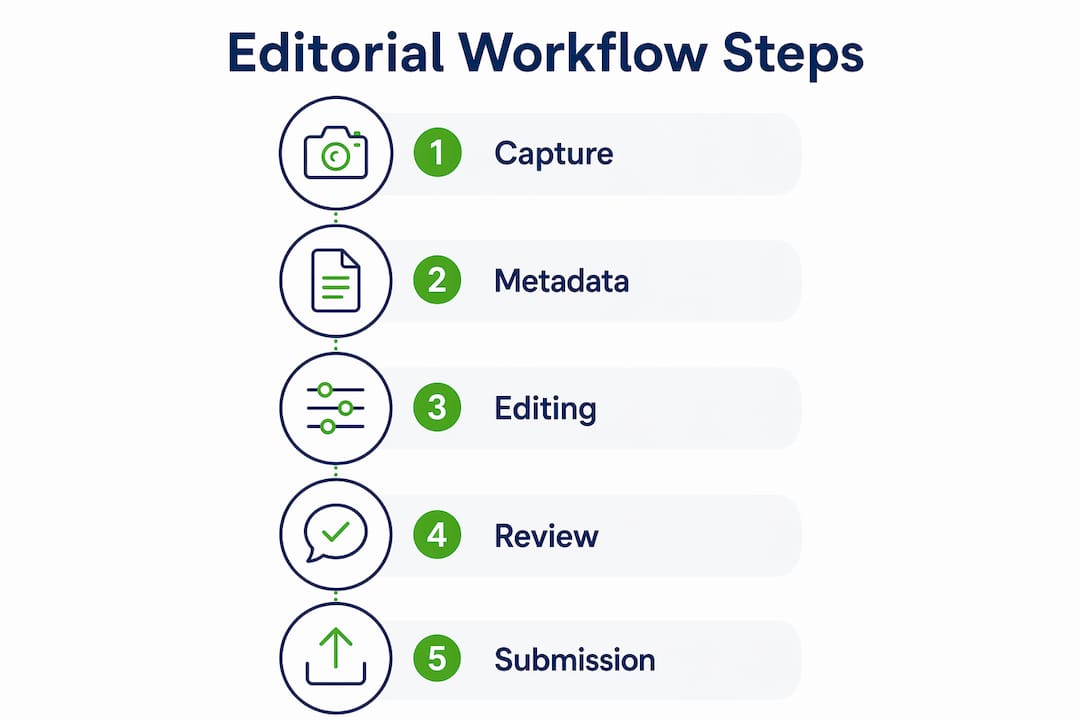
Failure to embed accurate metadata often results in rejection of high-quality images due to editorial verification and legal compliance needs. A stunning photograph with missing IPTC tags is unpublishable at most professional outlets. Build metadata embedding into your export preset so it never gets skipped.
Pro Tip: Create a Lightroom or Capture One export preset that automatically embeds your contact info, copyright, and a location placeholder. You fill in the subject description per shoot. This cuts submission prep time significantly and eliminates metadata errors.
For a deeper look at file format standards and how they affect editorial assignments, Bissig covers the full submission workflow in detail.
What are the common challenges in applying editorial standards in real-world photography?
The hardest part of ethical photography practices is not knowing the rules. It is applying them consistently when the pressure is on and the light is perfect but the scene needs “just one small fix.”
Editorial photography exists on a spectrum. Documentary photojournalism sits at the strictest end. Illustrative editorial work, such as a magazine feature on adventure travel, allows more creative latitude. The spectrum from strict documentary to flexible illustrative standards is real, and misreading where your assignment falls is one of the most common causes of rejection.
The challenges photographers and editors face most often include:
- Subtle manipulation crossing the line. Removing a distracting rock from a trail shot feels harmless. Getty Images editorial policy flags even minor aesthetic clean-up, such as removing dust or distractions, as a potential violation if it alters the factual scene.
- Subjective image selection. Choosing which frame to submit is itself an editorial act. Selecting only images that support one narrative while suppressing contradictory frames is a form of bias.
- Caption misalignment. A photograph of a training exercise submitted with a caption implying live combat is a factual breach, even if the image itself is unedited.
- Creative retouching without disclosure. Retouching beyond clarity adjustments should be transparently labeled to maintain professional trust. If a magazine feature image has been composited or heavily graded, that must be disclosed.
- AI tool temptation. Generative fill, sky replacement, and object removal tools are built into Adobe Photoshop and Lightroom. Using them on editorial submissions violates NPPA and Reuters policies regardless of how natural the result looks.
Pro Tip: Before submitting any image, ask yourself one question: “If the subject of this photograph saw what I changed, would they have grounds to dispute the accuracy of the image?” If yes, revert the edit.
Maintaining authenticity in editorial images requires discipline at the editing stage, not just at the moment of capture. The two are inseparable.
How can photographers and editors implement clear editorial standards in their teams?
Individual discipline matters, but organizational culture plays a critical role in upholding editorial standards beyond any single photographer’s effort. A team without a written policy will default to inconsistent individual judgment, and that inconsistency becomes a liability.
Building a functional editorial policy starts with these steps:
- Write a house style document. Define exactly which edits are permitted, which require disclosure, and which are prohibited. A defined house style prevents subjective rejections and gives photographers a clear reference before they submit.
- Implement a verification step. Before any image is published, a second editor should review the file’s metadata, edit history, and caption for accuracy. This is standard practice at Reuters and AP.
- Run ethics training annually. Technology changes faster than intuition. Training staff to recognize AI-generated artifacts, composite seams, and metadata gaps keeps your team current.
- Create a disclosure policy. Decide in advance how your publication will label images that include creative retouching. A simple tag like “photo illustration” is the industry standard.
- Protect staff who raise concerns. News organizations must empower staff to flag ethical issues without fear of retaliation. A photographer who flags a manipulated image is protecting the publication, not creating problems.
The photojournalist’s role in outdoor storytelling extends beyond the field. It includes the responsibility to hand off images that are honest, verified, and fully documented.
Key takeaways
Editorial standards in photography require clear written policies, strict metadata compliance, and zero tolerance for content manipulation to maintain audience trust.
| Point | Details |
|---|---|
| Define permitted edits clearly | Limit post-production to exposure, color, and crop; prohibit all content addition or removal. |
| Embed metadata on every file | Include IPTC tags with location, subject, and photographer info to pass editorial verification. |
| Match caption to image content | Captions that misrepresent the scene violate standards even when the image itself is unedited. |
| Disclose creative retouching | Label any edit beyond technical correction as a photo illustration to preserve credibility. |
| Build team-wide ethics culture | Written policies and annual training outperform individual discipline alone for consistent compliance. |
Why I think most photographers misunderstand editorial standards
Most photographers treat editorial standards as a submission checklist. Fill in the metadata, avoid cloning, done. That framing misses the deeper obligation entirely.
I have shot for outdoor and adventure publications for years, and the moments that tested my standards were never the obvious ones. They were the frames where the light was extraordinary but the athlete’s expression was wrong, where the location was stunning but a sponsor’s competitor logo was visible in the background. The temptation to “fix” those details is real. The correct answer is always to find a better frame, not a better tool.
The shift from film to digital made manipulation invisible. The shift from Photoshop to AI-powered tools made it trivially easy. That ease is the actual threat to editorial photography right now. Not bad actors deliberately faking images, but well-intentioned photographers making “small” corrections that collectively erode the credibility of the entire medium.
What I have found actually works is treating the editing stage as a second act of reporting. Every decision you make in Lightroom or Capture One is a claim about what was true. If you cannot defend that claim to your editor, your subject, and your audience simultaneously, the edit does not belong in the file.
The photographers who build long-term relationships with publications are not the ones with the most technically perfect images. They are the ones whose files arrive clean, honest, and fully documented every single time. Credibility is not built in the field. It is built in the workflow.
— Martin
Take your editorial photography further with Bissig
Understanding the rules is the starting point. Applying them under pressure, in the field, with a client waiting and a deadline approaching, is where real editorial skill develops.
Bissig has built a body of work across outdoor, adventure, and sports photography that meets the editorial standards of international publications. Whether you are looking to sharpen your approach to action photography techniques or understand how professional outdoor photographers manage the full workflow from capture to submission, the resources at bissig.ch go deep on the practical side. Explore the portfolio, read the guides, and see how editorial discipline and creative ambition work together in real assignments.
FAQ
What is the definition of editorial standards in photography?
Editorial standards in photography are the rules that require images to accurately represent the subject without manipulation that alters content or context. Organizations like the NPPA and Reuters publish formal codes that define acceptable edits and prohibit staging or AI-generated alterations.
What edits are allowed under photojournalism standards?
Exposure correction, cropping, white balance, and minor contrast adjustments are universally accepted because they mirror traditional darkroom techniques. Adding or removing any element from the frame, including AI-generated content, violates the standards set by the NPPA and Reuters.
Why does metadata matter for editorial photo submissions?
Editors use embedded IPTC metadata to verify image authenticity, confirm location and subject identity, and meet legal compliance requirements. Missing or inaccurate metadata is a common reason high-quality images are rejected by publications like Backcountry Magazine.
When should a photographer disclose retouching?
Any edit that goes beyond standard technical correction, such as compositing, sky replacement, or object removal, requires disclosure. Labeling the image as a “photo illustration” is the accepted industry practice for maintaining credibility.
How do editorial standards differ between publications?
Standards exist on a spectrum from strict documentary photojournalism, where virtually no manipulation is permitted, to illustrative editorial work, where creative latitude is broader. Understanding where your assignment falls on that spectrum before you shoot prevents rejections and ethical breaches.


