

Publication photography is defined as imagery created specifically to appear alongside text in magazines, newspapers, books, or digital media, with the primary purpose of telling a story or enhancing a narrative. Unlike advertising photography, it does not exist to sell a product. Photographers like Richard Avedon and Irving Penn built careers on this distinction, producing images that served editorial narratives rather than brand campaigns. Understanding what is publication photography means recognizing that the context of publication, not any particular visual style, is what defines the work.
What is publication photography, and how is it defined?
Publication photography is defined by its context: an image qualifies as editorial or publication photography when it appears alongside text within a media outlet. This is a critical distinction that most photographers miss early in their careers. A portrait shot for a magazine profile and a portrait shot for a brand campaign can look nearly identical. The difference lies entirely in where and why the image runs.
The industry term for this field is editorial photography. The phrase “publication photography” describes the same practice and is widely used in SEO and educational contexts, but editorial photography is the term you will encounter in submission guidelines, licensing contracts, and conversations with photo editors at outlets like National Geographic, Outside, or Wired. Both terms refer to the same discipline.
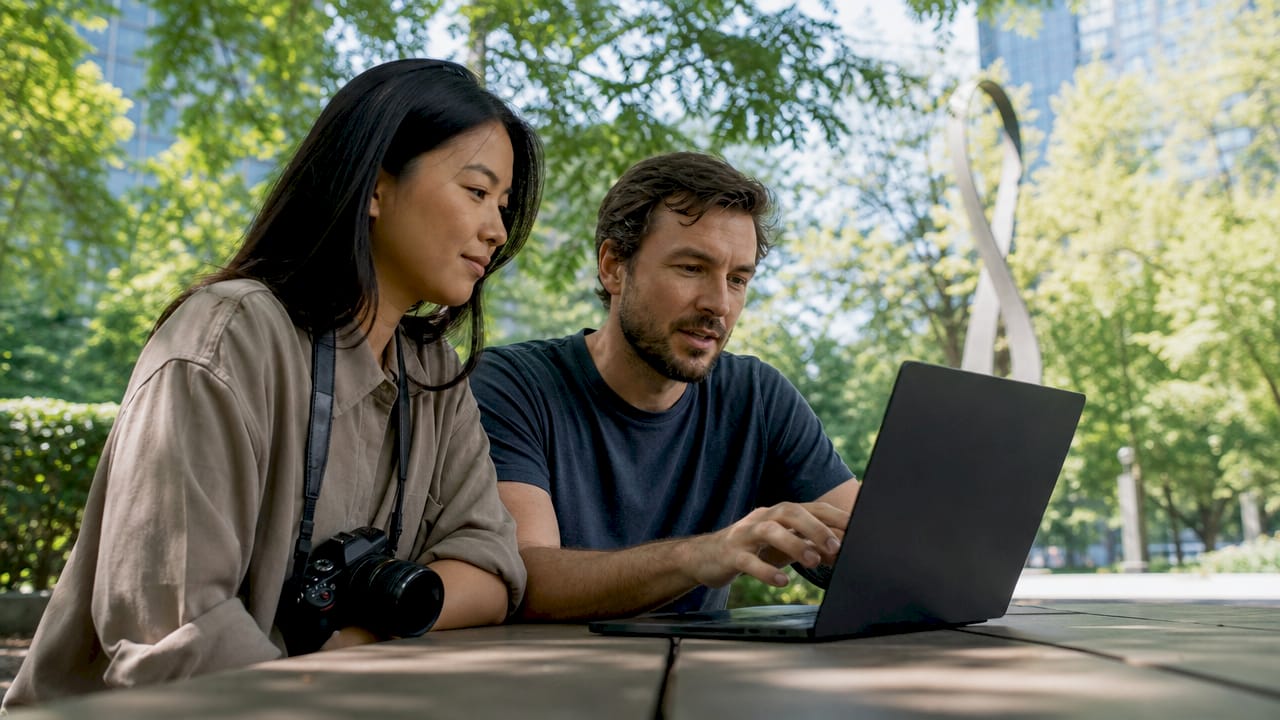
Editorial photography serves storytelling and narrative purposes without a primary intent to sell products. That single sentence separates it from the majority of photography work available in the commercial market. The question a publication photographer asks is not “will this sell?” but “will this tell the story?”
How does publication photography differ from commercial photography?
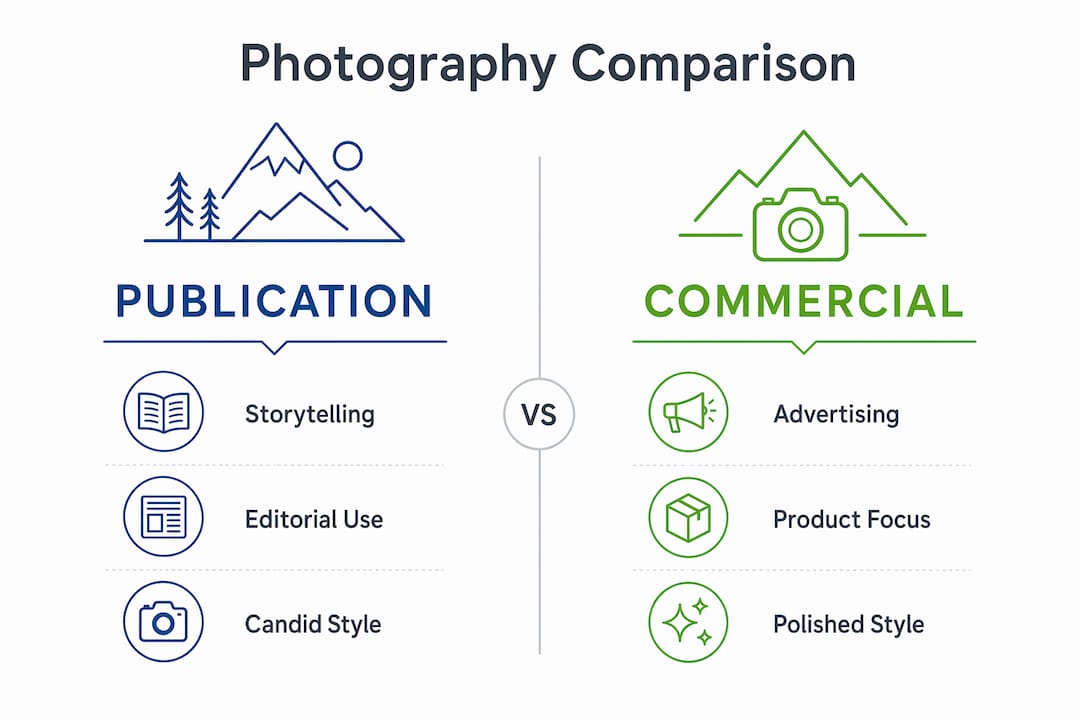
The core difference between publication and commercial photography is intent. Commercial photography asks “will this sell?” while publication photography asks “will this tell the story?” That shift in question changes every creative decision, from lighting to composition to post-processing.
Licensing is where the practical differences become legally significant. Editorial images carry restrictions that commercial images do not. An editorial photo of a recognizable person does not require a model release, because it runs in a journalistic or narrative context. A commercial image of the same person used in advertising requires a signed release. Photographers who confuse these rules expose their clients and themselves to legal risk.
Style expectations also diverge sharply. Editorial photography prioritizes candid or naturalistic lighting and composition to enhance storytelling. Commercial photography favors a cleaner, polished aesthetic built around product appeal. One rewards authenticity; the other rewards perfection.
| Factor | Publication photography | Commercial photography |
|---|---|---|
| Primary purpose | Storytelling and narrative | Advertising and sales |
| Model release required | No (editorial use) | Yes (commercial use) |
| Licensing restrictions | Cannot be used for advertising | Broad usage rights available |
| Visual style | Candid, naturalistic, narrative-driven | Polished, aspirational, product-focused |
| Typical outlets | Magazines, newspapers, books, digital media | Brand campaigns, packaging, billboards |
Understanding commercial vs. editorial distinctions protects your business and keeps your submissions legally clean.
What are the main types of publication photography?
Publication photography spans diverse subjects and styles serving varied narrative functions within media. The field is not a single genre. It is a collection of subgenres unified by the editorial context in which they appear.
Photojournalism is the most recognized subtype. It documents real events, conflicts, and social issues with minimal intervention. Outlets like Time and Reuters rely on photojournalists to deliver images that carry the weight of news.
Editorial fashion photography appears in publications like Vogue or Harper’s Bazaar. It uses clothing and styling as vehicles for visual storytelling, often with a conceptual or artistic direction that goes far beyond product display.
Lifestyle photography captures people living, working, and moving through the world in ways that feel authentic. Travel magazines and outdoor publications depend heavily on this subtype to place readers inside a scene.
Documentary photography builds long-form visual narratives over time. A photographer spending months in a remote region to document a community produces documentary work. This subtype demands patience and deep access.
Still life for editorial covers food, objects, and environments arranged to support a written piece. A recipe feature in a food magazine or a gear review in an outdoor publication both rely on this approach.
- Photojournalism: real events, minimal staging, news and current affairs outlets
- Editorial fashion: conceptual styling, narrative-driven, fashion and culture magazines
- Lifestyle: authentic human moments, travel, outdoor, and wellness publications
- Documentary: long-form visual narratives, in-depth features, and special reports
- Still life: objects and environments, food, gear, and product editorial contexts
What technical standards does publication photography require?
Technical compliance with a publication’s resolution, aspect ratio, and composition standards is critical. Non-compliance with submission guidelines is a leading cause of rejection, even when the creative work is strong. A technically brilliant image submitted at the wrong resolution or in the wrong color profile gets rejected before an editor ever evaluates its story.
Resolution requirements vary by output. Print publications typically require images at 300 DPI at the intended print size. Digital publications often accept 72–96 DPI but expect larger pixel dimensions to allow for cropping. File formats matter too. Most publications request TIFF or high-quality JPEG files. RAW files are rarely accepted for final submission.
Color profiles are a frequent source of errors. Print publications work in CMYK color space. Digital publications use sRGB. Submitting an sRGB file to a print publication, or a CMYK file to a digital outlet, creates color shifts that editors cannot easily correct. Check the submission guidelines before you export.
- Confirm the required resolution and file format before shooting or editing
- Match the color profile to the output: CMYK for print, sRGB for digital
- Study the publication’s aspect ratios and leave room for cropping in your composition
- Adjust tonal range for print reproduction, keeping contrast moderate to avoid detail loss in shadows and highlights
- Submit files with accurate metadata, including copyright, caption, and contact information embedded
Preparing images for print also involves understanding repro prints and tonal adjustments. Historically, muted contrast and careful tonal range management were critical for newspaper and magazine printing. High-end print production still demands this awareness. Blown highlights and crushed shadows that look acceptable on screen become unrecoverable on press.
Pro Tip: Always request a copy of the publication’s submission guidelines before you finalize your edit. Many publications post these on their website or will email them on request. Matching their specs exactly removes a major barrier between your work and the editor’s desk.
Magazine submission best practices cover these technical requirements in detail and are worth studying before your first pitch.
How can photographers get their work published in media outlets?
Getting published requires a systematic approach, not luck. Industry experts recommend studying a publication’s style, tailoring submissions to its needs, and building relationships with editorial staff. Photographers who treat every submission as a generic portfolio drop rarely succeed.
- Research your target publication thoroughly. Study at least six months of back issues. Identify the visual style, recurring subjects, and tonal range the editors favor. Note what they have already covered so you do not pitch a duplicate story.
- Align with the editorial calendar. Aligning submissions with a publication’s editorial calendar and thematic focus improves acceptance rates. Pitch a winter adventure story in late summer, not in december.
- Customize every submission. Tailoring portfolios and submissions to the unique style and audience of each target publication increases publishing success. A pitch that could have been sent to any magazine signals that you have not done your homework.
- Build relationships with editors and art directors. Attend industry events, respond professionally to rejections, and follow up with new work. Editors remember photographers who communicate well and deliver on time.
- Maintain a strong digital portfolio. Your website and social media presence function as a live portfolio. Editors search for photographers online before responding to pitches. Make sure your best publication-style work is easy to find.
Pro Tip: Before submitting, run your images through the publication’s stated technical specs as a checklist. File format, resolution, color profile, and metadata should all be verified. Technical errors are the fastest way to get ignored, even when your images are exceptional.
Photographic storytelling principles underpin every successful submission. Editors are not just selecting pretty images. They are selecting images that carry a story without requiring a caption to explain it.
Key takeaways
Publication photography is defined by editorial context, not visual style, and succeeding in the field requires both creative storytelling and strict technical compliance.
| Point | Details |
|---|---|
| Definition by context | Publication photography is defined by where it appears, not how it looks. |
| Editorial vs. commercial intent | Editorial images tell stories; commercial images sell products. These require different licenses. |
| Multiple subtypes exist | Photojournalism, lifestyle, documentary, fashion, and still life all qualify as publication photography. |
| Technical compliance is non-negotiable | Resolution, color profile, and file format errors are a leading cause of submission rejection. |
| Systematic pitching wins | Study each publication, align with its calendar, and customize every submission to its audience. |
What working in editorial photography actually taught me
The biggest misconception I see from photographers entering the publication world is that editorial is a style. They think if they shoot with a certain grain, a certain color grade, or a certain mood, they are doing editorial work. That is not how it works. Editorial photography is commissioned contextually to accompany text. The style follows the story, not the other way around.
Working on outdoor and adventure editorial projects, from mountain biking features to expedition coverage in Pakistan and California, I have learned that editors care most about whether an image carries the narrative. A technically perfect shot that does not serve the story gets cut. A raw, imperfect frame that puts the reader inside the moment gets the cover.
The other hard lesson is timing. Pitching a story after the editorial calendar has already been set is the fastest way to get a polite no. I now plan pitches six to nine months ahead, aligned with seasonal themes and the publication’s known focus areas. That discipline alone has changed my acceptance rate more than any technical improvement.
Balancing creative vision with editorial demands is not a compromise. It is a skill. The photographers who thrive in publication work are the ones who can hold their creative instincts and the editor’s needs in the same frame at the same time.
— Martin
Publication photography resources from Bissig
Bissig brings years of editorial and action photography experience to clients across outdoor sports, adventure travel, and mountain biking media.
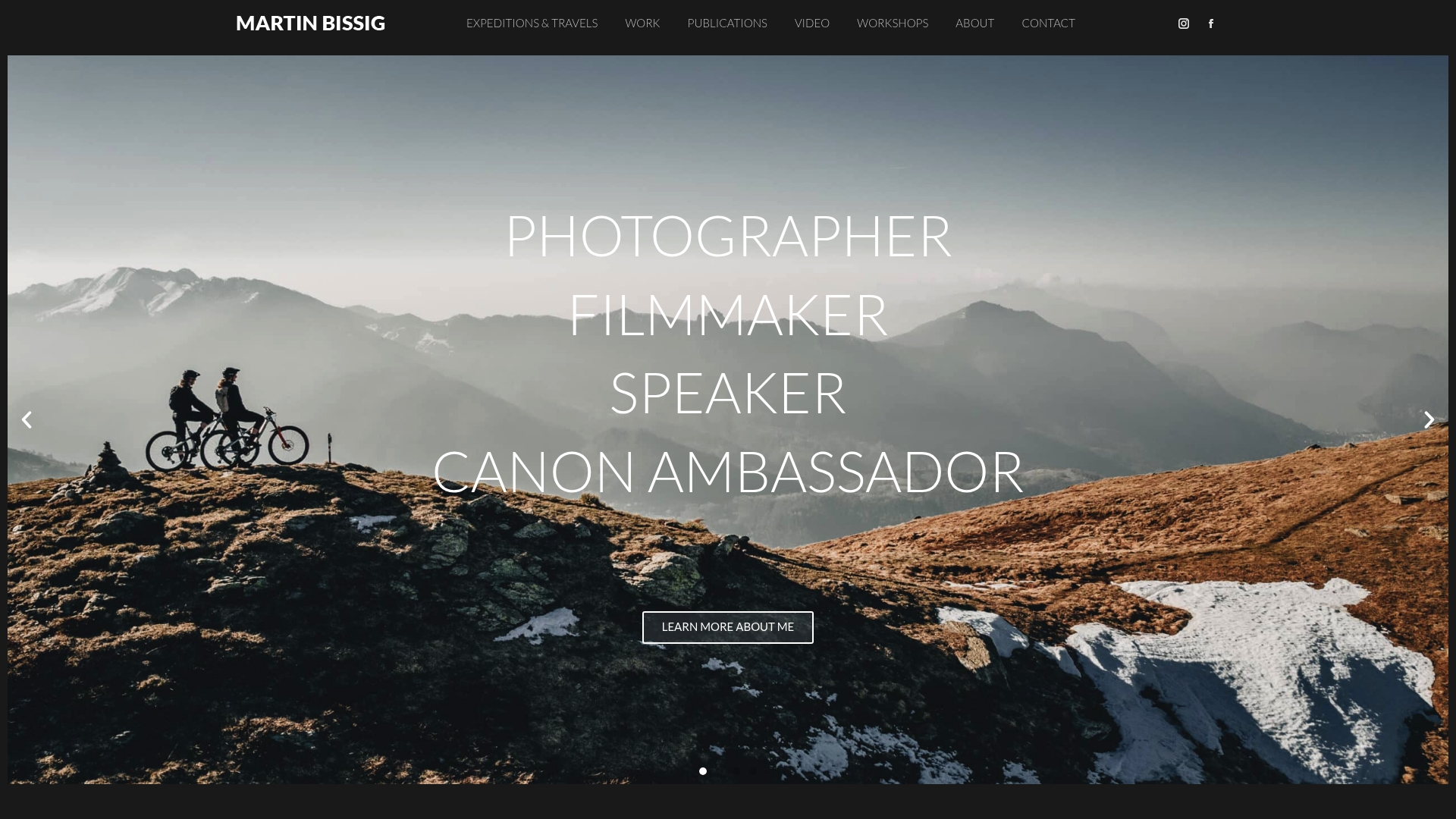
Whether you are building your first editorial portfolio or refining your approach to outdoor action shots, the guides and resources at Bissig cover the technical and creative ground you need. From professional action photography tips to a full outdoor photographer portfolio built on real editorial assignments, the work speaks for itself. If you are serious about getting your images into publications, start with the craft behind the camera.
FAQ
What is the publication photography definition in simple terms?
Publication photography is imagery created to appear alongside text in media outlets like magazines, newspapers, or websites. Its purpose is storytelling and narrative support, not advertising.
Does editorial photography require a model release?
Editorial photography does not require a model release when used in a journalistic or narrative context. A release is required if the same image is later used for commercial advertising purposes.
What file format do most publications require for photo submissions?
Most print publications require high-quality TIFF or JPEG files at 300 DPI in CMYK color space. Digital publications typically accept JPEG files in sRGB, though requirements vary by outlet.
How is publication photography different from photojournalism?
Photojournalism is one subtype of publication photography focused on documenting real events with minimal staging. Publication photography is the broader category that also includes editorial fashion, lifestyle, documentary, and still life work.
How do I find a publication’s submission guidelines?
Most publications post submission guidelines on their website under sections labeled “contributors,” “submissions,” or “contact.” If not publicly listed, contact the editorial team directly to request them before submitting.


