

Most brands assume their in-house visuals are good enough. They’re not. Adventure audiences are among the most visually sophisticated consumers on the planet, and they can spot staged, flat, or uninspired imagery instantly. The gap between “good enough” and genuinely compelling outdoor photography is exactly where brands lose attention, trust, and conversions. One adventure tour operator found that sharing professional guest images drove a 127% rise in referrals, proving that the right visuals don’t just look better. They perform better.
Table of Contents
- Why unique outdoor photography matters for brand storytelling
- How collaborations with outdoor photographers amplify your campaigns
- Choosing the right outdoor photographer for your brand
- Best practices for successful photographer collaborations
- A fresh perspective: What most brands miss about outdoor photographer collaborations
- Connect with expert outdoor photographers for your next campaign
- Frequently asked questions
Key Takeaways
| Point | Details |
|---|---|
| Visual storytelling matters | Professional outdoor photography forges emotional connections that generic imagery can’t replicate. |
| Collaboration boosts results | Partnering with adventure photographers increases word-of-mouth and repeat business by large margins. |
| Strategic partnerships win | Brands get the best long-term results by integrating photographers deeply into their marketing strategy. |
| Choose experts wisely | Selecting the right outdoor photographer ensures both creative quality and operational safety. |
Why unique outdoor photography matters for brand storytelling
Adventure brands compete in a crowded, visually noisy space. Your audience scrolls past hundreds of images daily, and they’ve developed a sharp instinct for authenticity. Generic stock photos or shaky smartphone footage won’t cut it when your competitors are publishing breathtaking mountain ridge shots and perfectly timed action sequences.
Professional outdoor photographers bring something no internal team can replicate: they live in the environment they shoot. They understand light at altitude, the unpredictability of weather, and how to position a subject so the landscape amplifies the emotion rather than swallowing it. That expertise translates directly into images that feel real because they are real.
Here’s what high-quality adventure photography actually delivers for your brand:
- Emotional resonance: Images that make viewers feel the cold, the rush, or the silence of a mountain scene trigger a visceral response that drives sharing and saves.
- Trust signals: Authentic photography communicates that your brand genuinely operates in these environments, not just markets to people who do.
- Conversion lift: Compelling visuals reduce the hesitation gap between interest and purchase, especially for high-ticket adventure experiences.
- Evergreen content: A single well-executed shoot can fuel social, editorial, and paid campaigns for months or even years.
“The brands that win in adventure marketing aren’t the loudest. They’re the ones whose images make you stop scrolling and feel something.”
The numbers back this up. Adventure brands that enabled professional guest photo sharing saw word-of-mouth referrals increase by 127%. That’s not a marginal improvement. That’s a fundamental shift in how audiences discover and trust a brand.
Looking at Martin Bissig’s case studies makes it clear how strategic imagery compounds over time. A single expedition shoot, executed with intention, becomes the visual backbone of an entire campaign cycle. The Abicht Group collaboration is a strong example of how brand-photographer partnerships produce imagery that outlasts any single campaign.
How collaborations with outdoor photographers amplify your campaigns
A great campaign visual isn’t just technically sharp. It tells a story in a single frame. That’s a skill set that takes years to develop, and it’s the core reason why professional collaborations consistently outperform in-house production.
Consider the difference between what your internal team can realistically produce versus what a seasoned outdoor photographer delivers:
| Factor | In-house team | Professional outdoor photographer |
|---|---|---|
| Technical image quality | Variable | Consistently high |
| Adventure environment expertise | Limited | Deep and specialized |
| Storytelling through composition | Basic | Advanced and intentional |
| Safety in extreme conditions | Often unprepared | Trained and experienced |
| Content variety per shoot | Narrow | Broad: stills, motion, detail |
| Licensing and usage clarity | Often unclear | Defined and professional |
The gap is significant across every dimension that matters for campaign performance. And the results show it. Adventure tour brands that invested in professional photo sharing as part of their campaigns saw repeat guests reach 9.3%, a metric that directly reflects how emotional, shareable imagery builds loyalty.
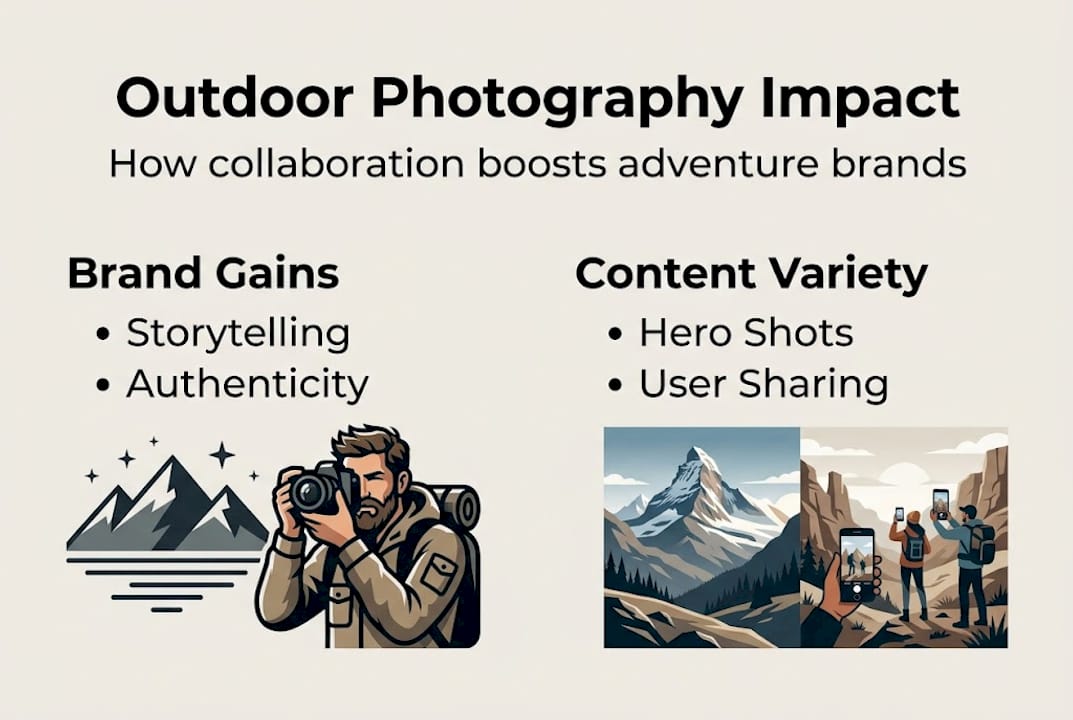
Professional collaborations also give you content diversity. One shoot with the right photographer produces hero images for paid ads, candid moments for organic social, detail shots for editorial, and video clips for reels. You’re not just buying photos. You’re building a content library.
Pro Tip: Brief your photographer on the specific platforms and formats you need before the shoot. A vertical crop for Instagram Stories requires different framing than a widescreen hero banner. Getting this right upfront saves expensive reshoots.
Explore brand collaboration examples to see how diverse content from a single shoot gets deployed across multiple channels. The South Africa photo campaign is a particularly strong example of how one focused project generates content that works across editorial, social, and commercial contexts simultaneously.
Choosing the right outdoor photographer for your brand
Not every skilled photographer is the right fit for adventure work. The outdoor environment introduces variables that require specific preparation, experience, and mindset. Choosing wrong can mean missed shots, safety incidents, or imagery that looks technically fine but emotionally flat.
Here’s a practical process for evaluating candidates:
- Review the portfolio for environment match. Does their existing work show the terrain, conditions, and activity types relevant to your brand? A mountain biker specialist and a sea kayaking photographer require very different skills.
- Assess technical range. Look for variety in lighting conditions, motion capture, and composition. A strong portfolio shows work in flat midday light, golden hour, and overcast conditions, not just the easy shots.
- Check for safety credentials. In rugged, remote shoots, safety-aware photographers are non-negotiable. Ask about first aid training, experience in your specific environment, and how they handle equipment failure or weather changes.
- Request client references. Past campaign outcomes and testimonials reveal how a photographer works under pressure, communicates with teams, and delivers on deadlines.
- Evaluate communication style. A great photographer who can’t translate your brief into visual language will frustrate your team. Look for someone who asks smart questions before they pick up a camera.
Pro Tip: Establish usage rights, licensing terms, and creative ownership in writing before the shoot begins. Verbal agreements create expensive disputes later, especially when images perform well and you want to extend their use.
The Deuter project example shows what happens when brand and photographer are genuinely aligned on vision and logistics. The Ladakh expedition demonstrates how specialized terrain demands a photographer who is as comfortable navigating high-altitude conditions as they are composing a shot.
Best practices for successful photographer collaborations
Securing the right photographer is step one. Making the collaboration actually work is where most brands stumble. Structure and communication are what separate a smooth, high-output partnership from a chaotic, expensive disappointment.
Here’s a framework for running a collaboration that delivers:
| Phase | Key actions | Owner |
|---|---|---|
| Pre-production | Creative brief, shot list, logistics, permissions | Brand manager |
| Briefing call | Align on story, tone, deliverables, and formats | Both parties |
| On-location shoot | Daily check-ins, flexibility for conditions | Photographer leads |
| Post-production | Editing timeline, feedback rounds, final delivery | Photographer + brand |
| Distribution | Platform-specific formatting, scheduling, sharing | Brand manager |
Beyond the logistics, the brands that get the most from their collaborations treat the photographer as a creative partner, not a vendor. Share your audience insights, your campaign goals, and even your past content performance. The more context a photographer has, the better their instincts on location.
Key elements to lock in before any shoot:
- Deliverables list: Number of edited images, video clips, and raw files expected.
- Usage rights: Which channels, for how long, and in which geographies.
- Timeline: Shoot dates, editing window, and final delivery deadline.
- Feedback process: How many revision rounds are included and what the turnaround expectation is.
Pro Tip: Encourage guests or participants to share professional images from the shoot on their own channels. Their networks trust their recommendations, and this organic amplification extends your campaign reach far beyond your owned audience.
For brands interested in video as well as stills, video workshop strategies offer a deeper look at how to structure multimedia shoots for maximum output.
A fresh perspective: What most brands miss about outdoor photographer collaborations
Here’s the uncomfortable truth: most brands treat outdoor photographer collaborations as a one-time fix. They book a shoot for a product launch or a seasonal campaign, get their images, and move on. Then they wonder why their visual identity feels inconsistent six months later.
The brands that build genuinely powerful visual narratives don’t think in campaigns. They think in visual languages. They work with the same photographer across multiple projects, building a shared shorthand, a consistent aesthetic, and a growing library of imagery that compounds in value over time.
A single shoot is a transaction. An ongoing partnership is a brand asset.
The lessons from the Ladakh expedition project make this concrete. Images from that kind of immersive, long-form collaboration carry a depth and authenticity that a one-day commercial shoot simply cannot replicate. Audiences feel the difference, even if they can’t articulate why.
Integrate your photographer into your annual marketing planning, not just your project briefs. That shift in thinking is where the real competitive advantage lives.
Connect with expert outdoor photographers for your next campaign
Putting these principles into practice starts with finding a photographer who genuinely understands the adventure space, not just technically, but experientially.
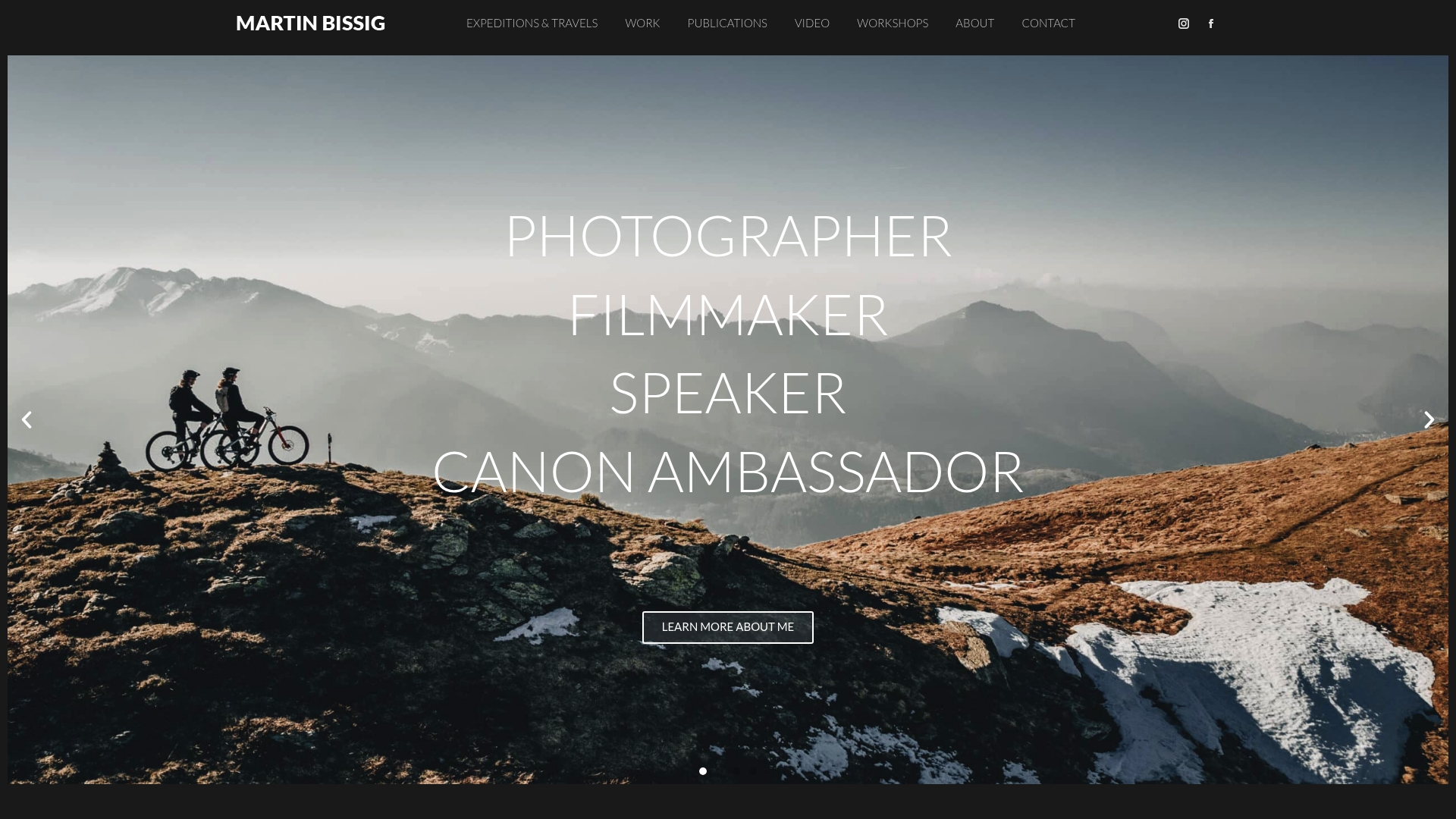
Martin Bissig’s outdoor photography portfolio spans mountain biking, alpine expeditions, and commercial campaigns across multiple continents. As a Canon ambassador with deep roots in adventure sports, his work consistently delivers the kind of imagery that moves audiences and builds brand credibility. If you’re ready to elevate your visual storytelling, explore the full range of brand collaborations and see how a focused partnership translates into campaign results that last well beyond the shoot.
Frequently asked questions
How does working with professional outdoor photographers impact brand engagement?
Brands see significantly higher engagement, with one adventure tour reporting a 127% increase in referrals after investing in professional imagery and guest photo sharing.
What should I look for when hiring an outdoor photographer?
Prioritize technical skill, genuine adventure experience, and safety awareness in remote shoots, alongside a portfolio that authentically matches your brand’s visual style and environment.
How do you make a photographer collaboration successful?
Set clear deliverables and usage rights upfront, maintain open communication throughout, and actively enable guest sharing to maximize the organic reach of your campaign content.
Are outdoor photographers necessary if my brand already hires a creative agency?
Specialist outdoor photographers deliver a level of technical precision and environmental authenticity that most generalist agencies simply cannot replicate, especially in extreme terrain or high-stakes adventure conditions.


