

Outdoor brand imagery is defined as authentic product visuals placed in natural environments to show real-world use and lifestyle context. The advantages of outdoor brand imagery go well beyond aesthetics: brands that increase lifestyle images from 1–2 to 5–8 per product see conversion rates improve by 20–35%. That lift is not accidental. When customers see a jacket on a mountain ridge or trail shoes on a rocky path, they stop imagining and start buying. For marketers, brand managers, and content creators in the outdoor industry, understanding these visual advantages is the difference between a catalog that scrolls past and one that converts.
1. Advantages of outdoor brand imagery for customer engagement
Outdoor imagery creates emotional storytelling that studio shots cannot replicate. A product photographed against a white background answers “what does it look like?” Outdoor imagery answers “what does my life look like when I own this?” That second question drives shares, saves, and comments far more reliably.
Adventure-context UGC generates 3–5x more social media engagement than traditional studio shots. That gap exists because natural environments trigger recognition and aspiration simultaneously. Outdoor enthusiasts scroll past polished product shots and stop at a real trail, a real summit, a real river crossing.
“Outdoor imagery adds emotional storytelling and lifestyle context that online-only digital content often lacks. Visual authenticity and environmental context create the kind of engagement that paid media cannot manufacture.”
The social media content advantage for outdoor brands is compounding. Each piece of authentic outdoor content builds a library of lifestyle associations. Over time, your brand stops being a product and starts being a place people want to go.
Pro Tip: Shoot in golden hour light whenever possible. The warm, directional quality of early morning or late afternoon light reads as authentic and aspirational to outdoor audiences far more than midday flat light.

2. How outdoor imagery builds brand credibility and trust
Outdoor branding acts as a credibility signal that transforms a brand from “seen online” to “trusted in real life.” This matters because outdoor consumers are skeptical buyers. They research gear obsessively, read reviews, and distrust brands that look like they have never left a studio.
Visual consistency and professional outdoor setups build brand recognition and signal reliability. When a brand consistently shows its products in real environments with real conditions, it communicates that the gear has been tested, not just designed. That perception directly affects purchase confidence.
Repeated exposure to quality outdoor visuals also builds familiarity. Familiarity reduces perceived risk. A hiker who has seen your pack on three different trail systems in your content library feels like they already know the product before they read a single spec.
- Establish a consistent visual environment for your brand (alpine, coastal, forest, desert) and use it across all channels.
- Use real conditions: mud, rain, dust, and snow signal authenticity better than pristine settings.
- Maintain consistent color grading across your outdoor imagery library to reinforce brand recognition.
- Prioritize professional composition so the product reads clearly even in complex natural backgrounds.
Pro Tip: Build a shot list that includes at least one “proof of use” image per product, showing wear, dirt, or environmental stress. These images outperform clean hero shots in trust-building contexts.
3. Impact of outdoor imagery on conversion rates and sales
The conversion rate impact of outdoor lifestyle imagery is one of the most documented advantages in outdoor ecommerce. Increasing lifestyle images per product from 1–2 to 5–8 improves conversions by 20–35%. That is a significant revenue gain for any catalog-scale brand.
Outdoor imagery reduces purchase hesitation by helping customers visualize product use. A tent shown pitched in a rainstorm answers durability questions. A backpack shown on a multi-day route answers capacity questions. Studio images show what a product is. Outdoor images show what a product does.
Seasonality and varied lighting conditions also drive sales performance. A waterproof jacket photographed in autumn rain, spring sleet, and winter snow gives customers three separate reasons to buy across the year. Brands that rotate outdoor imagery by season maintain relevance in search and social algorithms year-round.
| Image Type | Primary Function | Conversion Role |
|---|---|---|
| Studio white background | Accurate color and detail | Primary product assessment |
| Outdoor lifestyle | Emotional connection and use context | Secondary persuasion and engagement |
| Adventure action | Aspiration and brand identity | Top-of-funnel awareness |
| UGC in natural settings | Social proof and authenticity | Mid-funnel trust building |
The outdoor visuals conversion guide for 2026 confirms that brands combining studio and outdoor imagery consistently outperform those relying on either format alone. The two image types serve different jobs in the purchase funnel, and both jobs matter.
4. How outdoor imagery enhances brand storytelling
Outdoor storytelling provides visual authenticity that enables audiences to experience a product’s lifestyle, filling the gap that digital-only content creates. This is the mechanism behind why outdoor brand campaigns consistently outperform generic product advertising in recall and emotional response.
Storytelling through outdoor imagery works because it places the viewer inside a narrative. A climber reaching a summit while wearing your harness is not an advertisement. It is a story the viewer wants to be part of. That desire is the engine of brand loyalty.
The most effective outdoor brand campaigns use environmental context to communicate brand values without text. A brand that photographs its gear in remote, demanding terrain communicates toughness, reliability, and adventure without writing a single word. Outdoor brand campaign examples that perform best consistently use this visual shorthand.
Realistic imagery of nature also facilitates stress recovery better than abstract representations, with leafy vegetation being a key factor. Brands that incorporate genuine natural environments in their imagery benefit from this psychological response. Viewers feel better looking at your content, and that positive association transfers to your brand.
5. Scaling outdoor imagery with AI and smart production
Traditional outdoor shoots cost $15,000–$50,000 per expedition, which limits rich lifestyle content to flagship products only. Most outdoor brands face a catalog gap where only their bestsellers receive high-budget outdoor shoots. The rest of the catalog sits in studio shots, losing the conversion and engagement benefits that outdoor imagery delivers.
AI-generated UGC enables creating photorealistic outdoor environments at a fraction of traditional costs, making comprehensive catalog imagery feasible for the first time. This does not replace professional photography. It fills the catalog gap so every product benefits from lifestyle context.
- Use AI-generated outdoor imagery for secondary catalog images, seasonal variations, and regional environment adaptations.
- Reserve professional expedition shoots for hero products, campaign launches, and editorial placements where authenticity is non-negotiable.
- Select environments that match your customer’s actual terrain: Pacific Northwest forest for trail runners, alpine for mountaineering gear, coastal for water sports.
- Test AI-generated outdoor imagery in A/B frameworks before scaling to confirm it matches your brand’s visual standards.
Pro Tip: When briefing AI-generated outdoor content, specify tree coverage at roughly 25–30% of the frame. Research shows that tree coverage in imagery signals authentic nature more effectively than grass alone, which matters for how audiences perceive your brand’s outdoor credibility.
6. Balancing outdoor imagery with product clarity
Outdoor imagery works best as secondary images that support emotional connection, not as the sole product representation. Studio images remain critical for accurate product assessment. Customers need both to complete a confident purchase decision.
The ideal composition for outdoor product photography allocates roughly half the frame to the product and half to natural context. This balance maintains product clarity while conveying lifestyle. Tipping too far toward environment loses the product. Tipping too far toward product loses the story.
- Always lead your product listing with a clean studio image for accurate color and detail assessment.
- Use outdoor lifestyle images as images two through five to build emotional context after the product is clearly established.
- Choose neutral, uncluttered natural backgrounds: open sky, smooth rock, clean water, or sparse vegetation work better than dense, busy environments.
- Verify that product colors read accurately in outdoor lighting before publishing. Natural light shifts color temperature significantly, and ecommerce compliance requires color accuracy.
Brands that invest in outdoor imagery as a complement to studio work see the strongest combined results. The studio image closes the detail gap. The outdoor image closes the aspiration gap. Together, they address every question a buyer has.
Key takeaways
Outdoor brand imagery drives measurable conversion gains and emotional engagement when it combines authentic natural environments with clear product presentation.
| Point | Details |
|---|---|
| Conversion lift is documented | Adding 5–8 lifestyle images per product improves conversions by 20–35% versus 1–2 images. |
| Engagement multiplier is real | Adventure-context UGC generates 3–5x more social engagement than studio shots alone. |
| Credibility requires consistency | Repeated, professional outdoor visuals build brand trust and reduce perceived purchase risk. |
| Studio and outdoor images serve different roles | Studio images establish product detail; outdoor images build aspiration and close the emotional gap. |
| AI fills the catalog gap | AI-generated outdoor environments make lifestyle imagery affordable for full catalogs, not just hero products. |
What I’ve learned about outdoor imagery after years in the field
The most common mistake I see outdoor brands make is treating outdoor imagery as decoration. They shoot one beautiful hero image per product, put it on the homepage, and call it done. That approach leaves most of the conversion and engagement value on the table.
What actually works is building a library. Every product needs outdoor images across multiple environments, seasons, and use scenarios. A single alpine shot is a starting point, not a strategy. The brands I have worked with that commit to this approach see their content performing months and sometimes years after the original shoot.
The other thing I would push back on is the idea that AI-generated imagery is a threat to professional outdoor photography. It is not. It fills the catalog gap that professional shoots cannot economically address. The expedition-level work, the editorial placements, the campaign hero shots — those still require a photographer who knows how to read terrain, light, and athlete movement in real time. No algorithm replaces that. What AI does is make the case for outdoor imagery stronger across the whole catalog, which ultimately creates more demand for the high-end work that only professionals can deliver.
The future I am watching closely is immersive brand experience: augmented reality overlays that let customers place a tent in their actual campsite or see a jacket on their own body in a mountain environment. The brands building strong outdoor imagery libraries now will have the raw material to feed those experiences when the technology becomes mainstream. Start building the library before you need it.
— Martin
How Bissig brings outdoor brand imagery to life
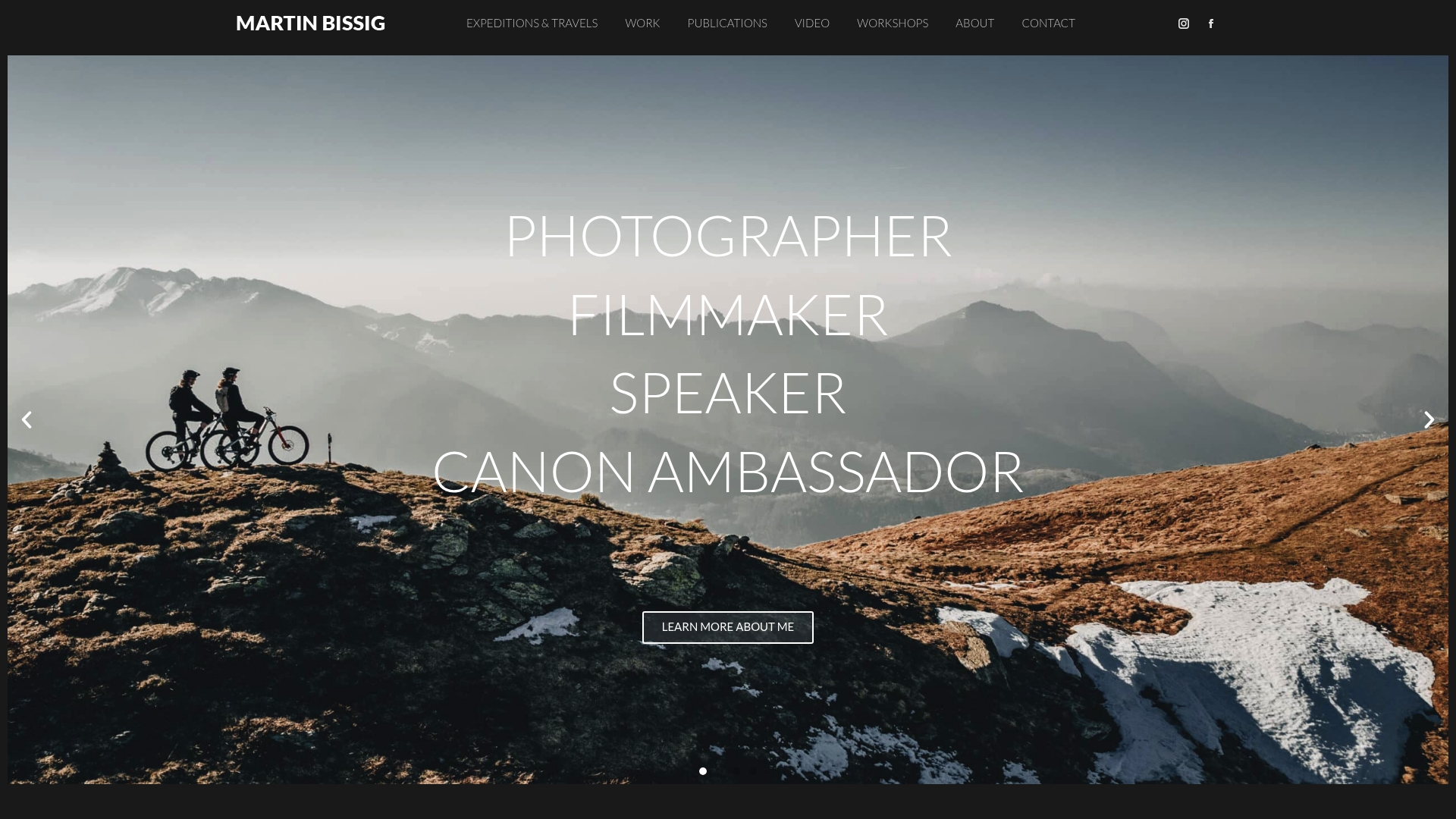
Bissig specializes in outdoor and adventure photography for commercial and editorial clients who need imagery that performs, not just looks good. As a Canon ambassador with years of expedition experience across locations from the Swiss Alps to Pakistan and California, Martin Bissig understands how to capture products in the conditions that matter to your customers. Whether you need professional outdoor photography for a campaign launch or adventure sports imagery that builds brand identity, Bissig delivers visuals built for conversion and engagement. Explore the portfolio and reach out to discuss your next outdoor brand project.
FAQ
What are the main advantages of outdoor brand imagery?
Outdoor brand imagery increases customer engagement, builds brand credibility, and improves conversion rates by showing products in real-world use contexts. Brands that add 5–8 lifestyle images per product see conversions improve by 20–35%.
How does outdoor imagery improve social media performance?
Adventure-context imagery generates 3–5x more social media engagement than studio product shots. Natural environments trigger both recognition and aspiration, which drives sharing and saves.
Should outdoor imagery replace studio product photos?
Outdoor imagery works best as secondary images that support emotional connection, not as replacements for studio shots. Studio images remain critical for accurate color and detail assessment in ecommerce.
How can smaller brands afford outdoor lifestyle imagery?
AI-generated UGC enables photorealistic outdoor environments at a fraction of traditional expedition costs, which run $15,000–$50,000 per shoot. This makes lifestyle imagery feasible across a full product catalog, not just flagship items.
What makes outdoor imagery feel authentic to consumers?
Authentic natural environments with genuine conditions, real tree coverage, and varied lighting signal credibility. Research shows that leafy vegetation is a key factor in how audiences perceive natural imagery as genuine rather than staged.


