

Environmental portraiture is defined as the practice of photographing a subject within a setting that reveals something meaningful about their identity, work, or story. Unlike studio portraits that isolate the face against a neutral backdrop, environmental portrait photography uses the surrounding space as a narrative tool. Arnold Newman popularized the genre in the mid-20th century, placing artists, politicians, and musicians inside the spaces that defined them. The result is a photograph that tells you who someone is, not just what they look like. Understanding this distinction is the foundation of photographic storytelling at its most intentional.
What is environmental portraiture and how does it work?
Environmental portraiture captures subjects within settings that narrate aspects of their life, work, or personality. The environment is not decoration. It is a second subject that carries equal narrative weight. A chef photographed in a restaurant kitchen, a carpenter surrounded by sawdust and tools, a mountain biker framed against a ridgeline: each setting tells the viewer something the face alone cannot.

This genre sits between studio portraiture and documentary photography. Studio portraits prioritize controlled light and isolated subject detail. Documentary photography captures unposed, spontaneous moments. Environmental portraiture does neither. It is fundamentally directed, meaning the photographer collaborates with the subject to compose their position and interaction within the space deliberately. That direction is what separates it from candid or lifestyle photography.
The narrative intent must be clear before the camera comes out. Ask what the environment says about the person. If the answer is “nothing specific,” the location is wrong.
Key techniques for environmental portraits
Strong environmental portraits depend on a handful of technical decisions made before the shutter fires.
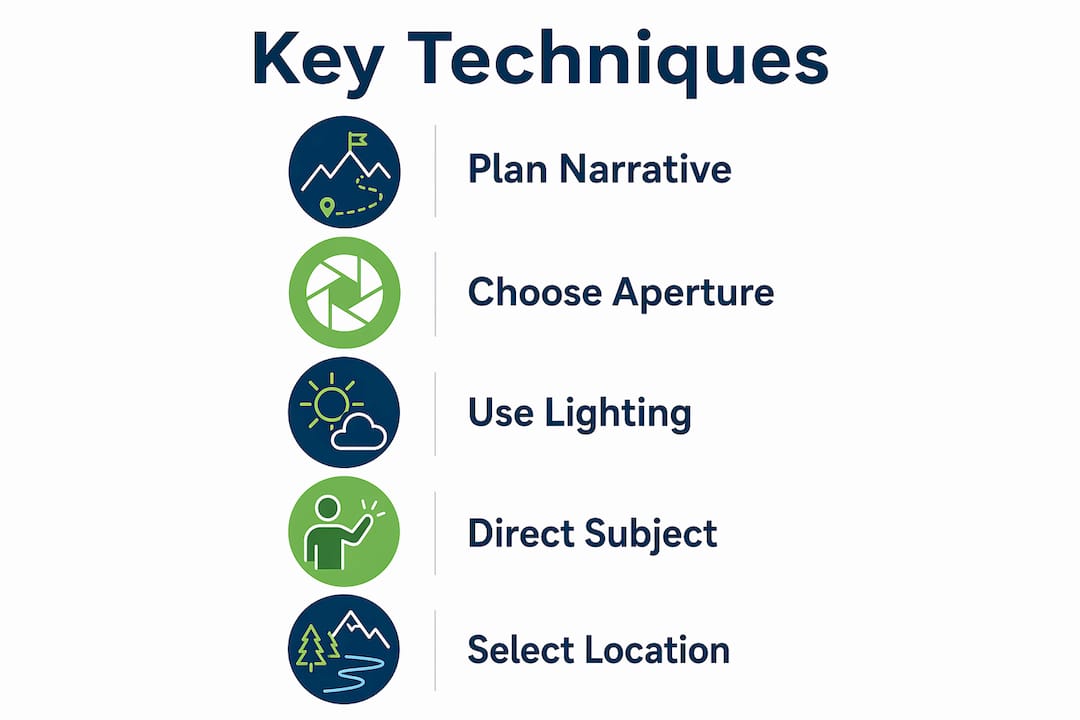
Aperture and depth of field
The most common beginner mistake in this genre is shooting with too shallow a depth of field. Apertures of f/5.6 or higher keep both the subject and the background in focus, preserving the environmental details that carry the story. Blurring the background destroys the narrative. A bokeh-heavy portrait of a blacksmith where the forge is unrecognizable is just a portrait. The environment must be legible.
Natural and mixed lighting
Real environments rarely offer perfect light. A workshop has harsh overhead fluorescents. A forest has dappled, shifting sun. The goal is not to overpower the existing light with flash but to work with it. Use a reflector to fill shadows, or position the subject near a window to use directional natural light. When supplemental light is necessary, keep it subtle enough that the scene still reads as authentic.
Composition tactics
- Leading lines: Use architectural elements, roads, or natural features to draw the eye toward the subject.
- Layering: Place objects in the foreground to add depth and reinforce the environment’s identity.
- Framing: Doorways, arches, and tree canopies create natural frames that anchor the subject within the space.
- Positioning: Place the subject off-center to give the environment room to breathe and tell its part of the story.
Directing the subject
Photographers must direct subjects to interact meaningfully with the environment, not just stand in front of it. Ask the carpenter to pick up a tool. Ask the chef to plate a dish. Physical engagement with the space creates visual authenticity that posed standing shots never achieve.
Pro Tip: Arrive at the location at least 30 minutes early. Scout the light and composition zones before the subject arrives. This cuts downtime during the shoot and keeps the subject relaxed and focused.
How does environmental portraiture differ from other portrait types?
The differences between portrait styles are not just aesthetic. They reflect fundamentally different intentions.
Environmental portraits are almost always directed. The photographer controls placement, interaction, and framing to serve a specific narrative. Candid portraits, by contrast, capture unposed moments without subject awareness. Traditional studio portraits focus on isolated subject detail, using controlled light and neutral backgrounds to remove environmental context entirely. Location portraits are sometimes confused with environmental portraits, but a location portrait can simply use a scenic backdrop with no narrative connection to the subject.
The table below summarizes the key distinctions:
| Attribute | Environmental portrait | Studio portrait | Candid portrait |
|---|---|---|---|
| Setting | Meaningful to subject’s identity | Neutral or controlled | Wherever the moment occurs |
| Background | Legible and narrative | Blurred or plain | Incidental |
| Direction | Deliberate and collaborative | Controlled | None |
| Depth of field | Deep (f/5.6 or higher) | Variable | Variable |
| Narrative intent | Subject and environment together | Subject alone | Spontaneous moment |
The clearest test: remove the background. If the portrait loses its meaning, it is an environmental portrait. If it still works, it is something else.
How to create compelling environmental portraits
Follow these steps to build a consistent approach to the genre.
-
Choose a location with narrative logic. The setting must connect directly to the subject’s identity or story. A musician in a recording studio, a farmer in a field, an athlete on their home trail: the location should be obvious in retrospect, not arbitrary.
-
Scout before the shoot. Scan the location upon arrival to identify the best natural light and composition zones. Identify two or three strong positions before the subject arrives.
-
Select the right lens. A 35mm or 50mm lens keeps the subject in proportion to the environment. Telephoto lenses compress the scene and flatten the relationship between subject and setting. Wide angles can distort at close range but work well when the environment needs more visual real estate.
-
Set aperture deliberately. Start at f/5.6 and adjust based on how much environmental detail the story requires. Avoid going below f/4 unless the background is genuinely irrelevant to the narrative.
-
Direct with purpose. Give the subject something to do. Interaction with the environment produces more authentic images than static poses. Keep equipment unobtrusive so the subject stays relaxed on their own turf.
-
Edit out distractions. Scan the frame for visual clutter that competes with the subject or confuses the narrative. Move objects, adjust your angle, or reframe before shooting rather than fixing it in post.
Common pitfalls to avoid:
- Shallow depth of field that blurs the narrative environment
- Locations chosen for aesthetics rather than meaning
- Subjects standing passively without engaging the space
- Cluttered backgrounds that add noise instead of context
Pro Tip: Prioritize storytelling over aesthetics. A technically imperfect image that clearly communicates who this person is will always outperform a beautiful portrait that says nothing.
Why environmental portraiture matters for photographers and artists
Environmental portrait photography serves a wide range of professional and creative applications.
- Editorial work: Magazines and news outlets use environmental portraits to introduce subjects in features, profiles, and interviews. The setting gives readers immediate context.
- Brand and organizational storytelling: Environmental portraiture acts as a visual branding tool for organizations and professionals, connecting narrative and identity in a single frame. A company’s leadership team photographed in their actual workspace communicates culture more effectively than a headshot wall.
- Documentary photography: Environmental portraits anchor long-form documentary projects by establishing who the subjects are and where they belong.
- Artist portfolios: Photographers who master this genre demonstrate a command of both technical skill and narrative thinking, which is a rare combination that stands out to editorial and commercial clients.
The emotional impact of environmental portraits comes from recognition. Viewers see a person in their natural context and feel they understand something true about that person. That sense of authenticity is what makes the genre so durable across editorial, advertising, and personal work. Bissig’s approach to outdoor visual storytelling reflects exactly this principle: the environment is never incidental.
The genre also builds a photographer’s compositional discipline. Managing a complex real-world scene with a human subject forces you to think about every element in the frame. That skill transfers directly to outdoor portrait photography and any work where context and subject must coexist.
Key Takeaways
Environmental portraiture succeeds when the environment carries as much narrative weight as the subject, requiring deliberate direction, deep depth of field, and location choices grounded in the subject’s identity.
| Point | Details |
|---|---|
| Definition is precise | Environmental portraiture uses the setting as a narrative element, not just a backdrop. |
| Aperture is non-negotiable | Shoot at f/5.6 or higher to keep environmental details legible and story-relevant. |
| Direction is required | Subjects must interact with the environment intentionally; passive poses undermine the genre. |
| Location must have meaning | Choose settings connected to the subject’s identity, not just visually appealing places. |
| Storytelling beats aesthetics | A clear narrative image outperforms a beautiful portrait that communicates nothing. |
The environment is never just background
I have shot portraits in mountain bike parks, on exposed ridgelines, and in the middle of alpine trails at dawn. The hardest lesson I learned early on was that placing a person in a dramatic environment does not automatically make an environmental portrait. The subject has to belong there. The environment has to say something specific about them.
The technical side is learnable fast. Aperture, light management, lens choice: these become instinct within a few shoots. What takes longer is learning to read a location the way a writer reads a scene. You are looking for the details that tell the story. The worn grip tape on a handlebar. The chalk dust on a climber’s hands. The way afternoon light cuts through a forest canopy onto a trail that person has ridden a thousand times.
The environment is a second subject. Treat it that way. Curate it, light it, and frame it with the same care you give the person standing in it. When both subjects work together, the image stops being a portrait and becomes a document of a life.
— Martin
Bissig’s resources for outdoor portrait photography
Environmental portraiture and outdoor photography share the same core demand: making real-world settings work for you, not against you.
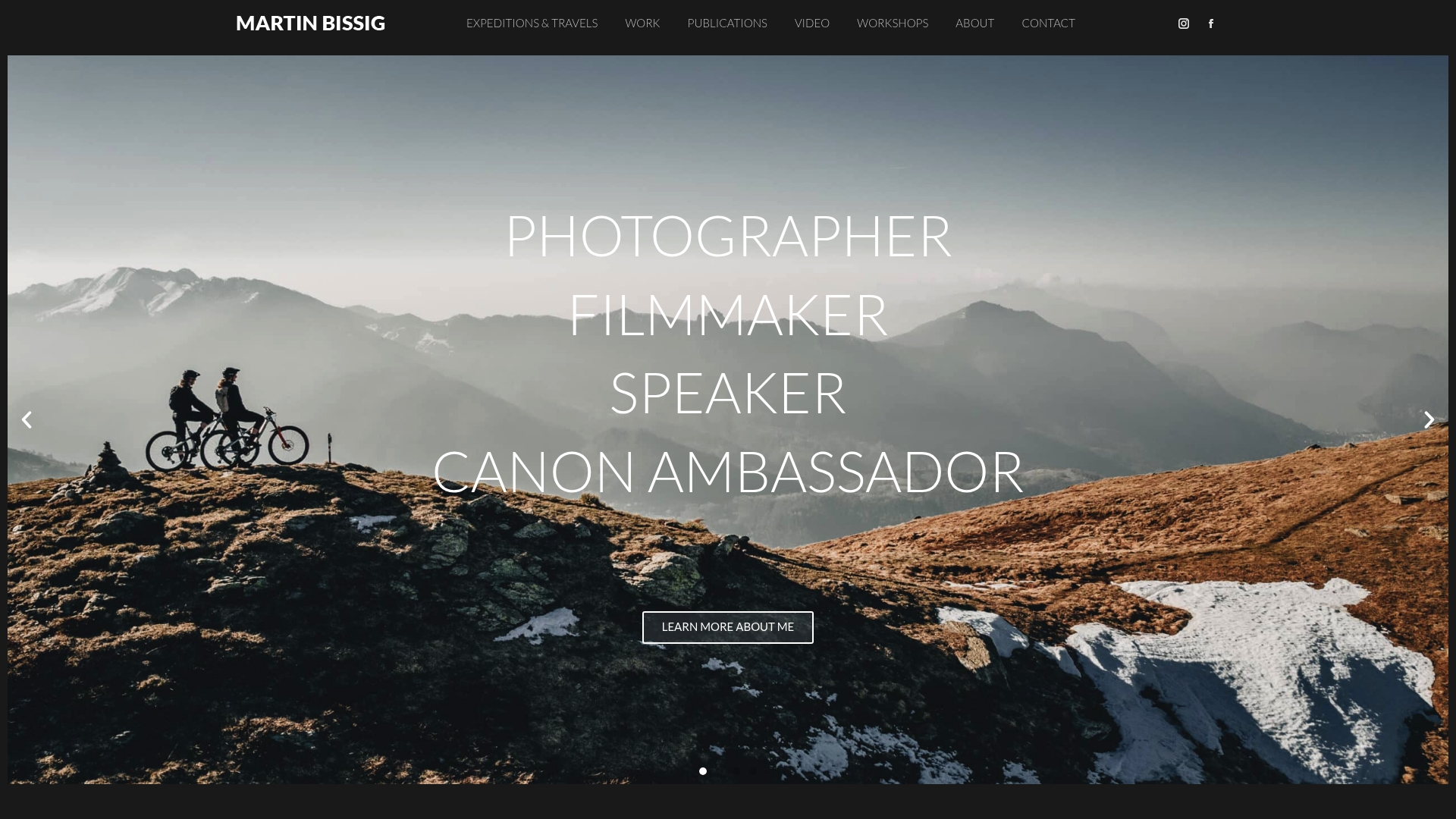
Bissig has built a body of work and a set of resources around exactly this challenge. The guide to outdoor photography styles and techniques covers the full range of approaches for working in natural environments, from light management to composition in unpredictable conditions. For photographers ready to put these skills into practice, the outdoor portrait shoot ideas resource offers concrete setups and creative frameworks for natural portrait sessions. Both are built for photographers who want to move beyond the studio and make the world outside their shooting space.
FAQ
What is the definition of environmental portraiture?
Environmental portraiture is a photography genre where the subject is photographed within a setting that reveals something meaningful about their identity, work, or personality. The environment functions as a narrative element, not just a backdrop.
Who popularized environmental portrait photography?
Arnold Newman popularized environmental portraiture in the mid-20th century by photographing notable figures inside the spaces that defined their work and lives.
What aperture should I use for environmental portraits?
Use f/5.6 or higher to keep both the subject and the background in focus. Shallower apertures blur the environment and destroy the narrative context the genre depends on.
How does environmental portraiture differ from candid photography?
Environmental portraits are directed: the photographer deliberately composes the subject’s position and interaction with the setting. Candid photography captures unposed, spontaneous moments without subject direction.
What makes a location right for an environmental portrait?
The location must have a direct narrative connection to the subject’s identity or story. A visually appealing setting with no relationship to the subject produces a location portrait, not an environmental one.


