

Dynamic outdoor lighting is defined as any outdoor lighting system that adjusts brightness, color, and direction in real time to respond to environmental conditions, user preferences, or programmed schedules. Unlike static fixtures that stay fixed at one output, dynamic systems use RGBW or RGBTW LEDs to shift between millions of color combinations and precise white tones throughout the day or night. The result is an outdoor space that feels alive, purposeful, and adaptable. For architects and landscape designers, understanding what is dynamic outdoor lighting means recognizing it as a design tool, not just a product category. The benefits span energy savings, circadian health support, and visual storytelling that static setups simply cannot match.
How do dynamic outdoor lighting systems work?
Dynamic outdoor lighting systems rely on three core components: LED light sources, sensors, and control protocols. Each component plays a distinct role in producing real-time changes in color, intensity, and movement.
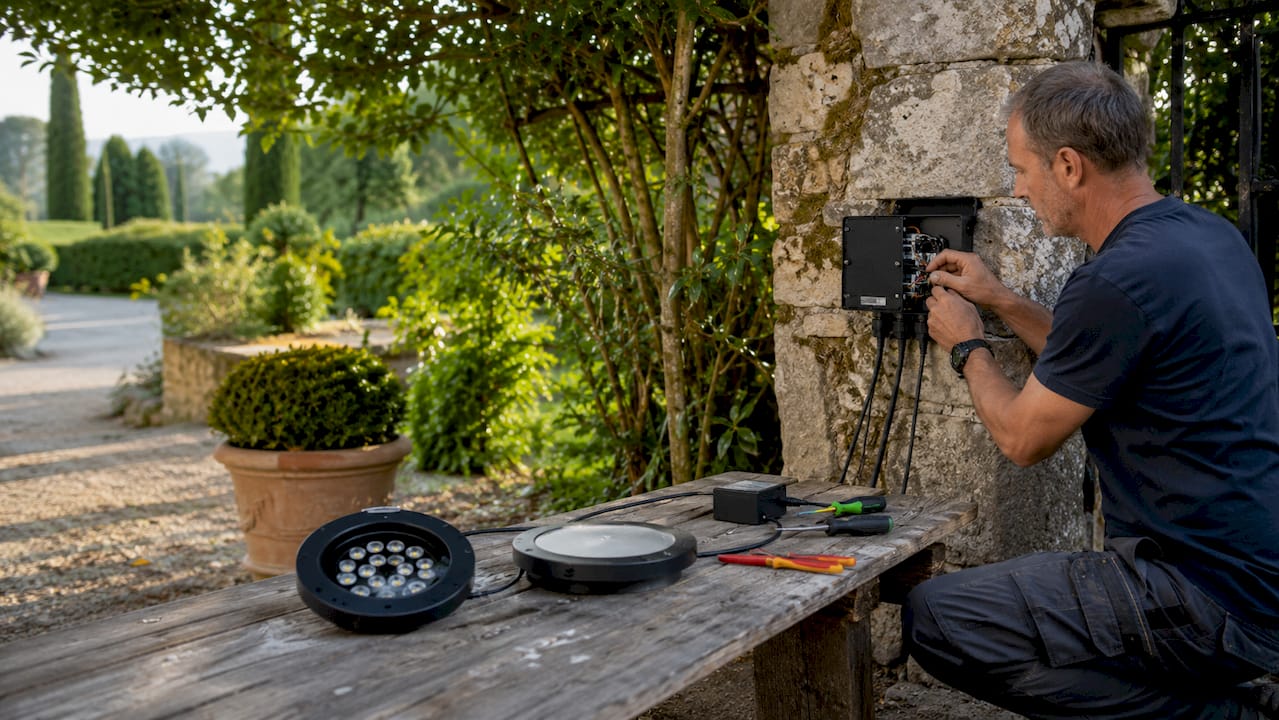
LED technology: RGB, RGBW, and RGBTW
The LED type determines what a fixture can actually do. RGB-only LEDs do not produce high-quality white light. Without a dedicated white chip, the white output looks unnatural and inconsistent. RGBW adds a single white chip, while RGBTW adds both a tunable warm and cool white chip. RGBTW fixtures deliver the full range: vivid color effects and clean, natural white light for everyday use. Architects specifying fixtures for mixed-use spaces need RGBTW to avoid compromising on white light quality.
Sensors and control protocols
Sensors detect occupancy and ambient light levels, then trigger brightness or color changes automatically. Control protocols connect the sensor data to the fixture. Consumer systems typically use Bluetooth mesh or Wi-Fi, while professional installations rely on wireless DMX protocols like Galileo from LumenRadio, which enable pixel-level addressing and time-coded shows across large installations.
Key control methods include:
- App-based control: Govee, Philips Hue, and Volt Lighting each offer dedicated apps for scheduling, color selection, and music sync.
- Wireless DMX: Used in professional and architectural projects for pixel-level precision and show programming.
- Proprietary ecosystems: Closed systems from a single brand ensure reliable synchronization of animations and effects.
- Open protocols: DMX and DALI allow integration across multiple manufacturers in commercial projects.
Pro Tip: Always confirm whether a system uses open or proprietary protocols before specifying it for a large project. Mixing brands mid-installation often breaks synchronization for dynamic effects like music sync and color animations.
What are the benefits of dynamic lighting over static systems?
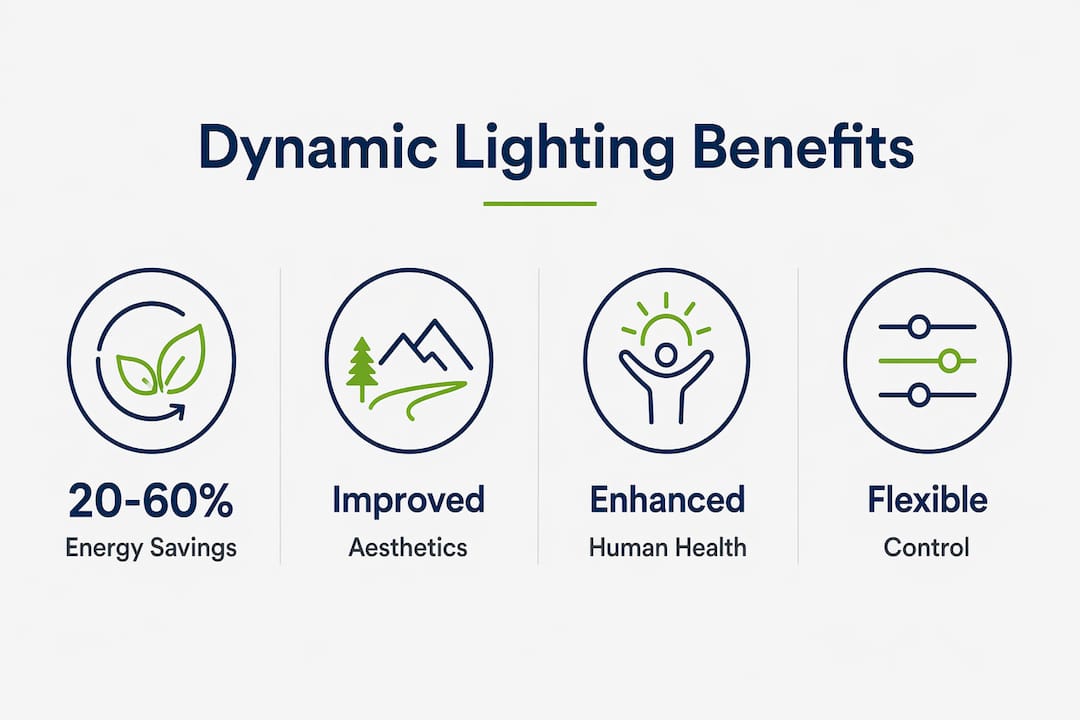
Dynamic lighting outperforms static outdoor lighting systems across four measurable areas: energy use, aesthetics, human health, and light pollution control.
Energy efficiency
Smart outdoor lighting systems reduce energy consumption by 20% to 60% compared to traditional static lighting through sensor-based brightness adjustments. When integrated with natural light sensors and scheduling controls, savings can reach up to 70%. That figure matters for landscape designers working on commercial properties where energy costs are a line item in the client’s operating budget.
Circadian health and human-centric design
Dynamic lighting supports human health by simulating natural sunlight progression throughout the day, which improves sleep quality and cognitive function. The WELL Building Standard now prioritizes biological health alongside energy efficiency in lighting design. This shift means outdoor lighting for hospitality venues, residential courtyards, and public plazas is increasingly specified with circadian cycles in mind, not just lumens and color rendering index.
Glare reduction and light pollution
Over-illumination causes glare and discomfort for both occupants and neighbors. Dynamic systems allow precise dimming and scene setting to reduce light trespass. A garden path lit at 100% output at midnight serves no one. A dynamic system dims it to 20% after 11 PM automatically.
“The industry is shifting focus from purely aesthetic color changes to human-centric lighting that supports circadian rhythms for health and well-being.” — Illuminating Engineering Society
Additional benefits for designers and homeowners include:
- Color-changing animations for seasonal outdoor lighting events and holidays
- Music-synchronized effects for entertainment spaces and hospitality venues
- Adaptive brightness that increases when motion is detected for safety
- Scene presets that shift the mood from functional to atmospheric with one tap
Dynamic outdoor lighting solutions: how do the main options compare?
The market for smart outdoor lighting splits clearly between consumer DIY ecosystems and professional-grade systems. Each serves a different project scale and budget.
| System | Technology | Best for | Control method |
|---|---|---|---|
| Govee Outdoor | Wi-Fi + Bluetooth | Residential DIY | Govee Home app |
| Philips Hue Outdoor | Zigbee + Bluetooth | Residential and small commercial | Hue app + voice assistants |
| Volt Lighting RGBCW | Low-voltage 12V | Landscape lighting kits | Volt app + transformer |
| LumenRadio Galileo | Wireless DMX | Large professional installations | DMX console or software |
| BlueHopper | Bluetooth mesh | Mid-scale commercial | Proprietary app |
Volt Lighting’s RGBCW landscape kits use low-voltage 12V systems with transformers, cables, and controls included, making them accessible for homeowners without an electrician. Professional fixtures in this category often carry a rated lifespan of 40,000 hours at L70, meaning they maintain at least 70% of their original brightness for that duration. That lifespan justifies the higher upfront cost for commercial projects.
Proprietary app ecosystems are the norm across consumer brands. Mixing Govee fixtures with Philips Hue controls, for example, breaks music sync and animation features. A unified single-brand ecosystem is the most reliable path to consistent dynamic effects.
Pro Tip: For residential projects under 20 fixtures, a consumer ecosystem like Philips Hue or Govee delivers strong results at low cost. For architectural or commercial projects above that threshold, specify a professional DMX system from the start to avoid costly retrofits.
How to use outdoor lighting: design and installation best practices
Good dynamic lighting design starts before a single fixture is purchased. These decisions made early prevent the most common and expensive mistakes.
-
Choose the right voltage class. Low-voltage 12V systems suit residential landscape lighting and DIY installs. Line-voltage 120V systems are required for commercial applications and high-output architectural fixtures. Mixing the two on the same project creates safety and compatibility problems.
-
Plan your data transmission backbone early. Large installations using wireless DMX or CAT cable networks need routing planned before trenching or conduit work begins. Wireless DMX systems like Galileo require clear line-of-sight or mesh node placement to maintain signal integrity across a site.
-
Avoid over-illumination. More fixtures do not mean better results. Over-lit spaces create glare, wash out architectural details, and increase light pollution. Start with fewer fixtures at higher quality and add only where needed.
-
Match fixture type to application. Spotlights work for uplighting trees and architectural facades. Path lights handle low-level wayfinding. In-ground fixtures suit hardscape and water features. Each fixture type has a different beam angle and output requirement.
-
Integrate with existing smart home systems. Platforms like Apple HomeKit, Google Home, and Amazon Alexa support many consumer outdoor lighting brands. Confirming compatibility before purchase prevents a system that works beautifully in isolation but cannot connect to the broader property controls.
-
Test color rendering in daylight and darkness. RGBTW fixtures look different under ambient daylight versus full dark. Always test a sample fixture on site before committing to a full specification. Color temperature and rendering index matter as much outdoors as they do indoors.
Seasonal outdoor lighting programs benefit most from this planning discipline. A well-designed system can shift from warm amber in autumn to cool blue-white in winter to vibrant color for summer events, all from a single app, without touching a fixture.
Key takeaways
Dynamic outdoor lighting systems deliver measurable gains in energy efficiency, human health, and design flexibility that static systems cannot replicate.
| Point | Details |
|---|---|
| LED type determines quality | RGBTW fixtures produce both vivid color and natural white light; RGB-only cannot. |
| Energy savings are significant | Dynamic systems cut energy use by 20%–60% versus traditional static lighting. |
| Stick to one ecosystem | Mixing brands breaks synchronization for music sync and animation effects. |
| Plan data transmission early | Large DMX installations require backbone routing before any trenching begins. |
| Circadian health is now a design standard | The WELL Building Standard treats biological health as a core lighting metric. |
What I’ve learned from watching light shape outdoor spaces
The most underrated shift in outdoor lighting right now is not the color capability. It is the move toward circadian-aware design. Photographers and filmmakers notice this before most designers do, because we spend hours in outdoor spaces at every hour of the day and night. The quality of light at dusk is not the same as at midnight, and a dynamic system that ignores that difference is wasting its potential.
The interoperability problem is real and frustrating. I have watched well-budgeted projects lose their synchronization because a client added three fixtures from a different brand six months after installation. The app stopped talking to half the system. The fix required replacing hardware, not just updating software.
Color-changing capability is genuinely transformative for outdoor spaces. A garden that shifts from warm white at dinner to deep blue at midnight feels like a different place entirely. That shift in atmosphere is something static lighting can never produce, and it is something a camera captures beautifully when the system is well-designed. For outdoor visual storytelling, dynamic lighting is not a background element. It is a primary subject.
My recommendation: if you are specifying a system for a client, commit to one ecosystem and plan the data backbone on day one. The savings in retrofit costs alone justify the discipline.
— Martin
Capturing dynamic lighting with professional outdoor photography
Dynamic outdoor lighting creates some of the most visually compelling environments a photographer can work in. The interplay of color, shadow, and movement across a landscape or architectural facade tells a story that still images and video can amplify far beyond what the eye sees in the moment.
Architects and landscape designers who invest in dynamic lighting systems often underestimate how much professional photography and videography can extend the value of that investment. A well-lit garden or facade, captured at the right moment by someone who understands both light and outdoor environments, becomes a portfolio asset that wins future clients. Bissig specializes in outdoor visual storytelling for brands, architects, and designers who need imagery that reflects the full impact of their work. If your next project deserves documentation that matches its ambition, explore what professional outdoor filmmaking can do for your brand.
FAQ
What is dynamic outdoor lighting in simple terms?
Dynamic outdoor lighting is a system that changes brightness, color, and direction automatically or on command using programmable LED fixtures and control software. It differs from static lighting by responding to conditions, schedules, or user input in real time.
What LED type is best for dynamic outdoor lighting?
RGBTW LEDs are the best choice for dynamic outdoor lighting systems. They produce both vivid color effects and high-quality natural white light, which RGB-only LEDs cannot achieve.
How much energy does dynamic outdoor lighting save?
Dynamic outdoor lighting systems reduce energy consumption by 20% to 60% compared to traditional static lighting. When paired with natural light sensors and scheduling, savings can reach up to 70%.
Can I mix different brands in one dynamic lighting system?
Mixing brands in a single dynamic outdoor lighting system typically breaks synchronization for music sync and animation effects. A single-brand ecosystem is the most reliable approach for consistent performance.
Do I need a professional to install dynamic outdoor lighting?
Low-voltage 12V systems like Volt Lighting kits are designed for DIY installation and include all required components. Line-voltage 120V systems and professional DMX installations require a licensed electrician or lighting designer.


