

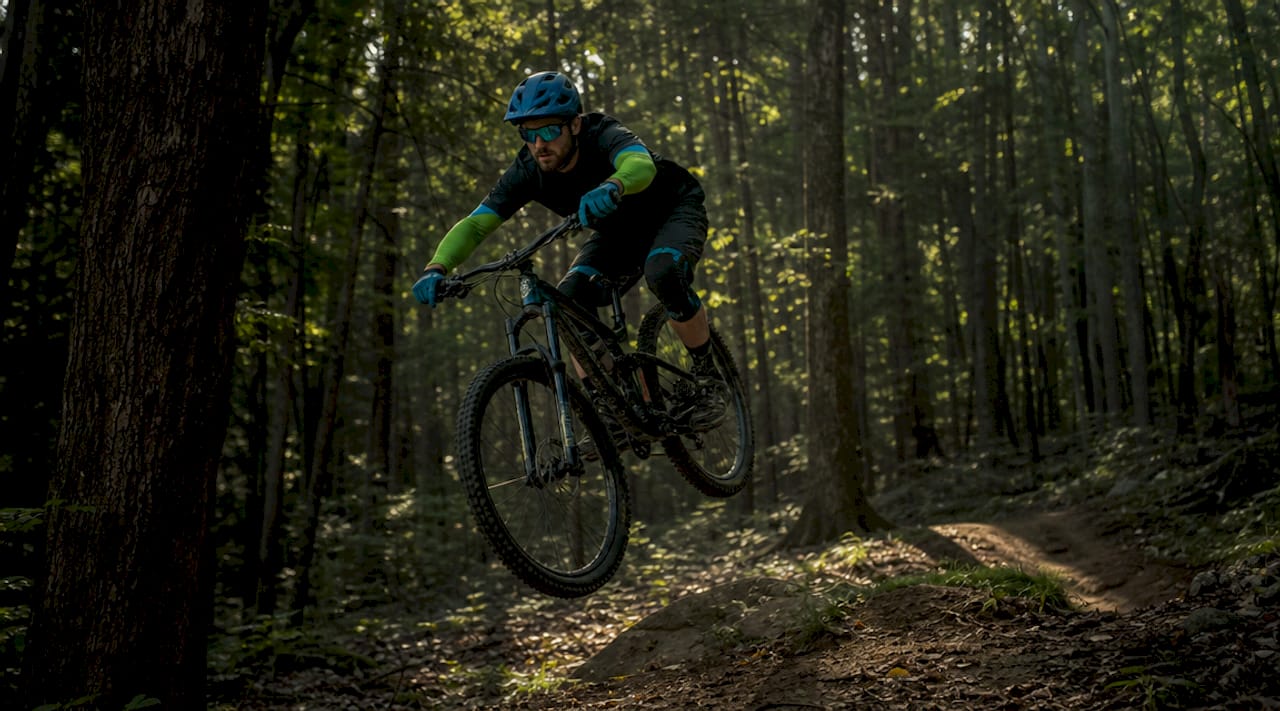
Outdoor sports imagery is the practice of capturing dynamic athletic moments in natural environments to tell a visual story that conveys movement, energy, and context simultaneously. It sits at the intersection of technical camera mastery and artistic composition, making it one of the most demanding and rewarding disciplines in photography. Whether you are shooting a mountain biker launching off a ridge in the Swiss Alps or a trail runner cresting a foggy summit, the goal is the same: produce a frame that makes the viewer feel the weight of the moment. This article breaks down the technical, compositional, and storytelling layers that define great outdoor sports visuals.
What is explaining outdoor sports imagery, and why does it matter?
Outdoor sports imagery is not simply action photography taken outside. The industry term is adventure sports photography, and it encompasses a deliberate fusion of athletic documentation and environmental storytelling. Where studio sports photography isolates the athlete, adventure sports photography uses the natural world as a co-subject. The mountain, the river, the dust cloud, the fading light all carry narrative weight equal to the athlete’s movement. Understanding this distinction is the foundation for anyone serious about outdoor photography styles and techniques.
The best outdoor sports images communicate three things at once: what the athlete is doing, where they are doing it, and what it feels like to be there. That triple demand is what separates a technically sharp action shot from a genuinely compelling photograph. Bissig’s work across locations like Pakistan and California demonstrates exactly this principle. The environment is never background noise. It is a character in the story.
What are the essential camera settings and equipment for outdoor sports photography?
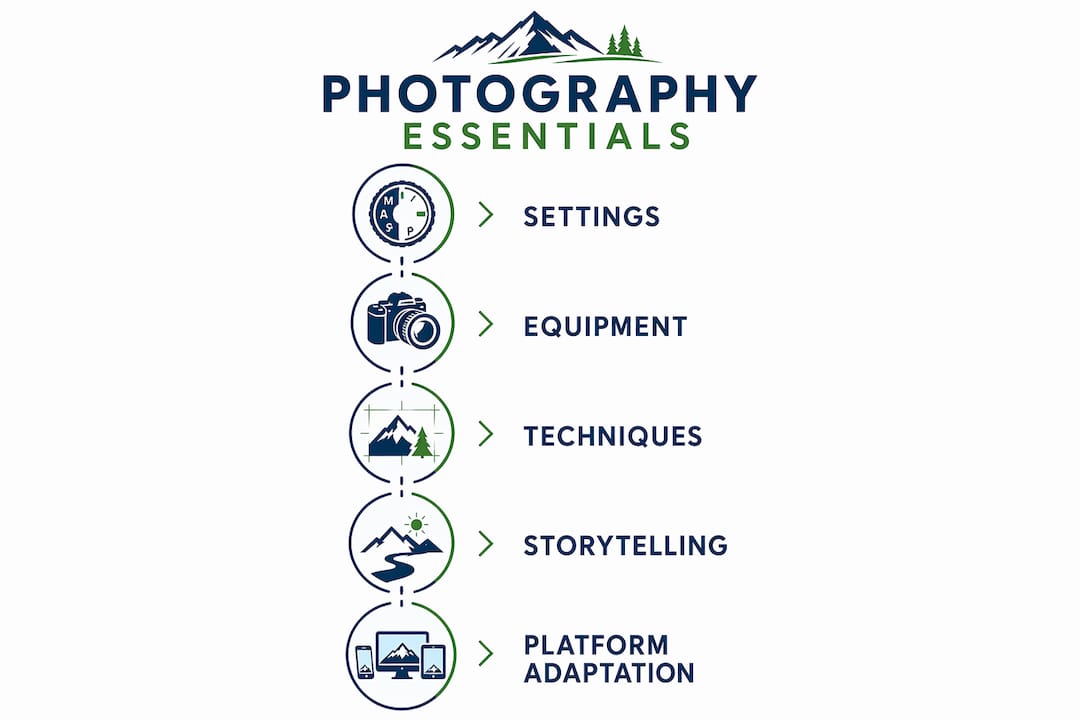
Camera settings are the first technical barrier most photographers hit when they move from casual shooting to serious outdoor sports work. Getting them right is not optional. A blurred athlete in a stunning landscape is still a failed image.
Shutter speed and aperture
Shutter speed and aperture recommendations from 2026 industry guidance are specific: start at 1/1000s to freeze motion, and push to 1/1600s or 1/2000s for high-speed disciplines like downhill mountain biking, motocross, or whitewater kayaking. Apertures between f/2.8 and f/5.6 give you the depth-of-field control to separate your subject from the background without losing environmental context entirely. That range is not arbitrary. It reflects the practical balance between subject sharpness and scene readability.
Autofocus, burst mode, and stabilization
Mirrorless cameras with fast autofocus and burst modes are the current standard for outdoor sports work. The Leica SL2, Canon R-series bodies, and Sony Alpha 9 III all offer subject-tracking autofocus that locks onto athletes moving through complex, high-contrast environments. Burst mode at 20 or more frames per second means you are selecting the peak moment in post, not gambling on it in the field. Image stabilization matters most when you are shooting handheld from unstable terrain, which is most of the time in adventure sports contexts.
Lens selection
Telephoto lenses in the 70 to 200mm range let you compress distance and isolate athletes against dramatic backgrounds. Wide-angle lenses at 16 to 35mm place the athlete inside the environment, which works powerfully for establishing shots and low-angle compositions. Carrying both is standard practice for professional outdoor sports photographers.
- Use 1/1000s as your baseline shutter speed; go faster for high-speed disciplines
- Shoot between f/2.8 and f/5.6 to balance subject sharpness and environmental depth
- Prioritize mirrorless bodies with subject-tracking autofocus for moving subjects
- Carry a telephoto and a wide-angle lens to cover both isolation and environmental shots
- Enable burst mode and review sequences in post to select the true peak moment
Pro Tip: Set your camera to continuous autofocus with subject detection before you arrive at the location. Adjusting settings while an athlete is mid-air costs you the shot every time.
How does composition and framing influence storytelling in outdoor sports imagery?
Composition is where technical execution becomes art. A correctly exposed, sharply focused image of a mountain biker is still mediocre if the framing adds nothing to the story. The choices you make about angle, foreground, and background determine whether the viewer feels the scale and danger of the scene or simply sees a person on a bike.
-
Shoot low. Documentary-style mountain biking photography uses low angles near the terrain to enhance perceived jump height and obstacle scale. Placing your camera at ground level and angling upward transforms a two-foot hop into something that reads as genuinely aerial. This technique works across disciplines: low angles in trail running emphasize root-covered terrain; in surfing, they reveal the wall of water behind the athlete.
-
Use foreground elements. Rocks, branches, snow, or water in the foreground create layered depth that pulls the viewer into the scene. A flat image with only athlete and sky reads as two-dimensional. Foreground elements give the eye a path to travel.
-
Incorporate leading lines. Trails, ridgelines, rivers, and fences naturally direct the viewer’s gaze toward the subject. Positioning yourself so a leading line converges on the athlete at the moment of peak action is one of the most reliable compositional tools in outdoor sports work.
-
Place athletes in unexpected environments. Variable perspective shifts and environmental staging help transcend cliché sports imagery toward artful storytelling. Shooting a climber against an industrial backdrop or a cyclist through a narrow urban canyon creates narrative tension that pristine mountain shots cannot deliver. The contrast between athlete and environment generates visual interest that keeps viewers engaged longer.
-
Balance action with context. The background should tell the viewer where this is happening and why it matters. A blurred forest behind a runner communicates speed and environment simultaneously. A flat white sky communicates nothing.
“The most powerful outdoor sports images are the ones where you could remove the athlete and the landscape would still tell a story. Then you add the athlete back, and the story becomes complete.”
What techniques ensure authenticity and dynamic storytelling in capturing outdoor sports?
Authenticity is the quality that separates memorable outdoor sports imagery from competent documentation. Staged shots read as staged. Viewers who participate in outdoor sports recognize the difference immediately, and so do the brands and editors who commission this work.
The most direct path to authentic imagery is participating in the sport itself. Professional mountain bike photographers consistently cite riding ability as the factor that most improves their photographic outcomes. When you understand how a biker reads a trail, you know where to stand before the action arrives. The same principle applies across disciplines. Knowledge of sport strategy and athlete tendencies allows you to anticipate moments rather than react to them, which is the difference between a decisive frame and a near-miss.
- Participate in or study the sport deeply before shooting it
- Capture rest, preparation, and emotional moments alongside peak action
- Use hands-free mounts and 360-degree cameras to record continuously without interrupting the athlete’s natural flow
- Avoid over-filming; natural pacing and minimal interruptions preserve the authenticity that makes footage compelling
- Document the full arc of an experience: arrival, preparation, effort, exhaustion, and reflection
Inclusive outdoor sports imagery now extends beyond elite moments to include beginners adjusting gear, families on casual trails, and athletes resting mid-route. This shift reflects a broader understanding that authentic storytelling requires the full spectrum of human experience in sport, not just the highlight reel.
Pro Tip: Spend at least one session with no camera, just participating or observing. You will identify three or four specific moments that repeat predictably. Those are your shots.
How can visual storytelling in outdoor sports imagery be adapted for different platforms?
The same image or sequence does not perform equally across all platforms and audiences. Adapting your approach to fit the context is a core skill for anyone creating sports imagery content professionally.
| Platform / Audience | Format and approach |
|---|---|
| Instagram / TikTok | Short vertical clips, 9:16 ratio, peak action in first two seconds, minimal text overlay |
| Editorial / magazine | Horizontal frames with environmental context, room for text placement, narrative sequence |
| Commercial brand use | Clean backgrounds, athlete and product visible, consistent color grading aligned to brand identity |
| Long-form documentary | Full narrative arc with setup, complication, response, and reflection; ambient audio essential |
| Endurance sports content | Biometric overlays and GPS data add context for heart rate, elevation, and pace that text alone cannot convey |
Outdoor storytelling benefits from emotional focus, ambient audio, and narrative arcs that include setup, complication, response, and reflection. For social media, this arc compresses into seconds. For a documentary or brand film, it expands across minutes. The structure is the same; only the duration changes. Aerial drone footage sets scale effectively, but aerial and wearable tech should be used sparingly to maintain intimacy and viewer connection. A film that is 80% drone footage loses the ground-level tension that makes outdoor sports compelling.
Editing strategy matters as much as capture. Raw, slightly rough footage often reads as more authentic than heavily color-graded sequences. The goal is polish that does not erase the feeling of being there.
Key takeaways
Outdoor sports imagery succeeds when technical precision, compositional intent, and authentic storytelling operate together as a single discipline rather than three separate concerns.
| Point | Details |
|---|---|
| Master your settings first | Use 1/1000s or faster shutter speeds and f/2.8 to f/5.6 apertures as your technical baseline for action shots. |
| Composition carries the narrative | Low angles, foreground elements, and unexpected environments transform technically correct shots into compelling stories. |
| Authenticity requires sport knowledge | Participating in or deeply studying the sport lets you anticipate action rather than react to it. |
| Adapt format to platform | Vertical short-form for social, horizontal narrative for editorial, and data overlays for endurance content each serve different viewer needs. |
| Capture the full experience | Rest, preparation, and emotional moments alongside peak action create richer, more credible visual stories. |
What I have learned after years in the mountains
The advice I give most often to photographers who want to improve their outdoor sports work is the same advice I had to learn the hard way: stop treating the camera as the most important thing you brought to the location. The mountain does not care about your gear list. The athlete does not perform better because you have a faster lens.
What actually moves the needle is time spent understanding the environment and the sport at a physical level. I ride mountain bikes. I hike the routes I plan to shoot. I stand in the rain on a ridge for two hours because I know the light will do something specific when the clouds break. That knowledge does not come from reading gear reviews. It comes from being present in the places you want to photograph, repeatedly, without a camera in your hand sometimes.
The other thing I have found consistently true is that the images that resonate most with viewers are rarely the technically perfect ones. They are the ones where something real happened and the camera was in the right place. A rider covered in mud at the bottom of a descent. An athlete sitting alone on a boulder looking at a valley. A moment of genuine exhaustion or genuine joy. Those frames require you to be trusted by the people you are photographing, and trust is built by showing up, participating, and not treating every moment as content to be extracted.
The technical side of this work is learnable in months. The storytelling side takes years. Start with the step-by-step action shot fundamentals, then spend the rest of your time in the field.
— Martin
Take your outdoor sports imagery further with Bissig
Bissig’s portfolio spans commercial campaigns, editorial features, and expedition documentation across some of the world’s most demanding outdoor environments. As a Canon ambassador and professional adventure sports photographer and filmmaker, Martin Bissig brings both technical depth and genuine field experience to every project. Whether you are a brand looking for high-impact outdoor sports visuals or a photographer building your own skills, the resources on bissig.ch are built from real-world practice, not theory. Explore the sports photography best practices guide for pro-level tips, or check the 2026 gear recommendations to make sure your kit matches the demands of the work.
FAQ
What is outdoor sports imagery?
Outdoor sports imagery is the practice of photographing or filming athletic activity in natural environments to create visual stories that convey movement, energy, and context. The industry term is adventure sports photography, and it combines technical camera skills with artistic composition and authentic storytelling.
What shutter speed should I use for outdoor sports photography?
Start at 1/1000s to freeze motion and increase to 1/1600s or 1/2000s for high-speed disciplines like downhill mountain biking or motocross. Pair this with an aperture between f/2.8 and f/5.6 for effective depth-of-field control.
How do I make outdoor sports photos look more authentic?
Participate in or study the sport to anticipate action before it happens, and capture moments beyond peak action including rest, preparation, and emotional reactions. Hands-free mounts and continuous recording methods preserve natural flow without interrupting the athlete.
How should I adapt outdoor sports imagery for social media?
Use vertical 9:16 framing for Instagram and TikTok, lead with peak action in the first two seconds, and keep sequences short. Long-form narrative arcs with ambient audio work better for documentary platforms and editorial use.
Do I need expensive gear to shoot outdoor sports photography?
Gear matters less than sport knowledge and compositional skill. A mirrorless body with fast autofocus and burst mode covers the technical requirements, but understanding athlete movement and anticipating action produces better results than any specific camera body alone.


