

Commercial sports photography is the craft of capturing high-impact, dynamic images that serve branding, marketing, and media needs with precision and visual storytelling. Known in the industry as editorial and commercial sports imaging, this discipline demands more than a fast camera. It requires technical mastery, an understanding of image licensing, and the ability to frame a brand’s identity inside a single frame. This guide to commercial sports photography covers everything from gear selection and camera settings to licensing frameworks and brand storytelling strategies. Whether you are an aspiring photographer or a brand looking to commission better work, you will leave with practical knowledge you can apply immediately.
What gear do commercial sports photographers actually need?
The right equipment separates usable images from exceptional ones. Commercial sports photography demands gear that handles speed, low light, and unpredictable movement without compromise.
Camera bodies worth investing in
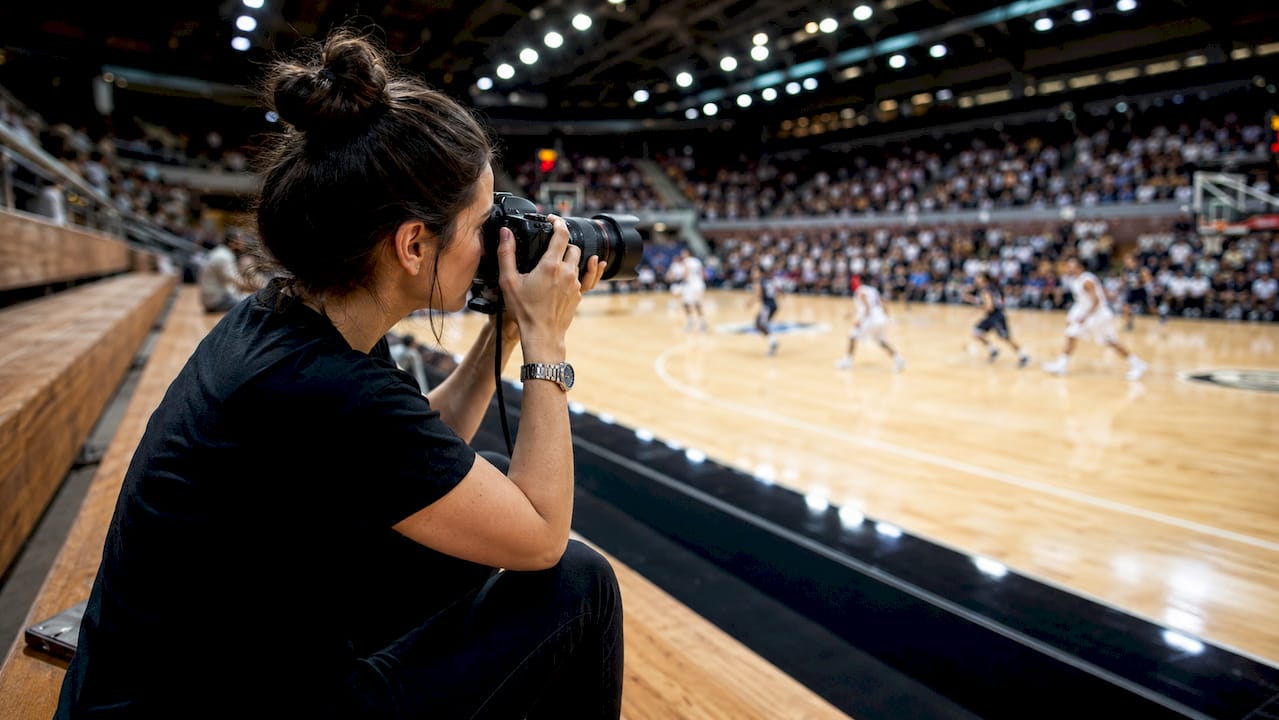
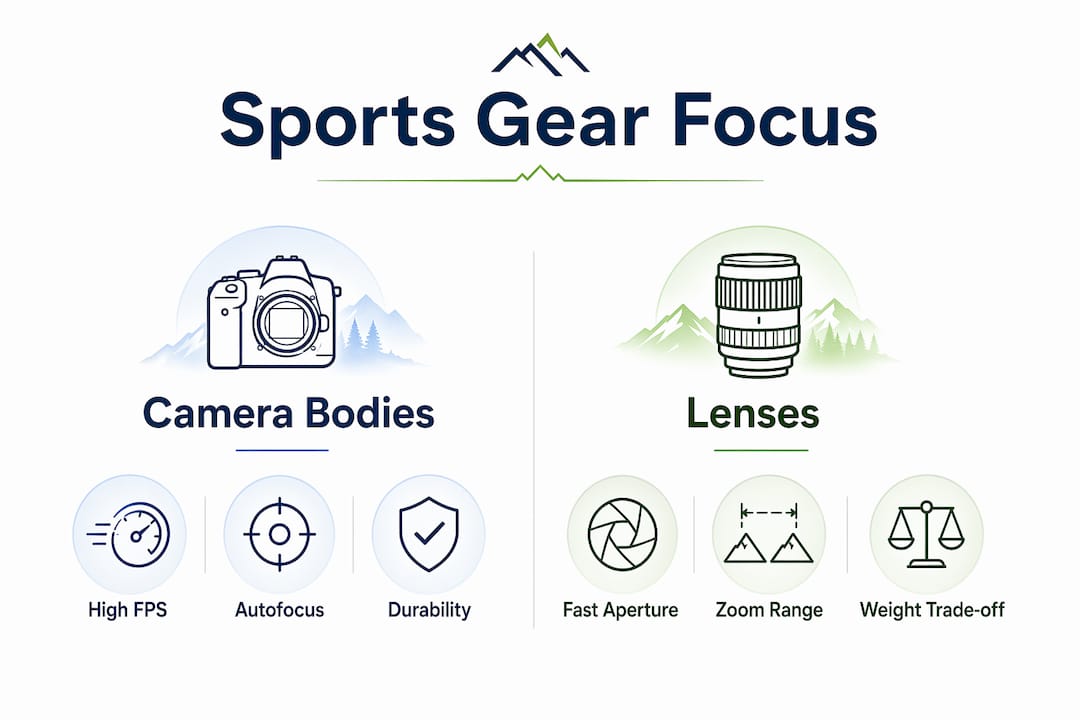
Camera bodies with high frames-per-second (fps) rates and advanced autofocus systems are the foundation of any serious sports kit. Canon’s EOS R3, Sony’s Alpha 9 III, and Nikon’s Z9 all deliver 20+ fps with subject-tracking autofocus that locks onto athletes mid-sprint. That tracking capability is what keeps your subject sharp when the action changes direction in a fraction of a second.
Lenses: speed and reach
Fast lenses with f/2.8 apertures are the standard for indoor arenas and overcast outdoor events. They let you maintain a fast shutter speed without pushing ISO into noise territory. For reach, a 70–200mm f/2.8 zoom covers most field sports, while a 300mm or 400mm prime is the tool of choice for track, cycling, and wildlife-adjacent adventure sports. Bissig’s work in mountain biking and outdoor adventure regularly relies on telephoto reach to compress distance and pull athletes out of complex backgrounds.
Support gear and accessories
Monopods provide lightweight stability ideal for tracking fast action and are preferred over heavier tripods when you need to reposition quickly between plays or laps. A tripod locks you in place. A monopod keeps you mobile while still reducing camera shake during long telephoto shots.
Essential accessories every commercial sports photographer should carry:
- Extra batteries: Cold mountain environments and long event days drain power fast.
- High-speed memory cards: CFexpress or UHS-II SD cards handle the data rate of burst shooting without bottlenecks.
- Lens hoods: They cut flare in harsh stadium lighting and protect the front element.
- Weather sealing covers: Rain sleeves protect gear during outdoor events without slowing you down.
| Gear Item | Best Use | Trade-off |
|---|---|---|
| 70–200mm f/2.8 zoom | Field sports, versatile reach | Heavy for all-day carry |
| 300mm+ prime lens | Track, cycling, distance events | Less flexible framing |
| Monopod | Mobility with stability | Less rigid than tripod |
| High-fps camera body | Burst shooting peak moments | Higher cost |
Pro Tip: Balance your kit weight against the event duration. A lighter 70–200mm f/4 is more manageable for a six-hour mountain bike race than a heavier f/2.8 version, provided the lighting holds.
For a deeper look at current options, Bissig’s 2026 gear recommendations break down specific camera and lens choices for action-focused commercial work.
Which camera settings best capture fast sports action?
Camera settings are the difference between a blurry near-miss and a frame-perfect decisive moment. The right combination of shutter speed, aperture, ISO, and autofocus mode gives you consistent results across unpredictable conditions.
Follow this shooting procedure for most commercial sports scenarios:
- Set shutter speed first. Shutter speeds of 1/1000s or faster freeze fast sports action cleanly. For panning shots that convey motion blur behind a moving subject, drop to 1/60–1/125s and track the athlete’s movement.
- Open your aperture. Start at f/2.8 to isolate your subject from the background and allow faster shutter speeds in lower light.
- Set ISO to match the light. Lower ISO is preferred outdoors in bright conditions. Indoors, push ISO higher but monitor noise levels on your camera’s LCD between sets.
- Switch to continuous autofocus. AI-driven subject tracking in Canon’s Dual Pixel CMOS AF or Sony’s Real-time Tracking locks onto athletes and holds focus through obstacles and direction changes.
- Engage burst mode. Continuous shooting drastically increases your chances of capturing the decisive moment. A single tap of the shutter at a key moment is rarely enough.
- Anticipate the peak. Study the sport before you shoot. A mountain biker’s biggest air happens at the lip of a jump, not mid-flight. A sprinter’s most powerful expression crosses the finish line, not ten meters before it.
- Review and adjust. Check your first burst sequence for exposure and focus accuracy. Adjust ISO or shutter speed before the next run or play begins.
Phil Hillyard, one of Australia’s leading sports photographers, emphasizes combining wide aperture, continuous shooting, and anticipation to consistently capture sharp peak action moments. That combination is not a shortcut. It is the professional standard.
Pro Tip: Start your burst slightly before the expected peak action. Top sports photographers rehearse this timing to maximize usable frames that capture facial expressions and decisive body positions.
Understanding how shutter speed, aperture, and ISO interact is the foundation of all exposure decisions. The exposure triangle explains these relationships clearly if you want to deepen your technical grounding.
How do commercial image rights and licensing work?
Licensing is the legal framework that governs how a sports image can be used commercially. It is separate from copyright ownership, and confusing the two is one of the most expensive mistakes photographers and brands make.
Commercial image licensing requires specification of the type of use, the term, the territory, and the media type. A license for a social media campaign in Switzerland is a different legal instrument than one covering global print advertising. IMAGO, one of the world’s largest sports image agencies, highlights that sports image licensing goes beyond photographer copyright to third-party rights clearance. That is a critical dimension for any brand using sports imagery commercially.
| License Type | Use Case | Model Release Required? |
|---|---|---|
| Editorial license | News, magazines, editorial features | No |
| Commercial license | Advertising, brand campaigns, packaging | Yes |
| Rights-managed | Specific use, term, and territory defined | Depends on use |
| Royalty-free | Unlimited use after one-time fee | Depends on content |
| Exclusive buyout | Full control, no other licensees | Yes |
Brands and photographers often misunderstand that purchasing an image does not grant unlimited commercial rights. A rights-managed license restricts how, where, and for how long the image appears. Violating those terms exposes brands to significant legal liability.
Model releases are a separate requirement from the license itself. When recognizable athletes appear in commercial images, a signed model release is mandatory. Without one, even a technically licensed image cannot be used in advertising. Bissig’s approach to commercial shoots always includes release documentation as part of the pre-production workflow, not an afterthought.
For a practical breakdown of how licensing applies to web and digital use, this guide on photography licensing for websites covers current best practices.
How do you create sports images that tell a brand story?
Technical sharpness gets an image published. Brand storytelling gets it remembered. The most commercially valuable sports images do both at once.
Effective sports photography strategies involve understanding the sport, positioning well, anticipating critical moments, and incorporating brand elements in the composition. That means knowing where the sponsor banners are, where the light falls, and where the crowd’s energy peaks before the action begins.
Key strategies for brand-focused sports imagery:
- Study the sport before the shoot. Know the scoring moments, the emotional peaks, and the visual rhythm of the event. A photographer who understands mountain biking positions differently than one who treats it like any other outdoor shoot.
- Frame for brand context. Include sponsor logos, team colors, and venue atmosphere in your wider shots. These details matter to marketing teams reviewing the final delivery.
- Capture emotion, not just action. A cyclist’s face at the finish line tells a brand story that a mid-race wheel shot cannot. Emotion creates connection.
- Capture spectator reactions and ambient moments. Crowd energy and environmental context build a comprehensive visual portfolio that clients use across multiple campaigns.
- Vary your focal lengths. Wide establishing shots, mid-range athlete portraits, and tight telephoto action frames give clients editorial flexibility. Delivering only one type of shot limits the image’s commercial life.
Bissig’s editorial work, including projects in locations like California and Pakistan, demonstrates how environmental storytelling and athlete performance combine into images that work equally well in a magazine spread and a brand campaign. His visual storytelling approach is a direct model for photographers building commercial portfolios.
Key takeaways
Commercial sports photography succeeds when technical precision, the right gear, and a clear understanding of licensing rights combine with intentional brand storytelling.
| Point | Details |
|---|---|
| Gear drives opportunity | Fast lenses at f/2.8 and high-fps camera bodies are non-negotiable for consistent commercial results. |
| Settings define sharpness | Use 1/1000s or faster to freeze action, and engage continuous autofocus with burst mode on every shoot. |
| Licensing is layered | Copyright ownership and commercial use rights are separate. Model releases are always required for athlete images in advertising. |
| Brand storytelling adds value | Framing for sponsor context, capturing emotion, and varying focal lengths make images more commercially useful. |
| Anticipation beats reaction | Study the sport, predict the peak moment, and start your burst before the action reaches its climax. |
What i’ve learned shooting commercial sports for over a decade
The biggest mistake I see aspiring commercial sports photographers make is treating the technical side as the finish line. Nailing a sharp, well-exposed frame at 1/1000s is the entry requirement, not the achievement. The real work is understanding what the client needs before you pick up the camera.
When I shoot for outdoor brands, the brief almost always includes specific deliverables: hero images for campaign headers, lifestyle frames for social, and detail shots for product context. If I arrive at a mountain bike event thinking only about capturing the best jump, I will miss half the brief. Client communication before the shoot is as important as any camera setting.
Gear technology has changed significantly in the years I have been working as a Canon ambassador. Subject-tracking autofocus has removed a layer of technical difficulty that used to separate professionals from amateurs. What it has not changed is the need to understand light, anticipate movement, and position yourself where the story actually happens. No algorithm replaces that judgment.
Licensing is the area where I see the most avoidable problems. Photographers who do not build release workflows into their pre-production process create legal exposure for themselves and their clients. I treat model releases and usage agreements as part of the shoot, not paperwork to sort out afterward.
The rewards of this work are real. When a brand uses your image as the centerpiece of a global campaign, or a magazine runs your shot as a full-page opener, the combination of technical skill and commercial awareness that produced it becomes undeniable. Keep learning, keep studying the sports you shoot, and treat rights management as a professional standard, not an optional extra.
— Martin
Take your commercial sports work further with Bissig
If you are ready to move from learning to doing, Bissig’s professional resources are built specifically for photographers and brands working in action and adventure sports.
Bissig’s action photography techniques and inspiration resource covers professional methods for capturing dynamic sports imagery with real-world examples from commercial shoots. For photographers building a portfolio or brands commissioning work, the adventure branding photography page explains how specialized sports photography translates directly into campaign-ready imagery. Martin Bissig brings over a decade of commercial and editorial experience to every project, from Swiss mountain biking to international expedition work.
FAQ
What shutter speed should i use for sports photography?
Use 1/1000s or faster to freeze fast sports action cleanly. For creative panning shots that show motion blur, drop to 1/60–1/125s and track the athlete’s movement through the frame.
Do i need a model release for commercial sports images?
Yes. Any commercial use of an image featuring a recognizable athlete requires a signed model release. Copyright ownership alone does not grant commercial use rights.
What is the difference between editorial and commercial sports photography licensing?
Editorial licenses cover news and magazine use and do not require model releases. Commercial licenses cover advertising and brand campaigns and always require model releases and clearly defined usage terms.
What focal length is best for sports photography?
A 70–200mm f/2.8 zoom covers most field and court sports. For distance events like cycling or track, a 300mm or 400mm prime lens delivers the reach needed to isolate athletes from the background.
How do i build a commercial sports photography portfolio?
Focus on variety: include sharp action frames, emotional athlete portraits, wide environmental shots, and images that incorporate brand or sponsor context. Clients evaluate portfolios for editorial flexibility, not just technical sharpness.


